
On Business and Political Speech

We seem to have lost the thread about businesses and political speech. Something has changed recently. Governments seem more willing these days to punish companies for political opinions which clash with current leaders’ politics. It’s a bad trend. It’s very likely anti-constitutional.
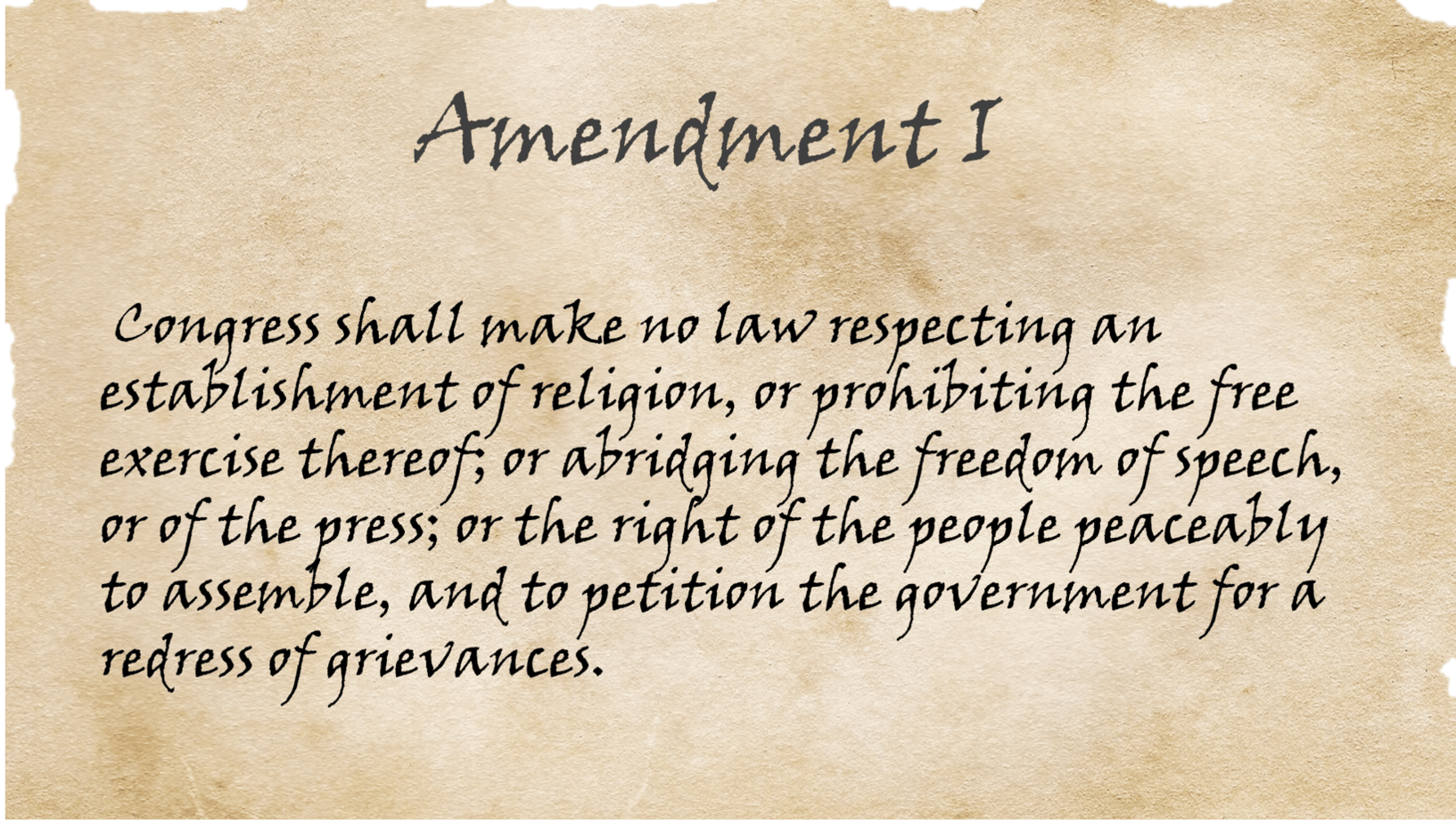
First Amendment
First Amendment begins “Congress shall make no law…” New TX laws violate this principle.

Based on laws passed in the 2021 legislative session in Texas, any company entering a state contract worth $100,000 or more must certify certain “politically correct in Texas” stances. First, the company must pledge that it does not boycott fossil fuels. Second, that it does not boycott firearms. Third, that it does not boycott Israel. If you attempt any of these political things, apparently, your business is not welcome in Texas, by statute. The attorney general’s office and the comptroller’s office have issued letters to companies seeking certification statements from businesses to pledge allegiance to this political stance. 

According to a report by National Public Radio, the actual implementation of these “politically correct” requirements in Texas is messy. Plenty of loopholes exist. It’s not working.

Nevertheless, the intent is to bully companies into agreeing to the politics of a particular place and particular party leadership in power now. Contrary to Texas lawmakers’ intent, this version of business political correctness should not make conservatives happy. This should make them very, very worried, from a constitutional standpoint.

This feels of a piece with Florida Governor Ron DeSantis’ moves in the past month to punish Disney for its supposed pro-LGBTQ messages.

I’m no First Amendment scholar, but here’s how I understand things. We start with the idea that there’s a big difference between whether you are a private citizen, a business, or the government.

As a quick reminder, private citizens get to say almost anything they like. They can’t incite violence or do the equivalent of yelling “Fire!” in a crowded theater for safety reasons, but most everything else – including quite offensive things – is fair game. 

Private corporations and their owners and executives also get wide latitude to express political opinions, usually lImited by civil protections like employment law. Private businesses run the risk of a loss of business for unpopular opinions and politics, but generally they can say or express nearly anything as well.

Public officials and government entities, however, do not and should not have the ability to impose their own political views on individuals or companies. That’s the direction of autocrats, both of the left and the right. In our pro-market, anti-autocratic system, it’s been an important tradition that political leaders do not pressure companies to conform with their politics.
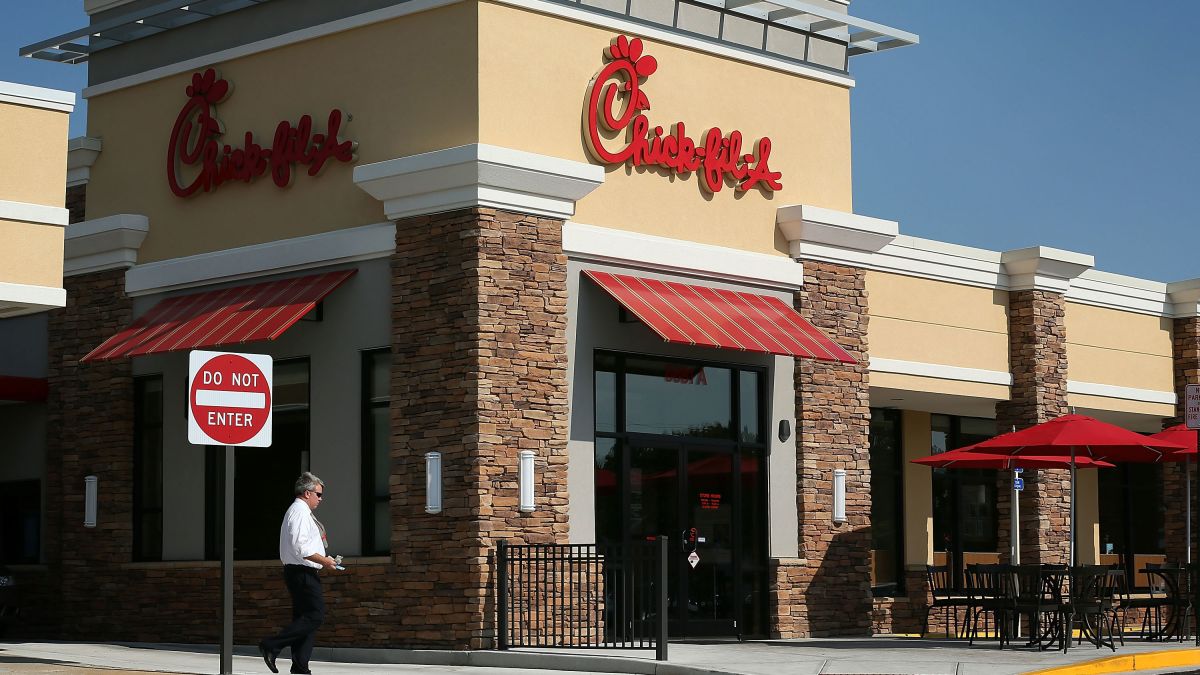
chick_fil_a

In this context, the San Antonip City Council vote a few years back crossed the line in explicitly deciding against letting Chick-fil-A open a restaurant in the municipal airport because of the fast food chain owners’ perceived hostility to gay marriage.  If individual consumers want to shun chicken to punish Chick-fil-A for its politics, that’s their right. But when a city government imposes a political litmus test like this on a private company, it oversteps. The left-leaning city council rightfully reaped the whirlwind for its choice. This isn’t the right way for governments to treat private companies.

Meanwhile, Florida Governor Ron DeSantis has joined the trend set by the Texas legislature of punishing corporations for their left-leaning politics. He urged the Florida legislature to strip Disney of its special tax status, when Disney joined a letter condemning proposed legislation in Florida. DeSantis made clear this was personal, and his action retaliatory, saying  “Disney thought they ruled Florida. They even tried to attack me to advance their woke agenda.”
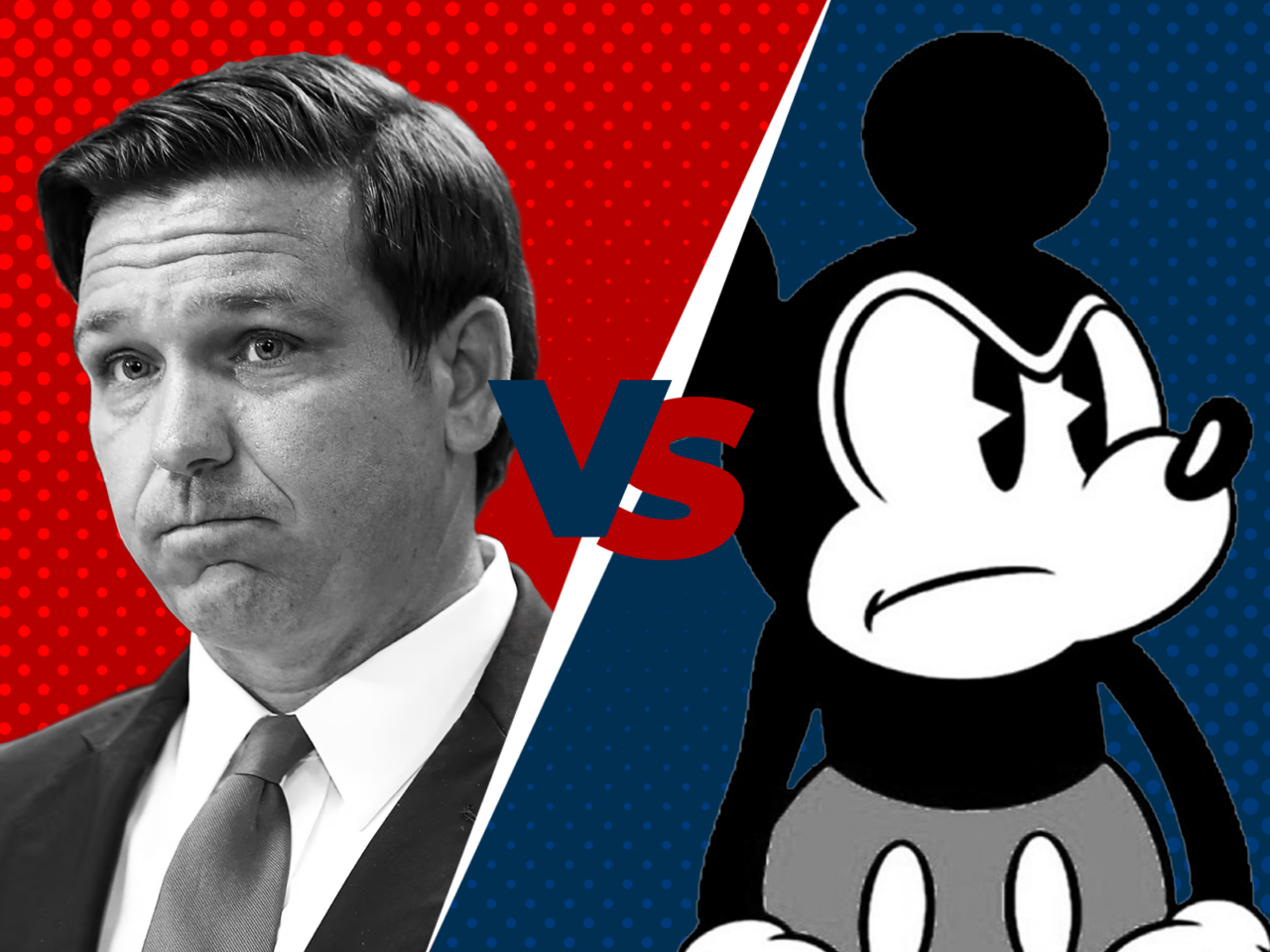
Desantis_v_Disney
Desantis’ bullying is clearly anti-constitutional

Official government retaliation for protected speech is a violation of the First Amendment. I guess it goes to the courts next but this is really important: Our system depends on DeSantis getting slapped down for this attempt to retaliate for political speech.

Here’s how it should go. Disney gets to express any type of speech or political stance it wants. Within the bounds of employment law, of course. Private consumers for their part get to decide whether to buy more, the same, or fewer of Disney’s products as a result of Disney’s expressions. Disney is free to be as woke or as reactionary in their public utterances as they please, and then they can suffer the consequences. Cancel, or embrace, or just appreciate princess movies for what they are – it should be all the same under the law.

In a non left-right culture-war context, this may be easier to understand. If I run an ice house – serving beer and spirits – and I flip the bird to the mayor of my city or the county judge or the governor, that’s my absolute right. I’m an American, damnit! If the next week I get a visit from the Texas alcoholic beverage commission and learn my license to serve has been revoked for no other reason than I was being rude to the powers that be, that’s retaliatory and a violation of my rights. Governments and government officials are not allowed to act like precious snowflakes. Private citizens and businesses are protected in a way that governments are not. 

Public officials and governments need to be circumscribed in their statements and actions. They don’t get to do and say what they want. That’s the whole point of the constitution. To protect us from the government. It is not ok for a public official to opine and then try to shape the politics of a private company. It is worse still to bring the power of the regulatory state to bear on a private company, as long as the company is acting within current law. To do what DeSantis has done in Florida is to make an important move toward an autocratic state. This should be equally clear to conservatives and progressives alike.

Forcing corporate allegiance to current office holders’ political stance is both anti-market and pro-autocrat. Punishing companies for their political stances is anti-American.  It’s the stuff of Putin’s Russia.

A version of this post ran in the San Antonio Express News and Houston Chronicle.

Please see related post:

The anti-constitutional attempt to regulate speech in TX on social media platforms.

Post read (161) times.
Guest Post: Sheldon Adelson’s Israel Gamble

sheldon adelson in sun glasses

[ED: If Adelson represents in 2012 the new face of unlimited political ‘speech’ in US Politics following the Citizens United ruling, he’s even further along in influencing Israeli politics.  My friend The Professor presents a fuller picture of Adelson than I had painted earlier with his rational bet on the Romney campaign]

By: “The Professor”

In a post earlier this month, The Banker analyzed the personal financial math behind Sheldon Adelson’s vow to double down on his (losing) bets on Republican political candidates in the next round of elections, presenting a convincing case that any monetary investment Adelson might make in candidates who support his views on tax policy would be amply rewarded were enough of those candidates to win to make those policies a reality.

However, The Banker ignored Adelson’s stated primary reason for supporting Republican candidates, which has nothing at all to do with tax policy.  In an op-ed in the Wall Street Journal published days before the presidential election, Adelson dismissed the claim that his support for Republicans was the result of the “conservative caricature” of him as a tax-evading oligarch and insisted that it stemmed from the fact that “the Democratic Party has changed in ways that no longer fit with someone of my upbringing.”  His primary evidence of this change?  His claim that more Republicans than Democrats “sympathize with Israel” (for which he provides an uncited statistic), which he calls the “sole liberal democracy in the region.”

It seems to me that The Banker’s account of Adelson’s rationality in betting on Republican candidates is undercut by Adelson’s wholly financially irrational commitment to influencing both the American-Israeli relationship and, more importantly, domestic Israeli politics.  Setting aside the question of whether a country that arrests women for praying openly in public places and allows religious authorities to control questions of citizenship and marriage can be considered a liberal democracy, Adelson’s involvement in Israeli politics and his unqualified support for Benjamin Netanyahu (hereafter known as Bibi, which is how he’s pretty much exclusively referred to in Israel) defies both financial logic and his supposed commitment to Israel as a “liberal democracy.”

In July 2007, a new daily newspaper debuted in Israel.  Called Yisrael Hayom, or “Israel Today,” it was (and is) bankrolled by Sheldon Adelson and distributed for free around the country.  By 2010, only three years after its inception, it had a circulation of over 350,000 and by 2011 had surpassed all other daily newspapers in Israel in its share of readership.

According to the Israeli business site Globes, Adelson lost 250 million NIS (about $70 million) on the paper from 2007-2010.  While this amount is considerably less than what Adelson spent in just the current election cycle in the United States, it nonetheless represents a significant chunk of change.  More importantly, what Adelson bought with his investment is somewhat more significant than what he got out of the last U.S. election cycle.[1]

With a 40% share of the Israeli newspaper market, Adelson now has the ear of the Israeli public, and has caused a crisis in Israeli journalism, with the third and fourth most popular papers in Israel, Ma’ariv and Ha’aretz, facing serious questions about their futures.[2]

Yisrael Hayom’s dominance of the Israeli newspaper market has raised two serious questions in Israeli politics, both of which impinge on the liberal democratic character of Israel that Adelson himself extols: first, whether Yisrael Hayom, which has a clear ideological bent (Americans need only know that the day after the most recent presidential election the headline on the front page read, “The U.S. chose socialism” to know what that ideological bent is, at least with regard to American politics), is constraining public political discourse with its dominance of the newspaper market, a dominance won through free distribution and lower advertising rates.  Second, whether the money Adelson has poured into Yisrael Hayom essentially amounts to a shadow contribution to Bibi’s campaign coffers, since the paper offers propagandistic and one-sided support to Netanyahu and his policies.

Ehud Olmert, then still the prime minister of Israel, accused Adelson of political purposes in starting the paper and of supporting Netanyahu when he was still the opposition leader.  In Israel, Yisrael Hayom is commonly referred to as “Bibiton,” a portmanteau word that basically means “Bibi’s paper,” and writers and editors at the paper have strong ties to (and have sometimes been simultaneously employed by) the prime minister’s office under Netanyahu.[3]

There’s no question that Adelson is losing considerable amounts of money on Yisrael Hayom, and that his goal is to advance (perhaps to the exclusion of all others) the political viewpoints of Bibi Netanyahu and his government.

The political positions with which Bibi is now synonymous have two components: international and domestic.

Internationally, Bibi is a hawk who has advanced policies that have solidified the continued Israeli occupation of Palestinian territories, despite voicing his ostensible support for a two-state solution.  His government’s recent declaration of their intention to begin building in the disputed territory around Jerusalem known as E1, presumably in retaliation for the successful Palestinian bid for upgraded status at the U.N., is recent evidence of this policy.

Domestically, since his first stint as prime minister in the 1990s and his later turn as Finance Minister in the early 2000s (a post from which he resigned in protest against the unilateral Israeli withdrawal from Gaza overseen by Ariel Sharon), Bibi has been in favor of a variety of “pro-market” financial reforms that have been largely credited with strong Israeli growth even at times of international financial crisis but have also been largely reviled by the general Israeli public.  These include the reduction of income-tax rates, particularly for corporations and high earners, and the privatization of state-owned corporations.  Public opposition to these reforms (and other domestic policies supported by Netanyahu and his right-wing coalition partners, like continued government subsidies and military exemptions for the ultra-Orthodox) culminated in a series of protests in the summer of 2011 over the rising cost of living, housing and food prices, and the aforementioned subsidies.

Since Adelson doesn’t pay taxes in Israel, Bibi’s market and tax reforms do not affect him personally, and so unlike his contributions to Republican candidates in the U.S., who might be able to affect tax policy (if they were to actually achieve office) that would benefit him, his investment in Bibi via Yisrael Hayom cannot be similarly justified.  Clearly, Adelson’s ideological commitment to either Israeli military and political dominance in the Middle East and with relation to the Palestinians or to pro-capitalist market and tax reform (regardless of its personal effect for him) has been sufficient to justify his commitment of more than $70 million to the cause.

Paradoxically, however, since he has justified his commitment to Israel on the basis of its ostensible status as the only “liberal democracy” in the Middle East, Adelson’s meddling in the Israeli newspaper market, and in its politics, seems rather to have contributed to the illiberalization of Israel’s democracy.  If one agrees that a democracy cannot survive without a strong and diverse free press, then Adelson’s Yisrael Hayom, with its infiltration of the Israeli newspaper market and one-sided cheerleading for Bibi’s administration, has only contributed to the weakening of one of the pillars of Israeli democracy.  In addition, the right-wing parties with which Bibi has maintained a governing coalition (and which promise to move further to the right after the January elections) have continued the government’s strong support for the religious stranglehold on certain aspects of Israeli law governing marriage, divorce, and the right to worship freely, among other things, which have caused many people inside and outside Israel to question whether Israel is indeed a liberal democracy at all, or rather a democratic theocracy.

In this respect, then, Sheldon Adelson’s financial support for what he calls “the sole liberal democracy in the region” seems highly suspect, and his gamble on Israeli politics less like a gamble than a stake in a style and type of governance in accordance with a personal ideology that values a capitalist, theocratic, militarist Jewish state.  And unlike his commitment to Republican candidates in the U.S. in the last election cycle, Adelson’s investment in Israeli politics is likely to offer him highly favorable returns come January 22.


[1] Opensecrets.org breaks out the roughly $93 million Adelson made in PAC donations during the 2012 US election cycle.  The PAC names indicate that he dedicated at least some of his investment to Congressional campaigns, even if he unsuccessfully burned the majority on the presidential campaigns of Gingrich and Romney.

[2] In September Ma’ariv had to sell its printing equipment to make its payroll and was sold the same month.  Ha’aretz, Israel’s oldest daily, sold a 20% stake in the Haaretz Group to the Russian-Israeli businessman Leonid Nevzlin and in October, as a result of a strike protesting layoffs, the paper did not go to press one day, marking the first time since 1965 that they had missed an issue.

[3] NPR reports, “According to a report in Haaretz, Dror Eydar, a senior columnist at Israel Hayom, receives an additional salary from the prime minister’s office. And Netanyahu adviser Nathan Eshel left his job in the prime minister’s office to work at Israel Hayom during its launch, only to rejoin Netanyahu’s staff last year.”

Post read (7441) times.