The Worst Presidential Economic Policies

Let’s talk about the Presidential candidates’ worst economic ideas.

My preference when reading about presidential candidates is to focus less on the name-calling and memes, and more on their stated plans for improving the odds of positive economic outcomes for Americans during and after their administration.

When candidates propose something new, they should figure out if the policies would do more harm than good. Trump’s tariff plan, and Harris’ plan to fight food prices, each land somewhere between bad and catastrophic. 

Trump’s Tariffs

Republican nominee for President Donald Trump has proposed a 10 percent tariff on all important goods from outside of the country, and a 60 percent tariff on all goods from China. 

The stated purpose of these tariffs is to raise revenue that could replace other taxes such as income tax, plus protect domestic businesses and address a trade imbalance with China. 

There is near-universal agreement among economists that even before a trade war – and indeed this would prompt a response from all trading partners and trading rivals – the tariffs would effectively raise prices on US consumers. This would kick off an immediate round of inflation and impose a $300 billion tax on the US economy, according to the Tax Foundation.

To the extent that tariffs boost domestic production, they would fail to raise revenue. To the extent they raised revenue, the price hikes would be felt by consumers as inflation. Domestic manufacturers that depend on intermediate goods produced outside the country would also pay higher prices and feel that same inflation.

That’s all very predictable even before we get to the secondary effects, such as the offshoring that our domestic manufacturers would do to avoid the 10 percent tariff. And the tertiary effects, which would be a Trump administration poised to “cut deals” and grant tariff exceptions to companies and industries that it favors for whatever reason, legitimate, political, or nefarious. The opportunities for corruption would multiply along with the bureaucratic barriers to trade. 

To lend some nuance to my critique of Trump’s plan and the role of tariffs: Certain specific industries should get tariff protections or outright trade restrictions, plus domestic subsidies, if it is truly a matter of national security or the industry represents a key strategic chokepoint. 

A consensus among economists has shifted over the past decade to recognize that protecting a domestic computer chip industry for example, or protecting our capacity for domestic military manufacturing, is necessary for national defense. But these industries are rare and strategic.

Trump’s impulse toward national strength and bolstering domestic manufacturing has led him too far and is deeply misguided. The effects of blanket 10 percent tariffs on importations would be catastrophic for consumers and for practically every medium and large business in the country. The inflation effects would be massive and permanent.

Harris’ War on Food Prices

In mid-August Democratic presidential candidate Kamala Harris unveiled a series of economic plans, the worst of which is an intention to fight “corporate price gouging” on food and groceries. Her plan did not come with specifics, but it’s nonsensical on its face. 

To fight “price gouging” you have to be willing to impose “price controls.” And price controls will do more harm than good when it comes to food and groceries. 

I don’t doubt Harris’ team poll-tested this idea and found it a winning argument among their likely or persuadable voters. But if so, their electorate is wrong. 

Price controls involve monitoring for rule breaking. Price controls means regulators have to weigh in on the fairness of prices. Did the company raise its prices – on any number of (hundreds? thousands?) of grocery items for a legitimate or a non-legitimate reason? Who is to decide and how? You will need a massive and intrusive bureaucracy to police this. 

Companies will then anticipate government intrusion, probably err on keeping prices artificially low in the short run to avoid penalties, and then pretty soon you would see scarcity on the shelves because keeping that grocery item stocked is a money loser. Consumers – all of us – could be catastrophically affected. 

The goal of announcing a plan to fight “price gouging” is presumably to be seen as responsive to the very unpopular bout of inflation we experienced in 2022 and 2023. But there is literally no evidence that inflation is caused by mythical “greedflation” by corporations, and instead is caused by loose monetary policy, expansive fiscal policy, and corporations trying to adjust, survive, and thrive in a changing environment. 

To take one salient example of price rises for a grocery item:

Two years ago the price of a dozen eggs briefly became an economic meme and supposed evidence for inflation and/or greedflation. It was a classic gross misunderstanding, or purposeful manipulation, of the story of how supply and demand works. An avian flu wiped out about 100 million egg-laying hens since early 2022. Once the flu receded, prices dropped in late 2023. They have recently risen again as avian flu outbreaks have recurred. But at no point in this fluctuating supply story would price controls have helped the situation. Lower prices for eggs imposed on grocery stores would simply discourage chicken farmers from reinvesting in rebuilding their flocks. Eggs will be plentiful and affordable again when the market gets back to equilibrium.

If you take the price-gouging idea and start believing price controls on consumer goods are the answer to the problem, then you’ve lost the thread. Slippery slope arguments are usually mistakes, but I’m going to acknowledge where our brains go with the slippery slope logic. You’ve already thought of the words “Venezuela” and “Cuba” before you read them here. Those countries have a lot of price controls and it’s not helping the average person’s standard of living.

Harris further offered support for “smaller food businesses” as part of a plan to bring down prices. The instinct for smaller obviously codes as a populist appeal against big business, but defies common sense. Any consumer knows that if you want the lowest prices, you’re going to Costco, Wal-Mart, or in Texas specifically, an HEB Plus-type store. Basically as big box as it gets. The Harris campaign probably knows that “Support your big box store!” is not an appealing electoral pitch, but is usually how we get lower prices in reality.

Smaller food suppliers usually correlates with higher prices. Micro suppliers like farmers markets will happily sell you a delicious $6 tomato – and that has its own aesthetic and ethical appeal – but most of us cannot afford buying in bulk at that kind of smaller-food business more than once in a while. I can’t really see how the federal government supporting smaller food businesses is moving us in the direction of lower food prices.

Like Trump’s tariffs, Harris’ focus on lowering food prices has a gut appeal (pardon the pun) but an obvious misunderstanding of how markets work in reality.

To return to the idea of price controls and to moderate my critique for a specific consumer sector, price-regulating of medications (by contrast with groceries) can be extremely important because 

1. Pharmaceutical companies do hold legal monopolies (in the form of patents) so price-gouging in those markets can be a real thing, and

2. People buying life-saving drugs are truly vulnerable. Insulin is not a luxury good. Your expensive cancer treatment is not your consumer choice, it’s a life-saving necessity. These are complicated trade-offs but pharma is in a different category than highly competitive and substitutable markets like food and other groceries.

I hope the sophisticated advisors for our main Presidential candidates realize the folly of these populist proposals which defy common economic sense.

A version of this ran in the San Antonio Express News and Houston Chronicle

Post read (116) times.

Ask An Ex-Banker: Debt, Inflation, Federal Reserve

Q.  Michael, I am trying to understand something here. The government spent a ton of money that it didn’t have stimulating the economy post Covid. This caused inflation to increase. So the Fed boosts its rate to cool inflation. When the Fed boosts its rate, banks have to pay to borrow money from the government. Does that higher rate go back to the government? It’s sort of like a tax on those who don’t have money to pay for houses and cars. So the poorer portion of our society is being taxed to pay for government spending. Those who have funds to pay cash aren’t really affected by the higher rates. Is this logic correct? Thanks, I always read your column.

Alexander McLeod, San Antonio TX

A. My short answer to your final question of “is this logic correct?” is mostly “no.”

But I like your question because it combines the top three drivers of economic news in the past two years – federal debt, inflation, and the Federal Reserve – and asks for logical cause and effect linkages between them, and real-world implications. Understanding how they interact is important. I’ll do my best to break them down, using your question as prompts.

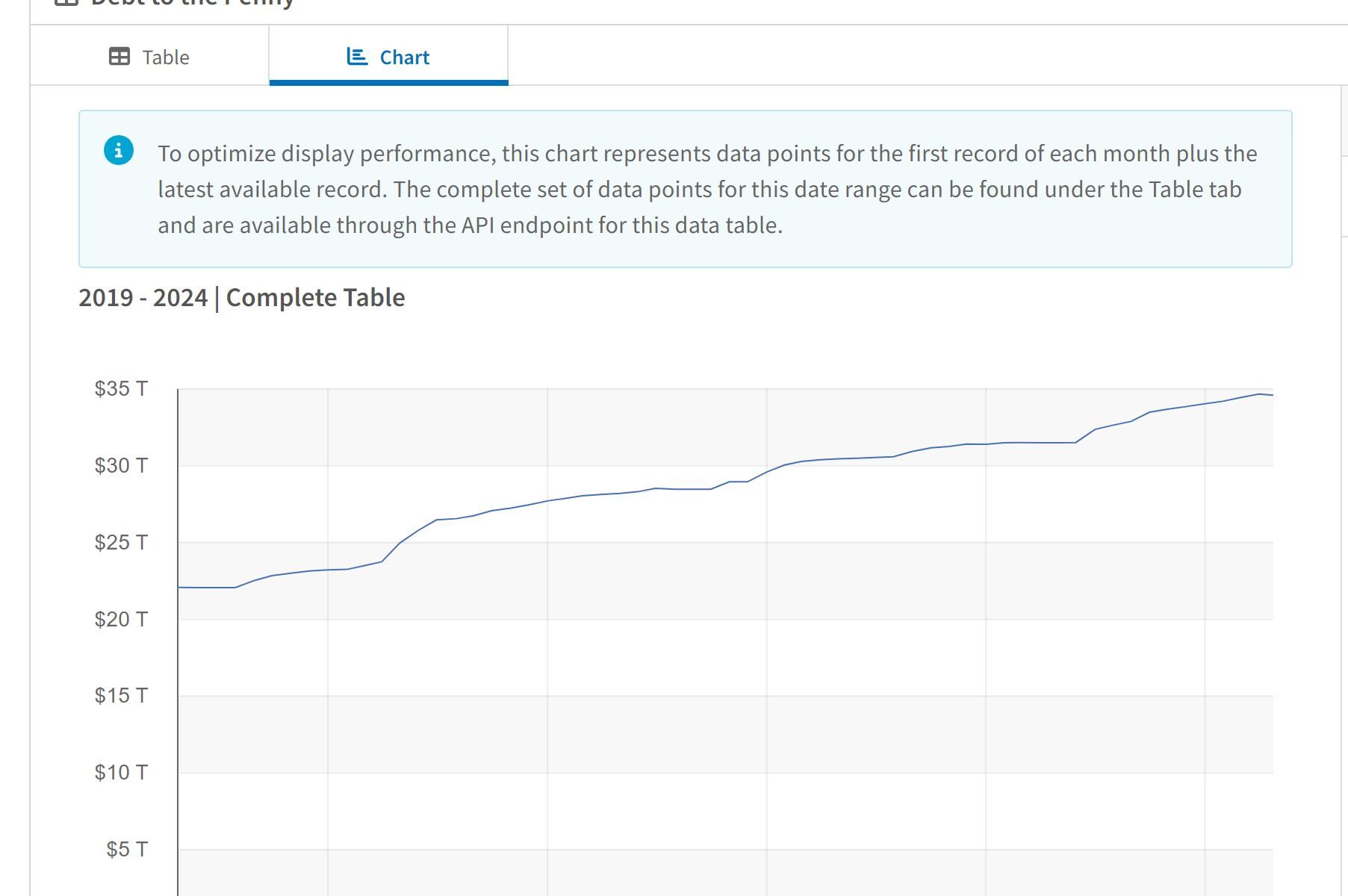
Federal_debt_2024
Federal Debt Reaches $34.5 Trillion in April 2024

Yes, the government did spend money it didn’t have. That is an ordinary thing for the US and most other governments in the world over the past century. Or basically forever. The magnitude of US borrowing has gotten substantially larger in the past decade. We do not have an actual answer yet for “how much is too much debt?” but the activity itself is highly precedented. Am I worried? Yes. But we don’t have certainty on whether we’ve hit limits or what the limits are.

“This caused inflation to increase” is not the right cause-and-effect. More accurately, the combination of low interest rates, extra fiscal (COVID) stimulus, and an energy shock from the Russian invasion of Ukraine probably caused inflation to spike dramatically in the summer of 2022. The rate of inflation has since dropped to a normal range, even if prices (outside of energy) have not declined. Prices rarely outright decline. 

The Fed did boost rates beginning in 2022 to cool inflation, as a 2 percent inflation rate is one of its key goals and mandates. Inflation is around 3.5 percent as of this writing, and the Fed as a result has indicated recently that it may not lower rates until further progress is made on inflation.

Fed_Fund_Rate_2021_to_2024
Fed Fund Effective Rate 2001 to February 2024

Higher benchmark interest rates are set by the Federal Reserve, technically both the country’s central bank and also technically a non-governmental entity. The interest paid and the interest earned by the Federal Reserve requires an extra step of explanation for accuracy. 

As the central bank for the US, the Federal Reserve actually pays interest to banks for their excess reserves. The Federal Reserve also uses funds to go out in the marketplace to buy US government bonds, and earns interest on the rate that the US government pays on its bonds.

“Who is making extra money off of higher interest rates?” is part of your question, and viewed a certain way, the Federal Reserve actually books extra interest income based on the difference between what it pays banks for deposits and what it earns on securities with its balance sheet. 

Private banks, which raise interest rates on consumers and businesses when the Federal Reserve raises interest rates on them, may earn higher interest income in this environment than they did before. But private banks are not the government. 

The federal government, by contrast, earns no big amounts of money from higher interest rates. 

Not at all. Basically, just the opposite. The US government, as a massive borrower, pays more in terms of higher interest rates.

The Federal Reserve may earn money as a net lender if it chooses to own more bonds, especially following times of monetary stress like 2008 and 2020. Private banks may earn more as lenders in a higher interest rate environment. The federal government, however, pays a lot more. 

To your question of whether higher rates are like a tax on people who do not have money to own cars or houses by paying cash for them, I would say “sort of,” but that it’s not very specific to our current higher interest rates environment. What I mean by that is that in every interest rate environment, low or high, individuals who borrow month to month on their credit card are paying in the 12 to 25 percent interest range. That’s the real and substantial tax on people who borrow, but it happens all the time, not just now. And the “tax” goes to banks and credit card lenders, not the government.

Wealthier folks, or people with substantial savings in the bank, are in a position – right now – to earn more on their savings than they have over the previous 2 decades, roughly 2001 to 2022. That’s again neither a tax nor a government bonus, but a private sector cost or benefit of participating in the banking system and earning interest on one’s savings. 

Your statement “the poorer section of our society is being taxed to pay for government spending” is an inaccurate understanding. To vastly simplify things, I would generalize the situation the following way instead:

Folks with no savings (generally poorer, but this can include middle- and upper-income people as well) are generally paying high interest rates to credit card lenders in every interest rate environment. At all time.

Folks with middle and upper incomes who borrow to own a car or home are paying higher interest rates, right now, to private lenders on their car and home loans. But again that extra income is captured largely by private lenders, not the government. 

Wealthier folks and institutions with surplus funds are earning higher interest rates on their savings and interest-bearing investments. If they lend to the US government by buying government bonds, they are earning a lot more now than they did two years ago.

The federal government is a pauper in this scenario, and is paying out higher interest rates. Not exactly like on a credit card, because the rates are roughly 4.5 to 5.5 percent. But that’s much worse than the 1.5 to 2.5 percent it was able to pay a few years ago. The Federal Reserve pays higher rates of interest for private bank deposits, but also earns higher rates on the bonds it buys. Although it has higher earnings in recent years, that has more to do with its larger post-crisis balance sheet than anything else. 

Federal_Reserve_Balance_Sheet_April_2024
Federal Reserve balance sheet 2008 to April 2024

As for “those who pay cash aren’t really affected by higher rates,” I’d say that’s somewhat true. But more than that: those who have cash are benefitted by higher rates, since they can earn more money on their savings. 

A version of this ran in the San Antonio Express News and Houston Chronicle.

Post read (72) times.

How’s Inflation Going These Days?

How’s inflation going these days?

It was the talk of the town 6 months ago and 10 months ago. The most recently published April 2023 Consumer Price Index rise (the most commonly quoted inflation rate) was 4.9 percent annual, down from the peak 9.1 percent annual rate in June 2022. 

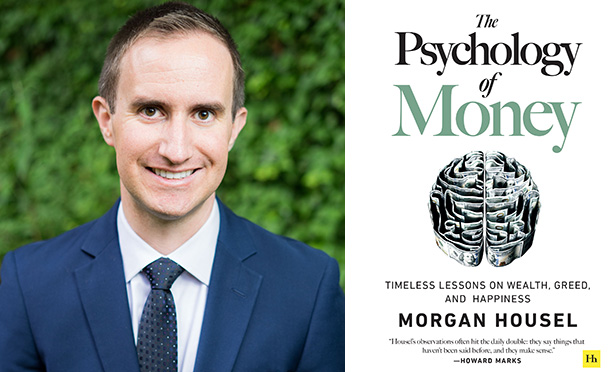
Morgan Housel

Even as the world panicked last year about rising inflation, I will now share with you a teensy confession. I didn’t really see it. Or if I did see it, it felt fine, temporary, non-threatening. I know this is heretical and borderline obnoxious to say.

This week I came across a comment on inflation from the finance writer Morgan Housel, who is one of the very best at what he does.

“What I think is really interesting is that everyone spends their money differently. So no two people have the same inflation rate,” he said in an interview in September 2022. “There is no such thing as the inflation rate. It’s just your own individual household.”

Housel’s insight explains my reaction when compared to the collective freakout I noticed elsewhere. My experience of inflation is different from yours, and yours is different from everyone else’s.

Falling Prices

Now in the latter-half of my intended century on this planet, I could settle gently into the “kids, when I was your age, that used to cost a nickel” phase of my life. But as I look around, that story isn’t particularly true in many areas.

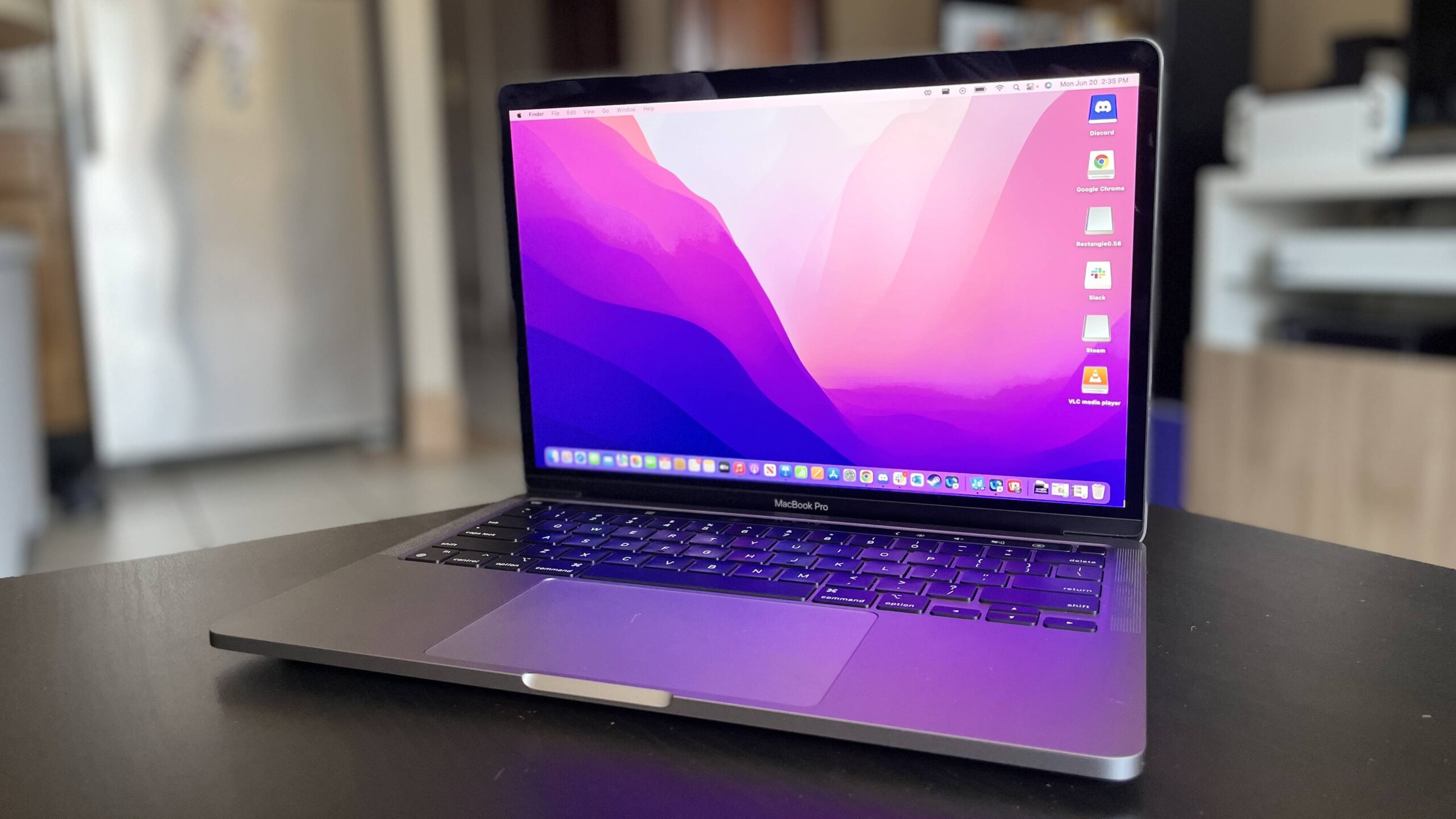
In July 2013 I purchased an Apple Macbook Pro laptop computer for the retail price of $2,499. This past week, the monitor died and I returned to the Apple store in the North Star mall and bought another Mac Pro laptop. In my mind, 10 years for a laptop is a good run. It lived a good long life as far as electronics go and it was time to buy a new one. I paid $1,999 retail for the new one with improved graphics, larger memory and a decade worth of incremental feature improvements compared to the 2013 version.

inflation_airline

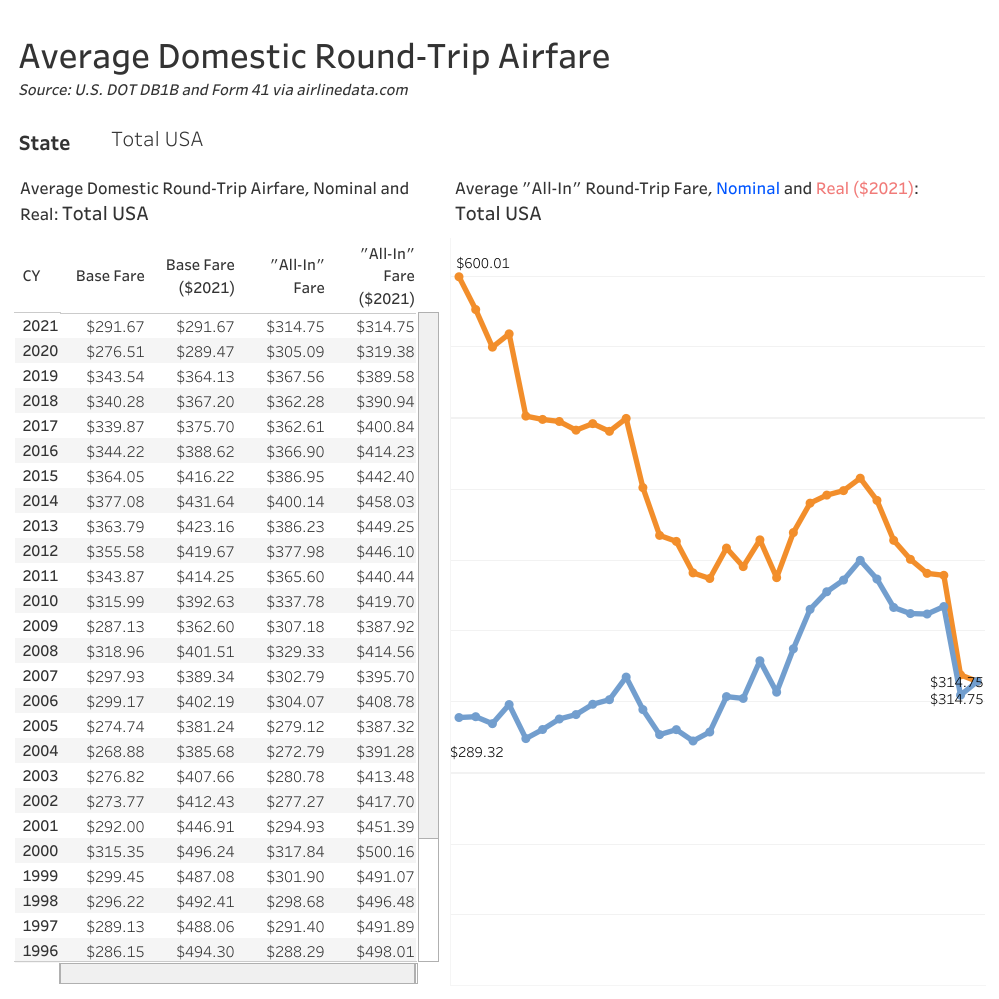
Last week I booked a round-trip flight to New York City in June for the all-in price of $517.80 (including taxes, travel booking, and airline fees). How much was this flight to New York City 33 years ago? I can’t compare the exact flight but The Department of Transportation reports that the average domestic airline fare from Texas in 1990 was $253.41. Meanwhile the average domestic round trip fare in Texas all-in was $314.75 in 2021.

Depending on the reference years, the average domestic flight costs the same, a little more, or a little less, over the past 40 years. This is actually incredible.

This past winter the internet lost its mind over the price of eggs, which had doubled. (Avian flu had wiped out the hens.) Our collective hive mind pointed to the rising cost of a carton of eggs as if that were some sign of inflation end-times. The price for a dozen large brown cage free eggs from HEB is $2.78 as I write this in mid-May 2023. Pretty much unchanged over the past decade.

I mention computers, flights, long-distance phone calls, and eggs because we notice the rise in prices but rarely their fall. So that’s one piece of the puzzle.

Inflation that we welcome

If you are a capitalist, inflation maybe hits differently. In my own capitalist way of thinking, the rise in both stock market values in my retirement portfolio over a decade and in the value of my home over that same decade are forms of inflation. Benign forms, from my perspective, but inflation nonetheless. Future purchasers of my shares or my home are negatively impacted by that inflation. Still, I’m personally glad for it.

Bloomberg News has run stories this year about companies that engage in “excuseflation.” That means firms that use bad news, like supply-chain disruptions or shortages or war – those were the top 2022 excuses – to raise prices. Companies that can raise prices and keep them high when normalcy returns – without losing market share – then have the opportunity for higher profits. 

Investors, in turn, seek to purchase shares in companies that prove they can hike prices and expand margins. This is another way in which inflation hits differently depending on who you are. For owners of capital, price hikes by companies are a sign of strength and an incentive to invest. For homeowners, price hikes are a path to long-term wealth.

MacBook
Deflationary

Inflation I don’t notice

I’m never going on a Caribbean cruise, where prices are up 14 percent since last year. I work from home, so I am not hurt much when gas prices hike the cost of a daily car commute. I don’t rent my home, so I’ve avoided one of the most brutal rises in costs in recent years.

Now, you’ve probably noticed I have conflated three ideas. First, prices are flat or falling in many areas over the past 30 years. (televisions, computers, long distance telephone calls, plain t-shirts and socks). Second, I benefit from some price hikes (my real estate, stocks in companies that have pricing power to use inflation as an excuse to hike prices and increase their margins.) Third, some price changes I don’t stress about because they hardly affect me directly (gasoline and diesel fuel, cost of caribbean cruises, home rental prices.) 

I’m not saying inflation isn’t real. I’m saying our experience of inflation is unique to each of us. There is no objective inflation since we all buy and own different stuff.

My inflation experience is about to get worse

One of the worst areas of inflation over the past 30 years has been the rising cost of higher education. Since I will be paying for this over 8 of the next 9 years for my daughters, you can expect near-constant whining in this space about tuition inflation. It’s going to be brutal. For me to experience and for you to read about.

A version of this ran in the San Antonio Express News and Houston Chronicle.

Please see related posts:

Book Review: The Psychology of Money by Morgan Housel

Post read (98) times.

The I Bond Solution

I learned about a timely investment tool from an article by Burton Malkiel in the Wall Street Journal this past month.

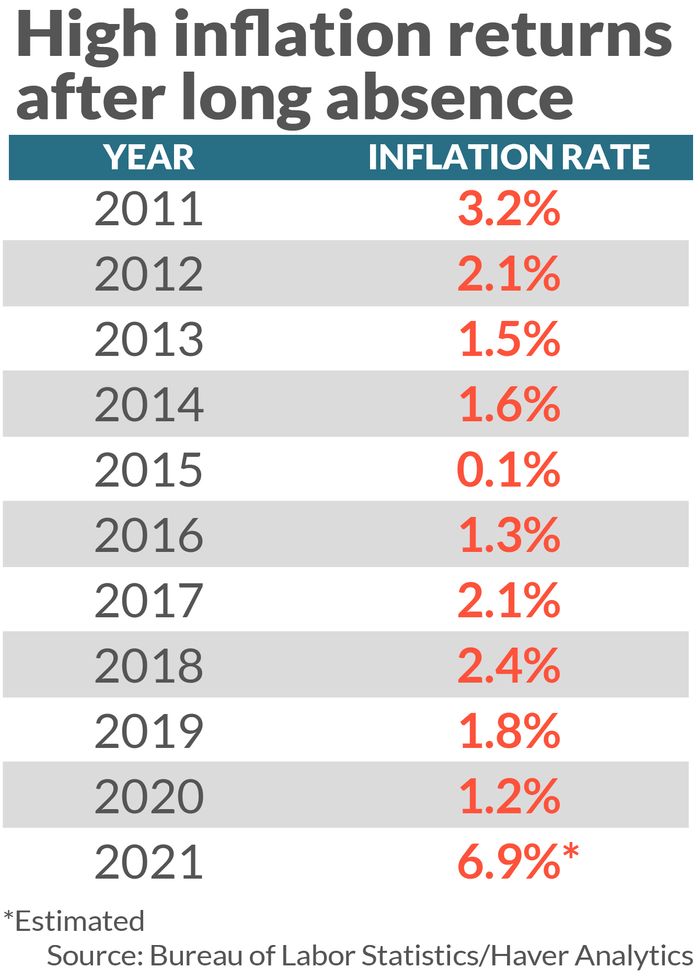
Timely, because observed, economy-wide inflation has finally hit us and prompted the Federal Reserve to acknowledge that “transitory” isn’t the right word for inflation anymore.

inflation_in_2021

I don’t give investment advice here, nor should you ever take investment advice from a stranger who writes a blog or newspaper column. So this is not something you necessarily should do. Rather, I think it’s worth knowing about tools that may solve a particular worry of yours, particularly if it’s been nearly 40 years since we’ve actually experienced broad-based inflation.

Malkiel is best known as the author of one of my personal All Time Top Five Investing Books, A Random Walk Down Wall Street.

So for me – just like in those E.F. Hutton commercials that the over-50 crowd will remember – “when Burton Malkiel speaks, people listen.”

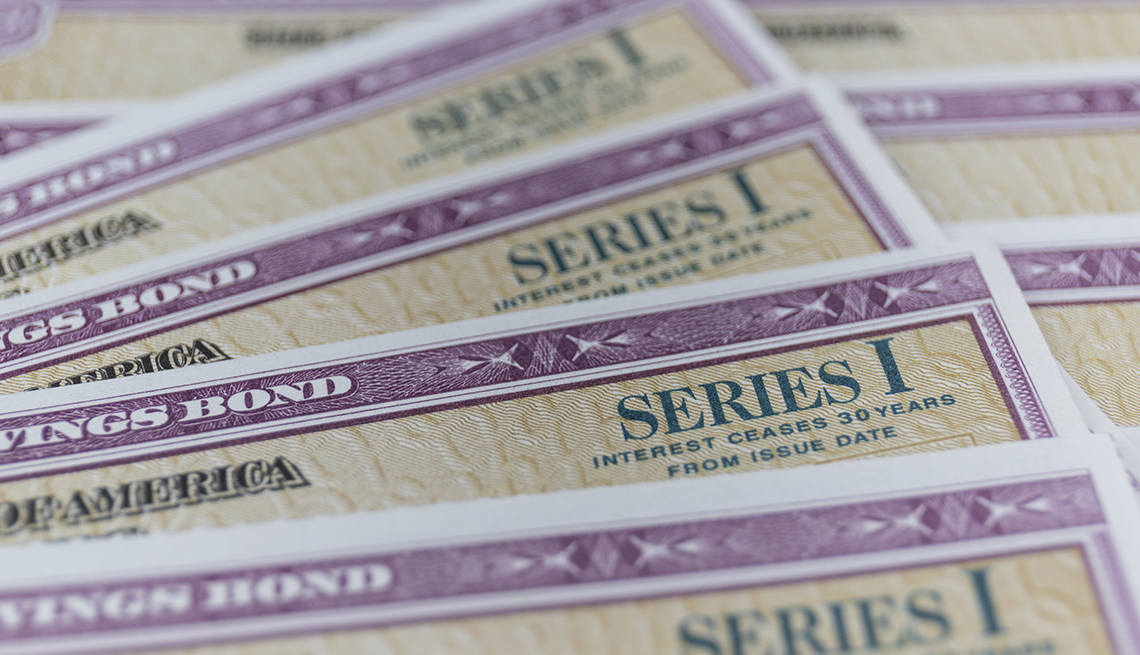
In his article, Malkiel introduced the US Treasury I bond as a tool that we should consider as part of their overall portfolio.

Here’s the part that makes I bonds quite sexy right now. Because the consumer price index jumped so much this Fall, the yield on I bonds is 7.12 percent. I bonds purchased in January 2022 will enjoy this fixed rate until July 1st. That is the highest interest rate that I bonds have offered since May 2000. The semi-annual yield reset will track the consumer price index in the future. After the next reset, the yield could very well go down, if inflation goes down. If it stays high, the I bond will keep a very nice yield, which is why it’s a plausible hedge against inflation. No matter what the inflation rate is in the future, the yield on I bonds can not go negative.

i_bond
U.S. Treasury Series I Savings Bonds.

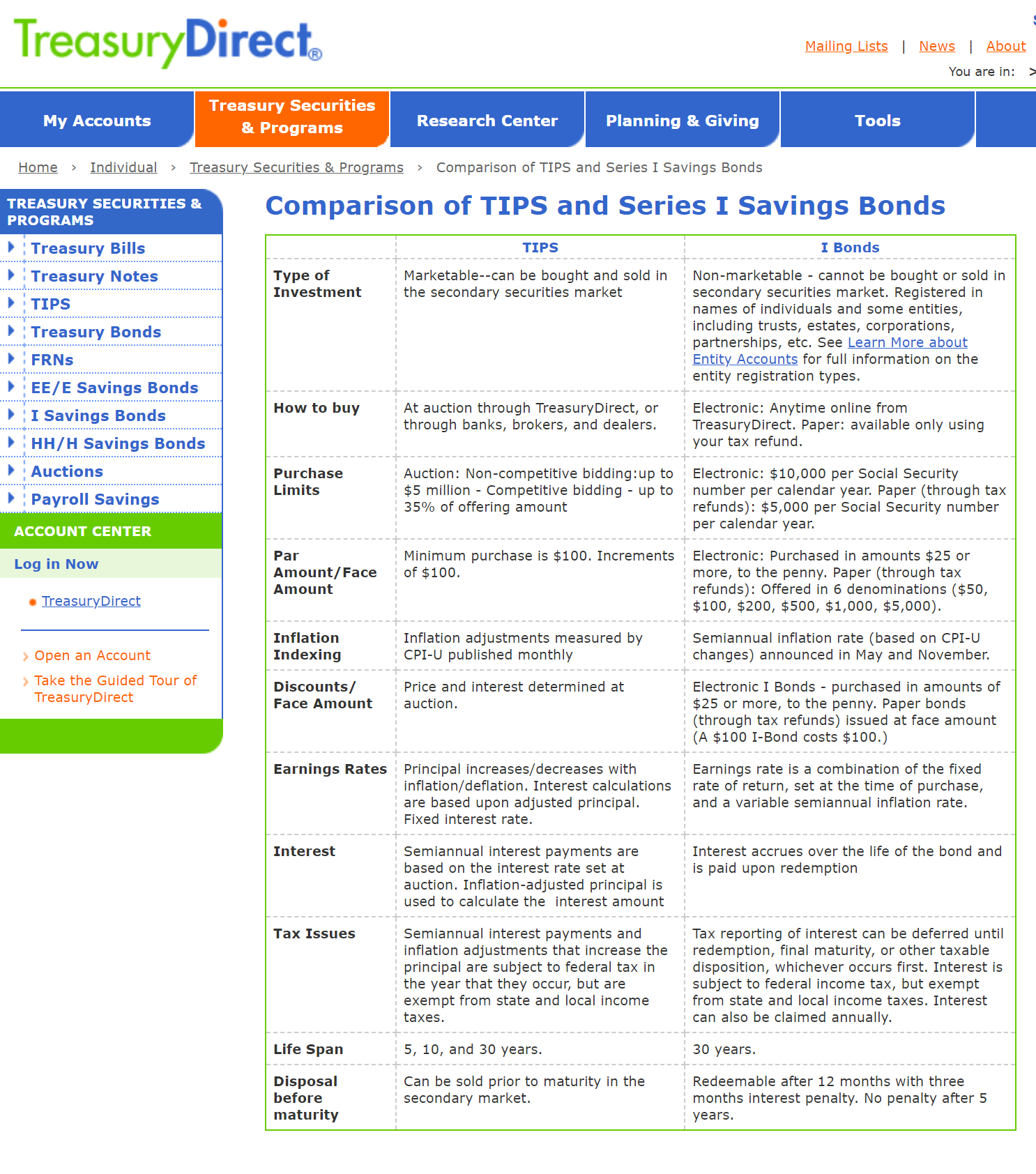
Institutional investors – big funds and insurance companies and banks – typically have looked to TIPS (Treasury Inflation Protected Securities) when they worry about inflation. Since 1997, investors have been able to buy these bonds that pay a fixed interest but that adjust their principal upward in response to inflation, also as measured by the consumer price index. 

The little guy has typically only been able to access TIPS through mutual funds. Because inflation has been so tame since 1997, TIPS have rarely been high yielding, but instead have offered a hedge against the “what if” scenario. And that “what if” has hardly shown up until recently. Returns over the past 10 years on a TIPS fund have been in the 3 percent annual range, before taxes, with the biggest boost to that performance hitting in the past two years.

Unlike TIPS, you would buy I bonds directly online from the US Treasury, without a brokerage company or mutual fund. They’re not saleable by a brokerage, nor by you. You buy them in increments from $25 up to $10,000 maximum per social social number, per year. They register in your name only, or the name of the trust or partnership buying it. 

I bonds are designed for retail investors with a long time horizon, and do not work as well for a short-term trade. That’s because you will pay a 3-month interest penalty if you redeem after 1 year. Although they can’t be traded and are intended to be held for 30 years, you can redeem your I bond after 5 years without penalty.

ibond_details
A detailed comparison of TIPS and IBonds from the Treasury website

Because interest accrues until maturity or redemption, you will pay income tax on the interest only at the end. The following fact is irrelevant for Texans, but the interest earned on I bonds is exempt from local and state income taxes, like traditional municipal bonds.

Speaking of traditional bonds, US Treasury or corporate bonds are the last thing you want to buy in an inflationary environment. In addition, US Treasury bonds offer a measly 0.5 percent to 1.8 percent right now. Even a basket of high-risk corporate bonds (what we’ve impolitely called junk bonds since the 1980s) only get you about a 4.5 percent annual yield. That’s unacceptable unless you enjoy locking in losses against the current observed rate of inflation.

Maybe another concluding thought about this particular investment tool is in order. I, personally, will not be purchasing inflation bonds, neither TIPS nor US Treasury I bonds. I’m not actually that worried about inflation in my life or in the economy. I think my combination of real estate (my home!) and stocks (my retirement accounts!) will serve me fine under medium-level inflation. But I have a different risk appetite from most – my appetite is quite high. And I have a longish time horizon. I’m turning 50 this year so I have another 80 or so years to live (if my math is correct?) 

I’m not deviating from my plan (Buy 100% equity index funds, never sell) but I mention this I bond product so that you’re a more-informed investor. 

Also, you should read Burton Malkiel’s classic A Random Walk Down Wall Street. That is my strongest investment recommendation. I wouldn’t recommend any particular stock or bond to buy, but reading a classic like Malkiel’s book is highly likely to make you richer in the long run.

A version of this post ran in the San Antonio Express News and Houston Chronicle

Please see related posts:

Book Review: A Random Walk Down Wall Street by Burton Malkiel

Never Sell – A Disney and Churchill Mashup

How To Invest

Post read (331) times.

Revisiting Recycling in late 2021

The two biggest macroeconomic worries in the US right now are burgeoning inflation and supply chain issues. A plausible narrative for both is that the rolling global COVID pandemic has disrupted our ability to efficiently move products to markets, while loose money policies have ignited inflation.

These both sound bad. But with markets, sometimes good or bad results depend on who you are. A disrupted supply chain for one business is an opportunity for another business. And high prices? Well, in recycling commodity markets for example, it’s the best market they’ve seen in the last ten years. 

Colored trash bins used to recycle paper, plastic and glass.

What does this mean? Recycled materials – in the big four categories of paper, metal, glass and plastic – all have secondary markets. The business goal of a recycling provider is to sort, package, and sell as cleanly as possible these four types of materials to the end user.

“Cardboard and paper prices are both on the rise. Plastic prices have skyrocketed compared to what they were, let’s say, five years ago,” Josephine Valencia, Deputy Director at the City of San Antonio Solid Waste Department, tells me. Her explanation points to the same macro trends we’re all worried about.

Valencia continues explaining high prices of recycled commodities, “In the past two years, and this is just my guess, it’s COVID-related supply shortages. There’s a shortage of just about everything these days. And I think that has really driven up the price of certain [recycled] commodities.”

So if you’re in the recycling business, these are the best of times.

If your personal subscription to the online newsletter “Resource Recycling” has recently lapsed, allow me to quote a few price changes for you. 

Baled steel cans have risen from $78 per ton last year to $250 per ton. 

Baled aluminum cans jumped from $0.45 a pound last year to $0.77 a pound last year. 

On the paper side, corrugated containers trade for $171 per ton, up from $60 per ton last year. Another paper product, sorted residential paper, sells for $117 per ton compared to $38 per ton a year ago.

As the band Chic used to sing back in 1979, These. Are. The. Good. Times.

If you were hoping to have a disco-era earworm stuck in your head for the rest of the day, dating back to the last time we saw high inflation, you’re welcome.

Good_Times
For Recyclers

When last I checked in with the recycling markets in 2019, a few trends were made clear to me. 

First, glass is infinitely recyclable but generally a money loser for recyclers unless it can be sorted by color and delivered to a nearby glass recycling operation. Second, paper and cardboard was in a multi-year decline because of the lack of demand for newsprint (RIP the newspaper industry!) and the awkward adjustment to a world in which ubiquitous Amazon cardboard didn’t fit traditional cardboard-sorting machines. Third, plastic prices were in freefall because China had begun refusing most deliveries. Fourth, metal was the only reliable money-maker.

But high prices in 2021 have swung recycling programs from losses two years ago back to a money maker. Things are a lot better now in San Antonio, for example, says Valencia. 

I’m going to simplify the math a bit, but here’s the basic deal in my city. We pay approximately $50 a ton to dump recycled bins with the city’s provider, which currently is the large waste processor Republic Services. Republic sorts and processes the stuff, and then sells it in the secondary commodities market, and agrees to share half the resulting revenue with the city. If the revenue from sales generates $120 per ton, the city makes $60, and can count a “profit” of $10 per ton. That’s approximately the economics – admittedly simplified – right now. 

In a bad year like 2019, the revenue share didn’t quite cover the upfront $50 cost to deliver, so the city had a “loss.” A bunch of other factors makes my explanation overly simple – they average out prices, contaminated commodities change the final revenue-sharing formula, losses can be carried forward – but Valencia endorsed my explanation as basically approximately true.

A factor which tempers the celebration of 2021 recycling profit is that – just like any business – the city’s costs are also affected by inflation. In the past year, the cost of purchasing new plastic household bins has increased from roughly $50 a barrel to $75 a barrel. Because they are made of plastic and plastic prices are way up. With a million barrels in circulation right now, that price increase affects the annual budget in a real way. And just as the price of new and used cars has increased, so too has the price of garbage trucks. In that past year, that’s gone up from $365 thousand per truck to $425 thousand per truck, says Valencia. Because of course trucks are made up of steel and plastic, all of which costs more now than last year.

“On the one side I can say, I’m excited as the city recycling revenues have gone up, so we’re making money. But on the other side, at the end of the day, we’re not sitting on a windfall because even though our revenues went up all our expenses went up as well,” continued Valencia.

Like any volatile financial market, hindsight is 20/20 and past performance is no guarantee of future results, included for recycled commodities. We don’t know what happens next.

By the way, the multi-generational fix that recycling experts would ideally have us do remains the same: Wean us off the big blue unsorted barrel of mixed commodity waste. We should all be sorting the multiple waste streams in our households into many different smaller homogenous-material barrels. Civilized countries (and by “civilized” I explicitly exclude here both the United States and the Republic of Texas) have figured out how to do this basic sorting at home. Everyone would recycle more stuff and make more money. 

A version of this post ran in the San Antonio Express News and Houston Chronicle.

Please see related posts

Recycling Markets were broken in 2019 – Part I

Post read (147) times.

Ask an Ex-Banker: How To Fight Upcoming Inflation?

homebuyer

A reader wrote me recently:

“Given the staggering debt of the United States and Congress’ seemingly laissez-faire attitude and impotence towards addressing it, I am starting to be concerned about the value of U.S. currency. Historically, wars and corrupt governments have led to hyperinflation in other countries where the costs of goods and services skyrocket. The likelihood of this happening in the U.S. may seem remote but it is not impossible. Are there ways for individuals to protect themselves from this?” — Dom D. From San Antonio

I really like this question. Dom recognizes our unprecedented current debt situation and the unfortunate parallels with other countries where hyperinflation followed. I have no idea what’s going to happen.

If it’s comforting, hyperinflation would require a failure by the Federal Reserve to do its job. The Fed withstood the last few years better than most institutions. But, yeah, increased inflation seems increasingly likely for the reasons Dom named. So what to do?

federal_reserve_seal
The Fed has to fail for hyperinflation to happen

Something to remember about inflation is that if the underlying economy is unchanged but the amount of available currency doubles, it is reasonable to assume that the price of things approximately doubles. This is bad when we have to pay for things. It is not necessarily bad if the price doubles of things that we already own. Things that you could own, which should double in price if the supply of money doubles, include real estate and stocks. As a result, these make for very good inflation hedges.

So the first great way to hedge against inflation is to own a business, or preferably many businesses. Some insist on the hard way to do this.1 I would like to focus everyone’s attention on the lazy way – my preferred way – which is to own hundreds or even thousands of businesses through a single low-cost diversified stock mutual fund. In an inflationary environment, successful businesses raise prices in response to their higher costs. Successful businesses adjust dynamically to earn profits despite inflation. 

Similarly it is reasonable to expect – all else being equal – that a stock worth $100 today will be worth $200 tomorrow, if the amount of currency doubles overnight. One explanation for the record rise of the stock market in the last few months – the one I find most plausible – is that the Fed has dramatically increased the supply of currency in the economy. The record stock market rise is probably a specific form of inflation hitting one very visible corner of the overall economy.

The second great hedge against inflation is to own real estate in advance of inflation. For starters, try to own your home. And then live in it for a long time. The price of your home should appreciate roughly at the rate of inflation. That’s the definition of a good hedge. Let’s say, for example, you own a home today worth $250,000. And then we suffer a patch of 10% annual inflation for ten years. Your house at the end of 10 years will be worth a little over 648 thousand dollars. Compound interest math uses the same formula as inflation math.

homebuyer
Homeownership is good

Now, here’s an even more interesting twist on inflation hedging via home ownership. The triple lindy inflation hedge, if you will. Are you ready for it? 

Do you have a long-term fixed-rate (let’s say, 30-year) mortgage on your house?

Ta da! You did it. You are amazing. Have you ever thought about being a hedge fund manager? 

Here’s why this is an amazing inflation-hedging tool. Using the previous example, as your home value leaps upward over 10 years of 10% annual inflation from $250K to $648K, your 30-year fixed rate mortgage decreases dramatically, both in nominal and real terms. Using a standard 30 year amortization schedule, your mortgage would pay down from $200K to $162K during the first ten years. At the end of ten years, a $162K amount of debt on a house worth $648K is actually pretty easy to handle. You moved from owning $50K in home equity to $486K in home equity, nearly a ten-times increase. 

Also, just as money isn’t worth as much following inflation, debts are also not worth as much in an inflationary future, so $162K in debt is not as big a deal in that future as it would be today. In other words, being a borrower during an inflationary period is actually a powerful inflation hedge. (Provided, of course, your debt has a fixed rather than variable interest rate.)

By owning your home with a mortgage, you’re a fancy inflation hedger, and you didn’t even know it.

Next, what should you specifically not do if you anticipate future bouts of inflation?

Do not buy fixed income products for any investment purposes. Traditional fixed income investment products include bonds, bond funds, annuities, and CDs. Inflation absolutely wrecks the value of these fixed income investments. Even money market funds, savings accounts, and cash could be considered fixed income, just with an extremely short (same day) maturity date. If your net worth or income is in any of these fixed income products, inflation will unfortunately destroy your wealth.

gold_as_an_inflation_hedge
Not an inflation hedge I endorse!

Next, do not buy gold as an inflation hedge. Gold is a pretty but useless metal sold by preying on the fears of unsophisticated financial minds. I understand you don’t believe me, because of all those plausible sales pitches on your video screens, but it’s true.

Also, do not buy bitcoin as an inflation hedge. Bitcoin is a fake currency, neither useful for buying beer nor paying taxes. It has no legal use case and produces no wealth, except for people hyping you to buy it, based on the greater fool theory of speculation.

In sum, own your own home, own some businesses either directly or through the stock market, and if you must borrow, then borrow at a fixed interest rate. Avoid the standard inflation-hedge scams.

Bitcoin
Avoid Bitcoin

What I really like about the previous two sentences is that in anticipation of heavy inflation – and I can not emphasize this strongly enough – you should pursue the exact same investment actions I would advise to anyone who is not anticipating a future bout of heavy inflation. 

Did you catch that? It’s important. Do exactly the same prudent things you should always do.

Finally, is Dom’s scenario likely to come to pass? I don’t know. Neither does anyone. Pundits who predict the economic future with certainty are fools or confidence men to be deeply distrusted. 

I have personally (but silently) expected significant inflation since aggressive interest rate drops in September 2001. I’ve been wrong every time. 

Although, maybe not. Come to think of it, my home value and my stock index funds have suffered quite a bit of inflation over the past twenty years. Haven’t yours?

A version of this ran in the San Antonio Express News.

Please see related posts:

Homeownership is great, including as an inflation hedge

Bitcoin and Bullocks

Never Buy Gold

ETFs and Mutual Funds

Trump_federal_reserve
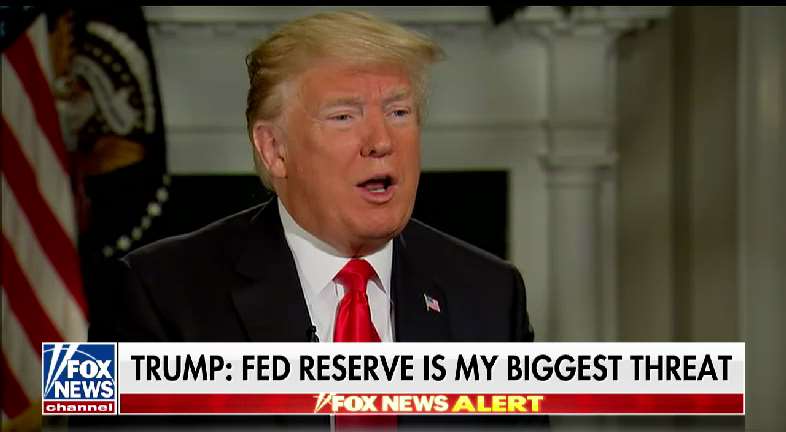
This guy…would have happily caused hyper inflation if he thought it served his short-term political or narcissistic interests

Post read (233) times.

  1. Being an entrepreneur is the hard way. I’ve tried it. It’s…hard.