Trump Part IV – The Causes and Uses of An Economic Crisis

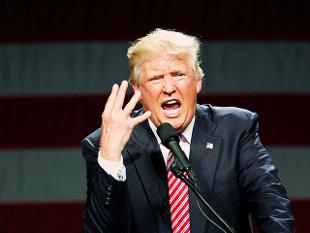
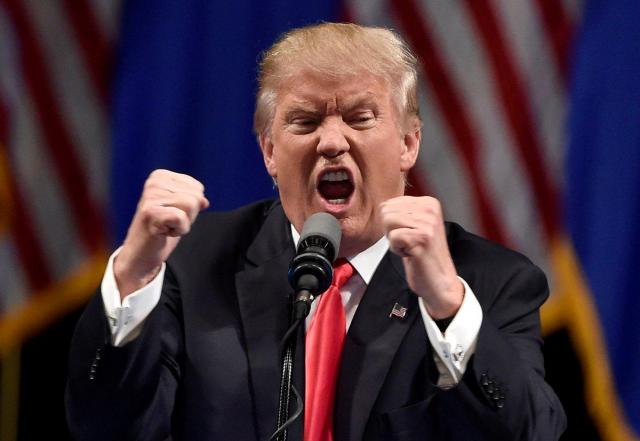
trump_angry_with_hatThis is a long post about how Trump has specifically threatened to cause an economic or financial crises through either a trade war or through undermining the US monetary system and credit.

[Previous Trump posts in this series introduce my fever dreams of a Trump Presidency, my review of recently-elected authoritarians, and the Machiavellian use his administration could make of a security crises.]

Economic Crisis

Similar to a security crisis, I can’t sleep because I worry Trump may inadvertently cause an economic crisis, which he may then uses as a pretext for further authoritarian moves.

Look, this can’t be a prediction about “what’s going to happen” with the economy under Trump. Most of the time when we talk about markets responding to a presidency, we are finding false signals in noise or we’re predicting things that are really unknowable.

I do worry, however, about two specific economic problems that Trump has promised to cause: Trade wars, and interference with US financial strength through the bond markets and Federal Reserve. The long-term problem with an economic crisis – besides the obvious pain and suffering – is a societal desperation that allows an authoritarian to make bold moves otherwise unavailable to him.

Let’s start with trade.

In the arena of international trade, Trump’s “plans” – such as they are – could and would cause a worldwide trade-war and global recession. He launched his presidential campaign pledging massive 35% tariffs on our major trading partner Mexico. He reiterated his plans many times on the campaign trail to retaliate both against Mexico, and against companies like Ford Motor that may move manufacturing jobs to Mexico. By the way, 16% of our national exports go to Mexico.
trump_china
This doesn’t leave a lot of room for nuance

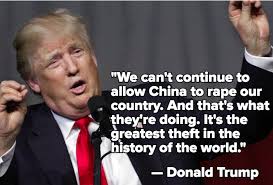
In addition, he has threatened 45% tariffs on Chinese exports both in Republican debates and in interviews with the New York Times. Some of our biggest global brands like Starbucks, Boeing, and Apple see the 1.3 billion Chinese people as their largest single market. By the way, 7% of our exports currently go to China.

Trump pledged to withdraw not only from the recently-negotiated Trans-Pacific Partnership but also to renegotiate or withdraw from 1994’s North American Free Trade Agreement with major trading partners Canada and Mexico. By the way, 19% percent of all U.S. exports go to Canada.

Trump’s promises mark a very big shift in US policy and leadership.

The problem with unilateral trade sanctions like this is:

  1. They don’t stay unilateral. Countries affected will obviously retaliate against us with their own trade sanctions, and;
  2. The United States would probably be in violation of international trade systems like the WTO.

Most experts agree that the Smoot-Hawley Tariffs of 1930 exacerbated the Great Depression worldwide, as both imports and exports from and to the United States dropped to about half previous levels.

The globalization of trade since the end of World War II – and in particular since the end of the Cold War – has greatly favored the United States, even if the effects of trade hurt particular industries or geographies. A reversal of that trade situation – championed by Trump as he champions those most hurt by globalization – will make us all poorer.
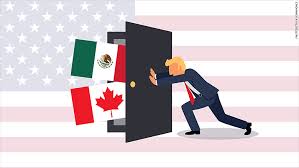
trump_naftaAt the same time, high tariffs are unlikely to bring back manufacturing jobs. The bad news[1] is that we pay people too much in this country and we enforce too many worker protections to make many manufacturing jobs viable here.

Trump has promised a trade war, but without a chance that it could possibly “work” in the sense of bringing back many jobs for those most affected by globalization.

Now, maybe Trump is just kidding about his trade war plans. Maybe its just a goof, indicating his direction of thought, but he won’t enact anything as crazy as what he’s promised?

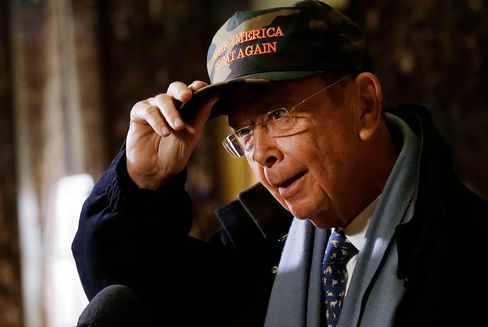
Commerce Secretary Wilbur Ross

His selection of billionaire investor Wilbur Ross for Commerce Secretary, however, indicates Trump’s seriousness about protective tariffs. Ross made his career as an extraordinarily successful vulture investor in beaten-down industries such as steel and coal, domestic industries buffeted in part by regulations and high worker-costs, but also by international trade.

In 2002 and 2003, Ross bought up bankrupt steel-producers LTV Corporation, Acme Metals and Bethlehem Steel.

A well-timed 30% tariff on imported steel in 2002 enacted during the George W. Bush Administration helped raise the value of Ross’ steel holdings, which he eventually sold to Indian-owned Mittal Corp in 2005.
wilbur_ross
Incoming Commerce Secretary Wilbur Ross likes steel tariffs

Ross has indicated his support for both Trump and the idea of protective tariffs, and he clearly has the business experience to know that trade protection can enrich the owners of certain industries.

While higher steel prices help steel workers and owners, however, they hurt other industrial companies – like the auto or construction industries – that need to buy steel at the lowest price possible.

Trade wars can benefit some select sectors and people even while most of us end up poorer through higher costs. International trade has been a major generator of wealth since the end of World War II, with the United States as its biggest cheerleader. I’m afraid Trump intends to kill the golden goose, with severe economic consequences.

Undermining financial strength

The second economic crisis threatened by Trump is his promise to weaken the Federal Reserve. It will take some wise financial counseling to explain to Trump why his threats do not really help the United States. He has not shown evidence, however, that he can take that kind of advice, or learn from it.

I worry that over the next two years Trump will have the ability to reshape the Federal Reserve in ways that undermine one of the central bank’s key strengths – its independence from politics.
Janet_Yellen
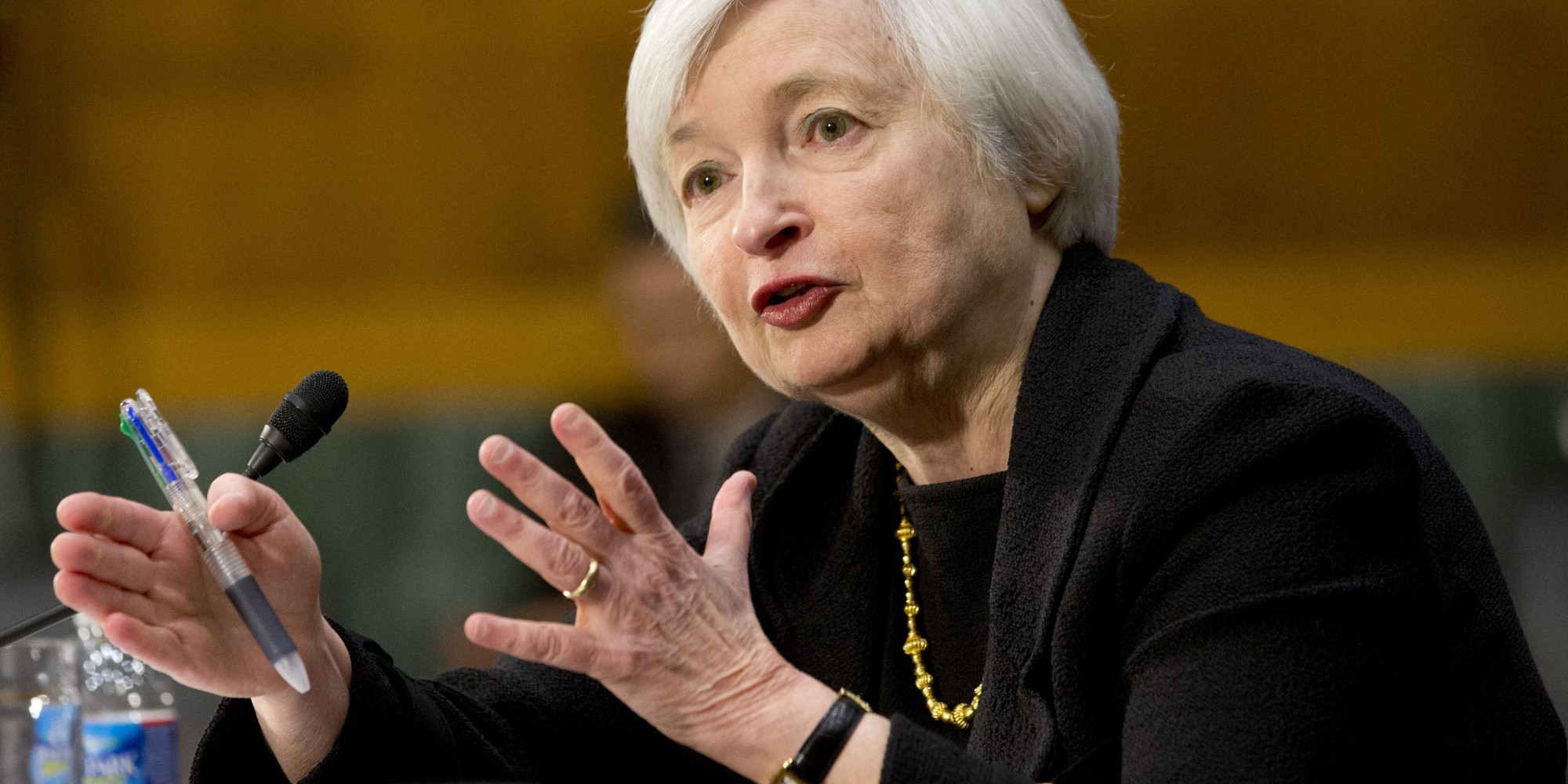
Janet Yellen, Chair of Federal Reserve

The Fed is the quasi-public, semi-mysterious, massively-powerful, independent central bank for the United States. It’s an “independent” regulator, meaning it technically doesn’t report to Congress or the U.S. president. Given its mystery and importance, critics on the Left and Right often seek to curb the power of the Fed. Anything that powerful must be part of some kind of conspiracy, right?

President-Elect Trump — who served as human fly-paper for the bad economic ideas of fringy cranks throughout his campaign — caught this wave too. He accused the Fed of being in the tank for the Obama administration. Like the Republican Party, the Democratic Party, the FBI, the Electoral College, and the media to name a few — the Fed — Trump complained, was part of an unfair conspiracy against him.

But then Trump went further down an even darker path in attacking the Fed. In “Donald Trump’s Argument For America,” released in the days before the election, he linked images of Fed Chair Janet Yellen to the well-known faces of financiers George Soros and Goldman Sachs CEO Lloyd Blankfein, as part of a “global elite” conspiring against ordinary Americans. All three are Jewish, of course, and the ad recalled anti-Semitic conspiracy theories that follow the vile and fictional “Protocols of the Elders of Zion.” Whether Trump claims that Yellen is in the tank for his opponents, or whether he winks knowingly at anti-Semites about a global Jewish conspiracy, he has set the stage to justify curbing the Fed’s independence.

This video:

This should trouble us tremendously. The U.S. is a country that — despite the confounding popularity of the Kardashians — retains an outsized role in the global economy. One of America’s greatest strengths as a financial power is the belief that its central bank is not unduly subject to political control from any particular party or faction.

Usually when we talk about policies from the Fed, we don’t focus on Democrats and Republicans or Liberals and Conservatives, but rather “Hawks” and “Doves.”

In simplest terms, a “hawk” tends to worry about inflation more than unemployment, and pushes the board to raise interest rates quickly enough to avoid unexpected inflation. A “dove,” conversely, worries more about unemployment than inflation, and would tend to want to keep interest rates low as long as possible, to juice economic activity even if it spurs a little bit of inflation. I’m simplifying here, but these are the broad strokes.

A key point, though, is that a Fed governor — whether hawk or dove — is supposed act independently from politics. Almost as important is the idea that a Fed governor seems to act independently from politics. We count on the appearance of independence as much as the reality.

The first guarantee of independence is that the seven board members, known as governors, serve 14-year terms, thus guaranteed to outlast any U.S. President. A bit like justices appointed to the Supreme Court for life, Fed governors therefore should not owe their ongoing positions to any particular political faction. The next guarantee of central bank independence is that the Fed Chair is nominated by the President from among the governors and gets appointed to a four-year term that does not coincide with a President’s four-year term. Janet Yellen, the current Fed Chair, plans to stay in office at least through her term in 2018.
inflation_rate_us_twentieth_century
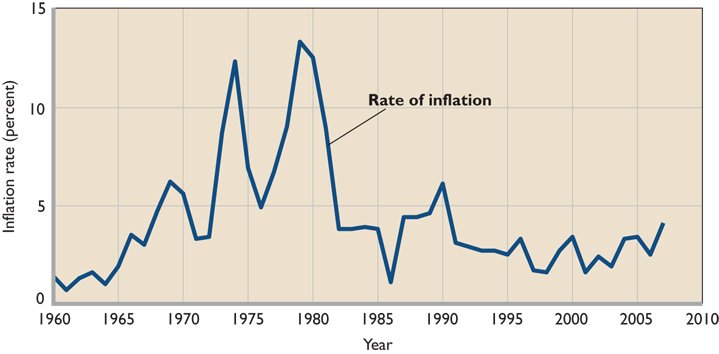
Inflation spikes correspond with political interference with the Fed

The specter of political interference in Fed policy has darkened our political scene before. Economist and former Minneapolis Fed President Narayana Kocherlakota recently wrote about historical problems when the executive branch interferes with the US Fed. During and following World War II, the Fed kept long-term rates artificially low to allow the government to borrow cheaply. Inflation soared to nearly 10 percent by the time the Korean War began in 1950. Later, Narayana reports, Presidents Johnson and Nixon pressured the Fed to stimulate the economy, leading in part to astronomical inflation of the ’60s and ’70s that peaked at 14 percent in 1980.

With President Trump able to appoint a new Fed chair and vice-chair in 2018, plus the chance to fill two more currently open spots on the Board of Governors, a real point of pressure exists. By 2018, he will have appointed four of seven Fed governors. Would Trump show restraint, or would he pressure the Fed to support his agenda?

Authoritarians, as a rule, cannot stand independent central banks. They don’t like the idea that some entity independent of them can wield vast power over both the real economy and banking institutions.

The U.S. enjoys a massive financial subsidy because, up until now, the wealthy of the world trust that our currency will not be suddenly inflated away to worthlessness. An independent Fed assures the world that authoritarians cannot bend monetary policy to their will. But authoritarian regimes, the kind that curb central bank independence, never get trusted with this kind of financial status, as a place where global holders of capital want to park their surpluses.

There are many areas where Trump’s actions might undermine our strengths as a country. Attacking the independence of the Fed is one of the most important ones to watch out for.

Threatening bond markets

Last but certainly not least, it takes a long time (dating back to Alexander Hamilton!) to build up the kind of credit the United States gets for political independence in monetary policy, as well as the kind of trust that attracts global capital to fund our government. It probably only takes one aggressive authoritarian to make that capital flee. And if it flees quickly, that alone can cause a financial crisis.

During the campaign last Summer, Trump argued that if the US borrowed too much, he would simply re-negotiate our debts.

“I’ve borrowed knowing that you can pay back with discounts. [As President,] I would borrow knowing that if the economy crashed, you could make a deal.”

Um. Wut.

Holy fucking shit. Gah. That’s not how it works with the US bond market. You don’t default (that’s what “making a deal” means) on the US bond market. Or at least, you don’t get to do it more than once. Because suddenly you’re Argentina, or Ecuador, or Ukraine when it comes to your ability to borrow.
wtfHe’s talking about treating our country like one of his Atlantic City casinos, walking away and stiffing our lenders. If bond investors took him seriously and literally (like I do) we’d have an immediate financial panic. Personally I think Trump’s attitude towards US sovereign debt is the scariest thing he’s ever said, in terms of a threat to the continuation of the United States of America as we know it.

And that’s saying a lot, considering what’s come out of his mouth or Twitter account.

Who will be to blame?

If an economic or financial crisis occurs under a Trump administration, I don’t see the events as something that would cause Trump to reflect on his actions or take responsibility for his errors. I think he will see the crisis he caused as an opportunity to blame his enemies.

Surely it will be fault of the Mexicans, or the Muslims, or the Chinese, or the Jews, or the journalists that his trade war or threats to default on our sovereign debt have hurt markets and the US economy.

An economic crisis – like a security crisis – can make people desperate for action, any action (however rash) to make it better. People who are angry or fearful about losing their jobs or financial status or fortunes are more likely to turn a blind eye to constitutional encroachments.

Those constitutional encroachments are in the end what I’m most worried about, and are what I will write about next.

Parts of this post appeared as two different columns in the San Antonio Express-News and Houston Chronicle.
Trump Part I – Fever Dreams

Trump Part II – Review of Recent Elected Authoritarians

Trump Part III – The Use of Security Crises

Trump Part V – The Constitutional Crisis

Trump Part VI – Principled Republican Leadership

And related posts:

Candidates Clinton and Trump: Economic Policies

Candidate Trump on US Sovereign Debt


[1] It’s actually good news, but you know what I mean.

Post read (451) times.

Trump Part III – The Use of Security Crises

angry_trumpI can’t predict the future, but we know every US President is tested by security crises – whether domestic or foreign. President Trump’s four years will be no different.

[While I’m not predicting the future, in previous posts on Trump I am having nightmares of a potential future, and reviewing the past rise of authoritarians.]

We don’t know if the biggest threat will come from domestic disturbances or jihadists at home. We don’t know whether the crisis will be abroad, like a foreign military threat. We do know there will be heightened moments during and after a security crisis when we as civilians are especially frightened for our safety.

Those are the times when society turns eagerly to the institutions with a monopoly on the legitimate use of force – institutions like the police, the FBI, spy agencies, the National Guard, and the Army.

It’s precisely at that time that we are most vulnerable to leaders’ worst instincts. It’s then that we willingly vote in – with few Congressional dissenters – the Patriot Act, to give up our protections from domestic surveillance. When we are under direct attack we (many of us) seem willing to condone the creation of Japanese internment camps.

It’s then that we applaud extrajudicial interrogation techniques – like waterboarding – that authoritarians seek.

japanese_internmentThe Turkish premier Erdogan is right now using the crisis opportunity of the failed coup in Turkey to jail or fire independent voices from the universities, the press, the military, the judiciary, and the civil service.

Former Congressman, Obama White House Chief of Staff, and now mayor of Chicago Rahm Emanuel famously counseled, “You never let a serious crisis go to waste. And what I mean by that it’s an opportunity to do things you think you could not do before.” [1]

In the authoritarian’s hands, what use can he make of that inevitable security crisis? What opportunity will he take to do the things he could not do before?

When the next lone-wolf jihadist shoots up a movie theater, will that be the pretext that Trump needs to register all Muslims for a government database as Trump says he wants to do? When the next dead-ender pledges allegiance to ISIS on Facebook just before shooting up a mall, does that mean Homeland Security shuts down all immigration from majority Muslim countries as Trump says he wants to do? When Russian irregulars in civilian clothes in Estonia, Latvia, or Lithuania ask for Russian military intervention to protect their rights, and Putin responds with another opportunistic strike, how does NATO, and our country, respond?

homeland_securityTrump does not have to enact a false flag attack – As Putin’s FSB seems to have done – in order to take advantage of a security crisis to enact his plans. We will have incidents around which he and his national security team can build a case for breaking with constitutional norms.

Trump has told us over and over how he yearns to bully perceived enemies. He has demonstrated a vengeful character throughout his campaign.

We know that vengeful instinct because we’ve even felt it ourselves, when we feel attacked. What will we give up, that we can’t get back again, when we’re most fearful?

In January Trump will control the awesome power of the US national security apparatus. He will wield more power to threaten, detain, injure, and kill people than anyone else on the planet. This is part of why I can’t sleep.


Please see related posts:

Trump Part I – Fever Dreams

Trump Part II – Review of Recent Elected Authoritarians

Trump Part IV – The Use of Economic Crises

Trump Part V – The Constitutional Crisis

Trump Part VI – Principled Republican Leadership


And related posts:

Candidates Clinton and Trump: Economic Policies

Candidate Trump on US Sovereign Debt


[1] Winston Churchill also gets credit for this one. Because Churchill said every clever thing that’s ever been said, like, ever.

Post read (349) times.

Trump Part II – Rise of Authoritarians

Trump_handsThis is part 2 of probably 6 posts on Trump, of which the first one is here. These are not predictions of the future per se, but just a recording of what I worry might happen, and why I can’t sleep at night.

A slow unfolding

It takes a long time, sometimes years, for the authoritarian to tip the system in his favor, to undermine enough counterbalancing institutions that he can no longer be opposed.

A leader willing to do whatever it takes to keep and increase power can – over time – chip away at resistance. After a few years, there might be very little left standing in his way.

Chavez

I remember well the day after the election of Chavez in Venezuela in 1998, as I worked on Goldman’s Latin American bond desk. We hardly knew Chavez’ name and background, but our economist who covered the Andean countries warned us that this would certainly be a catastrophic regime for Venezuela. He was right, although it took some time to play out that way.

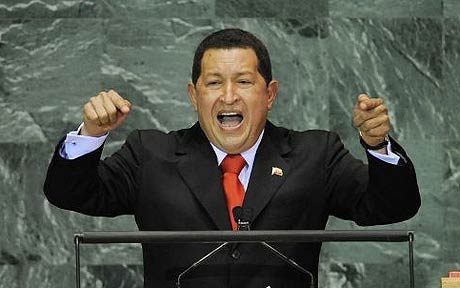
chavez_angryFirst Chavez had to replace governors and mayors with loyalists. He needed to delegitimize the opposition parties and the opposition newspapers. He needed to overturn the system.

Like many authoritarians, Chavez initially sought the legitimacy of constitutionality. He called a constitutional convention in 1999, and had it 95 percent packed with Chevez loyalists. These conventioneers in turn set about abolishing the existing legislature and courts.

A new single house of Congress replaced the old Congress, and handed legislative authority over to Chavez. The Presidential terms was extended to six years, with the chance for reelection, which of course Chavez got.

The Supreme Tribunal of Justice – established at the constitutional convention of 1999 – has recently been rated the most corrupt court in the world by Transparency International.

As fragile as Venezuela’s political system had been at the time of Chavez’ election, it started with important political checks in the form of two parties that had alternated power for decades, a free press, and strong banks. Dismantling them took time, consistent pressure, and some populist violence. Fomenting a constant state of semi-war against Colombia, plus the perceived threat of the United States, helped consolidate Chavez’ power.

Putin

Putin’s rise from semi-obscure Yeltsin-appointee to seeming lifetime Tsar of Russia was not pre-ordained. Many steps along the way helped him eliminate rivals and seize complete power over the Russian state.

putin_angryPutin has only slowly dismantled an independent domestic press through intimidation, “tax investigations,” violence, and the murder of journalists. He coopted business oligarchs with whom he could do a deal, and jailed or exiled those who would not cooperate. Regional Governors are hand-picked by the President in Russia.

All along, Putin has been careful to cloak his actions in constitutional forms. The legislative Duma is dominated by Putin’s party – along with some acquiescent minority parties like Communists – with the veneer of regular elections to signal legitimacy.

Putin rise is a sort of blended electoral victory and seizure of power in the face of corruption and chaos. He became acting president following the resignation of the ailing Boris Yeltsin, and then won election in 2000 by a 53% to 30% margin. Putin, like Chavez before him, has insisted on holding regular elections and even respecting the letter of the law regarding Presidential term limits, even while few believe he ever took his hands off the levers of power during Dmitri Medvedev’s Presidential inter-regnum, 2008 to 2012.

Putin’s accession and consolidation of power was greatly aided in September 1999, however, by a series of apartment building bombs blamed on Chechen rebels but believed by many to be the result of a ‘false flag’ operation by Russian security forces, known as the FSB.

Putin’s rise may be the most relevant example to watch with Trump. Dangerous authoritarians may arrive via the ballot and constitutional legitimacy, only to set to work to undermine that same constitutional structure. I think that’s what I’m most worried about with Trump.

The first few months

Gaius_Marius
Gaius Marius: The Beginning of the End for Rome

History does not afford us counterfactuals with which to test the following claim, but it seems the first few months and the first two years in particular are when brave patriots have to stand up and take risks in the face of encroaching authoritarianism.

If the authoritarian finds little resistance to eroding institutional checks on his power, the regime can move much more quickly. I am worried about where the checks and balances on Trump’s power will come from in his first few months in office.

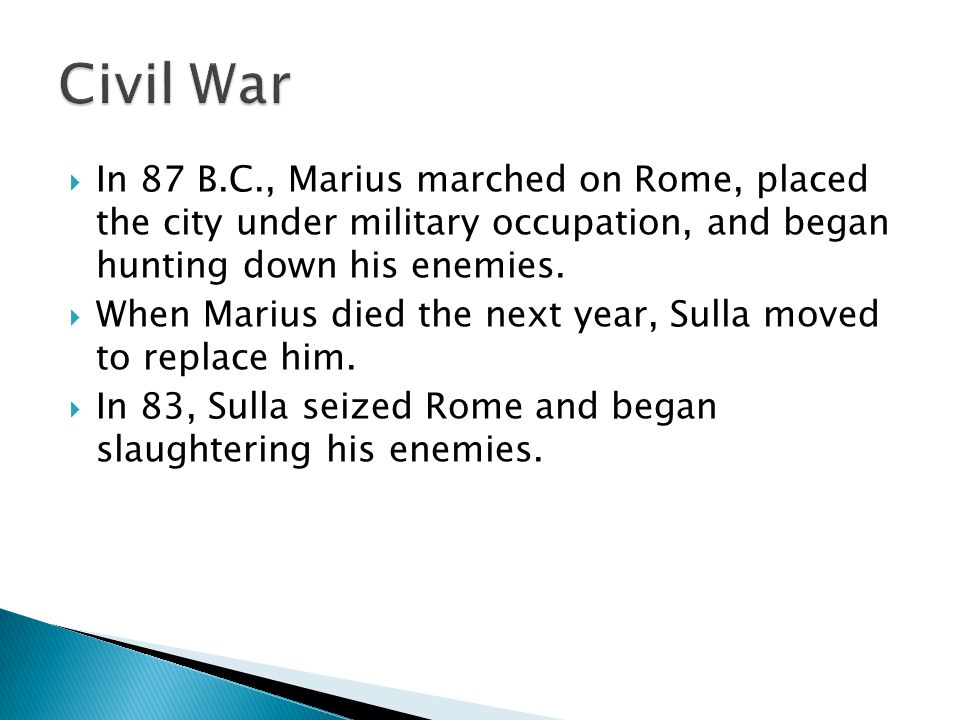
Gaius_MariusI’m desperately reading Plutarch’s Fall of The Roman Republic right now, looking for signs of the end of our republic. Plutarch describes Senators bowing before the Roman strongman Gaius Marius[1], who demanded a humiliating oath. One of Marius earliest mentors Metallus remains an honorable Senator to the end, saying:

“It is certainly sordid to do the wrong thing, and anyone can do the right thing when there is no danger attached; what distinguishes the good man from others is that when danger is involved he still does right.”

Where is the principled institutional opposition to Trump? Are there enough good men and women?

I assume the Democratic opposition – such as it is in 2016 and 2017 – will try its best. I expect newspapers and legitimate news organizations will continue to claim that the rise of Trump is “Not Normal” in terms of the threat to constitutional government in the United States.

Hitler_New_York_Times
NYTimes on Hitler, in 1922: He probably doesn’t literally mean that Anti-Semitism, does he?

What will the courts do? Will a Republican Congress stand up to him? How will governors and mayors respond? Will good people in the FBI, the military, the police, and the NSA do what’s right, rather than what he may ask them to do? All of these people and institutions will be tested.


Please see related posts on Trump:

Trump Part I – Fever Dreams

Trump Part III – The Uses of A Security Crisis

Trump Part IV – The Uses of an Economic Crisis

Trump Part V – The Constitutional Crisis

Trump VI – Principled Republican Leadership

Also, previously:

Trump as Candidate – Sovereign Debt Genius

Clinton and Trump as Candidates – Economic Policies Compared


[1] Marius was born 57 years before Caesar and ruled Rome approximately 50 years before him. His authoritarian descent into murderous rule – followed by similar strongmen like Sulla – is one of the precipitating events leading to the fall of the Roman Republic and the conversion of the Republic to an Empire under the Caesars.

Post read (451) times.

Trump Part I – Fever Dreams

trump_angryI haven’t slept well since the Presidential election.

The Trump presidency – an unlikely nightmare until the night of November 8th – suddenly became reality.

Taking Trump Seriously

A week before the election, Trump’s biggest Silicon Valley supporter (PayPal founder, early Facebook investor, and Gawker Destroyer) Peter Thiel offered us all some insight.[1]

“…[T]he media is always taking Trump literally. It never takes him seriously but it always takes him literally. I think a lot of the voters who vote for Trump take Trump seriously but not literally.”

He was right about the media – and probably many Clinton supporters – that Trump as a candidate often seemed fundamentally un-serious. We are now beyond the realm of what voters thought, and into the new world of Trump as President. We have to take him both seriously, and literally.

And that’s what keeps me up at night. His literal words are a nightmare.

Fever-dream of the future

What follows here are not predictions – as people who predict the future generally don’t know what they’re talking about (or they have something to sell.) I have nothing to sell. So these are not predictions, but rather fever-dreams of a possible future.

I need to write this down because I want – if any of the worst comes true – to be able to record that we knew this was possible, even from the beginning.

If Trump turns out to be the authoritarian that I fear he is, I at least want the (sad, pitiful) solace of being able to say “we saw the signs from the very start. We knew what could happen.” I think it’s safe to say his supporters and voters do not fear an authoritarian Trump regime in the same way I do. I hope for all our sakes, I am wrong and they are right.

It’s also safe to say many of Trump’s opponents do not fear Trump in quite the same way I do. By that I mean as a middle-class straight white male I don’t have precisely the same personal fears of Trump’s Presidency as do others. Although I’d like to think I’m “woke” enough to heed Neimoller’s warning about what will happen when they finally do come for me.[2]

My own fears about Trump tend to focus on an institutional crisis – his clear threats to constitutional democracy.

I find myself looking back at the rise of earlier demagogues and authoritarians, looking for lessons and signposts.

The authoritarian’s rise

The rise of demagogues and authoritarians does not pertain specifically to a story of the Left or Right. We need to study and understand the Hitler narrative, but also Hugo Chavez, and Vladimir Putin. These stories can teach us the patterns, and we need to study and watch these patterns closely.

First, dictatorship often comes through the ballot box. It did for Hitler, who led a minority Nazi party invited into power and legitimacy by arch-conservative plutocrats who decided it was better to have him inside the tent[3], where they could better control and benefit from his worst impulses.[4]

It did for Chavez, who legitimately won the Presidency of Venezuela in 1998 via an election.

A few people since the election have linked to a passage from philosopher Richard Riorty’s 1998 Achieving Our Country with a vision of a strongman coming to power in the United States. I’m afraid it’s too scarily accurate. It captures what’s happened, so far.

From Riorty’s book:

“…Members of labor unions and unorganized unskilled workers, will sooner or later realize that their government is not even trying to prevent wages from sinking, to prevent jobs from being exported…that suburban white collar workers are not going to let themselves be taxed to provide social benefits for anyone else. At that point, something will crack. The nonsuburban electorate will decide that the system has failed and start looking around for a strongman to vote for – someone willing to assure them that, once he is elected, the smug bureaucrats, tricky lawyers, overpaid bond salesmen, and post-modernist professors will no longer be calling the shots.

A scenario like that of Sinclair Lewis’ novel It Can’t Happen Here may then be played out. For once such a strongman takes office, nobody can predict what will happen. In 1932, most of the predictions made about what would happen if Hindenburg named Hitler chancellor were wildly over-optimistic.

One thing that is very likely to happen is that the gains made in the past forty years by black and brown Americans, and by homosexuals, will be wiped out. Jocular contempt for women will come back into fashion. The words “nigger” and “kike” will once again be heard in the workplace. All the sadism which the academic Left has tried to make unacceptable to its students will come flooding back. All the resentment which badly-educated Americans feel about having their manners dictated to them by college graduates will find an outlet. But such a renewal of sadism will not alter the effects of selfishness. For after my imagined strongman takes charge, he will quickly make his peace with the international super-rich, just as Hitler made his with the German industrialists.

… He will be a disaster for the country and the world. People will wonder why there was so little resistance to his evitable rise. Where, they will ask, was the American Left? Why was it only rightists like Buchanan who spoke to the workers about the consequences of globalization? Why could not the Left channel the mounting rage of the newly dispossessed?”


All I can say is: Riorty, in 1998, was accurate!


Please see further Trump posts:


Trump Part II – The Rise of Elected Authoritarians

Trump Part III – The Use of a Security Crises

Trump Part IV –  The Use of an Economic Crisis

Trump Part IV – The Constitutional Crisis

Trump Part VI – Principled Republican Leadership

And related Posts:

Trump as Candidate – Sovereign Debt Genius

Candidates Trump and Clinton – Economic Policy


[1] It appears that Thiel probably lifted and amplified the phrase from a headline and article by Selena Zito in the Atlantic that appeared in September 2016.

[2] The German Protestant pastor Martin Niemoller’s warning of course reminds us that although I will not be picked up first, I and everyone else has a duty to speak out about authoritarian round-ups:

“First they came for the Socialists, and I did not speak out – Because I was not a Socialist.

Then they came for the Trade Unionists, and I did not speak out – Because I was not a Trade Unionist.

Then they came for the Jews, and I did not speak out – Because I was not a Jew.

Then they came for me – and there was no one left to speak for me.”


[3] Pissing outward, etc etc

[4] Trump was not particularly embraced by his country’s plutocrats before the election. Technology and finance titans from Soros to Silicon Valley executives on the (presumed) left opposed his campaign, while many of the plutocrats on the right (including the politically-active Koch brothers) similarly declined to support him prior to the election. Famously, no CEOs of Fortune 100 companies backed Trump publicly, while 11 CEOs backed Clinton. Some of that lack of CEO support may be explained by the fact that Clinton was ahead in the polls, and therefore a safer bet, all the way until election day. But still, Trump certainly wasn’t “handed the throne” by a group of high-profile business elites.

Post read (1277) times.

College Finance – A Response

Middlebury_vtEditor’s Note: The History Teacher sent his eldest daughter off to a private four-year college this Fall, so read my posts on college finance with particular interest, and decided to respond. As you can read, his views on their choices are also influenced by the recent election.

Dear Michael:

These thoughts were prompted by your recent blog post on College Finance Prep.  I have been thinking about it ever since, because I did not take your mother’s advice for my daughter. It was a hard decision, as her advice is usually the kind I (as a former teacher and advisor) would give to parents and students: save your money, go to a Community College, then a public college.

Indeed, that is exactly what I did and it turned out just fine. However, recent studies of the impact of globalization and technology on future employment trends have given me cause for concern about the benefits of an education similar to mine. To be honest, I don’t think I would be particularly employable in this new environment. I had always hoped that my daughters would be prepared, but a video on Artificial Intelligence and an article on college education caused me to change my mind about how best ready my daughters for the future. The video predicts the growing importance of Artificial Intelligence and explains how we are close to having AIs do many of the jobs that professionals do today in journalism, law, and medicine. Those with typical college degrees, like mine, would not be employable or particularly valued in such an AI dominated world.

The second is a newspaper report on a study of critical thinking and university education that found:

“Forty-five percent of students made no significant improvement in their critical thinking, reasoning or writing skills during the first two years of college, according to the study. After four years, 36 percent showed no significant gains in these so-called “higher order” thinking skills.”

I vividly recall an HR executive at a tech company, lamenting to me the lack of critical thinking ability of many of her recent hires – from the local public university – who only knew how to solve problems by going through check lists. If the solution was not on the list, they could not solve the problem.

Without developing critical thinking skills, I fear that my daughter would lead an unreflective and unfulfilling life. In addition, she would not be able to compete with AIs and she would fall through the social and economic cracks of the AI-dominated future. Thus, after much consideration with my wife, we decided to sacrifice a great deal to financially support our daughter through a very expensive, private liberal arts college.

We had three reasons for doing so and one of them already seems to be paying off in her freshman year. The most important is the quality of the teaching she is receiving. She is taking interesting classes (not your usual Introductory courses), working really hard, and stretching her knowledge, her critical thinking skills and exercising her creativity. There is a great deal of interaction with the professors and other students as the classes are small.  I am most pleased that she is developing skills of social and human collaboration. She is learning and maturing considerably. This compares favorably to her former high school classmates who are in freshman classes of 500 or more at a nearby public university.

The second is her ability to make useful connections with her professors (who can recommend her to grad schools) and her upwardly mobile classmates (who might help her in the future with employment). We shall have to wait and see if this has any long term benefit.

Finally, there exists a cachet of being at a top ranked college which might help her with both grad school applications and with employment. Am I wrong here? From your personal experience, has your Harvard education helped you in this regard?[1] I think it is probably the least important reason, but it is still a factor.

I do not mean to argue that all public institutions do not provide critical thinking skills or that only private liberal arts institutions do, but that students need to select their college choices with this in mind. Thus, if they can find a public university with an honors program and/or whose classes emphasize reading and writing critical essays and research papers, they should take up the opportunity and challenge. According to Dr. Aram: “Students who took courses heavy on both reading (more than 40 pages a week) and writing (more than 20 pages in a semester) showed higher rates of learning.” This should be a minimum standard for an expensive private university. The key is for students and parents to be informed consumers.

Editor: And now, some further thoughts from The History Teacher, prompted by the election results:

I am writing this sitting in front of my computer still stunned at the election results and listening to Gregorian Chants (they suit the raining weather and my mood). Indeed, I woke up this morning dreaming about a war with Iran.

I feel like one of the “good Germans” who were Social Democrats or Volks Partie and voted against but then could only just watch in horror. Well, as Marx wrote about Napoleon III, to paraphrase, everything in history happens twice, the first time it is a tragedy, the second it is a farce. I tried to escape by reading PG Wodehouse and delving into the past (those sensible Plantagenets.)

middlebury_collegeI feel too drained to have any emotion at this stage. This feeling is family wide, except for the dog: Mary and my daughters are very depressed. We are all in mourning.  Anna cried and Cecilia[2] said that she and her friends at Middlebury are walking around with vacant expressions on their faces. I have stopped watching the TV and reading the papers for the nonce: just too masochistic.

Forced to my own resources, I am trying to make sense of it all. To me, it boils down to education or the lack thereof (surprise, me being a teacher). Trump supporters with their racism, misogyny, and grievances are the product of a refusal to recognize reality (France constructing the Maginot Line—remember?) and a lack of critical thinking skills. They have learned how to memorize and use check lists to solve problems, but not to analyze. As a consequence, the modern economy with its emphasis on technology, globalization, and the absolute requirement of the ability to work with diverse teams are leaving them behind. Trump might as well try to stop the tide as to stop this process.

It is going to get worse as Artificial Intelligence becomes more and more utilized. The latter will threaten the livelihoods of the college educated, particularly those who did not develop critical thinking skills.

[1] Banker’s Response: I didn’t enjoy Harvard at all but I’ll admit it’s been totally useful as a door-opening brand.

[2] We made up these names to maintain the fun of anonymity!


Please see related posts:

529 Accounts are for Grandparents

College Finance Prep

Want to See Something Really Scary? College Tuition


Post read (220) times.

Legal Realism – Or – What I am Most Worried About Today

Matt_levine_legal_realismMy favorite financial blogger is Matt Levine on Bloomberg. My favorite course in college was called Legal Realism.

The mashup of these two personal favorites this morning – to explain my deepest fears about the election results – are worth reading.

Take it away, Matt:

Hmm.

The summer before I started law school, 15 years ago, I read a little book by Karl Llewellyn called “The Bramble Bush.” It’s basically a “Law School for Dummies” type thing from 1930, full of somewhat outdated advice on how to ace your classes and impress your professors. But Llewellyn was a leading thinker of the school of thought known as “legal realism,” and “The Bramble Bush” is also a major statement of that philosophy. In a famous passage, Llewellyn wrote:

“This doing of something about disputes, this doing of it reasonably, is the business of the law. And the people who have the doing of it in charge, whether they be judges or sheriffs or clerks or jailers or lawyers, are officials of the law. What these officials do about disputes is, to my mind, the law itself.”

He went on:

“And rules, in all of this, are important to you so far as they help you see or predict what judges will do or so far as they help you to get judges to do something. That is their importance. That is all their importance, except as pretty playthings.”

And then I went to law school. And I took the first-year course in Constitutional Law, and I learned about the fundamental principles that rule the United States. And I learned — or at least was given the general impression — that, while the country has not always lived up to those principles, in the long run, the Constitution has served as a wise guide and constraint on the power of our rulers, and the foundation of our system of government.

But in the back of my mind I thought about Llewellyn. I thought about the fact that those principles can’t automatically enact themselves, that they only work if the human actors in the system choose to follow them and to demand that others follow them. They persist because the people constrained by them believe themselves to be constrained by them. The Constitution, separation of powersreligious liberty, freedom of the press, an independent judiciary, the rule of law, equality of all citizens: There is a complacent sense in America that these things are independent self-operative checks on power. But they aren’t. They are checks on power only as far as they command the collective loyalty of those in power; they require a governing class that cares about law and government and American tradition, rather than personal power and revenge. Their magic is fragile, and can disappear if people who don’t believe in it gain power.

Anyway this is a financial newsletter, so I’ll tell you that S&P 500 futures were limit down at minus 5 percent overnight, before paring losses. The Fed probably won’t hike in December now. Foreign markets have had a wild ride. Treasury yields plunged, I guess an indication that default is not too imminent. Bitcoin rallied. The Mexican peso is … best not to look. Maybe everything will be fine!


Things are not ok.


Post read (953) times.