Another Corzine Rant

One last rant, and then I’ll rest a while on MF Global and Jon Corzine.[1]

Yesterday’s news[2] pointed out the regulators’ problem that only Corzine, and not his Treasury department subordinates like Edith O’Brien and Henri Steenkamp, had registered as professionals subject to the Commodity Futures Trading Commission (CFTC), the primary regulator of a trading shop like MF Global.  The CFTC could more easily sanction registered members of MF Global for negligence, without having to prove criminal intent,[3] but only Corzine (of those 3) is registered and therefore subject to sanctions.

This matters, and it doesn’t matter.

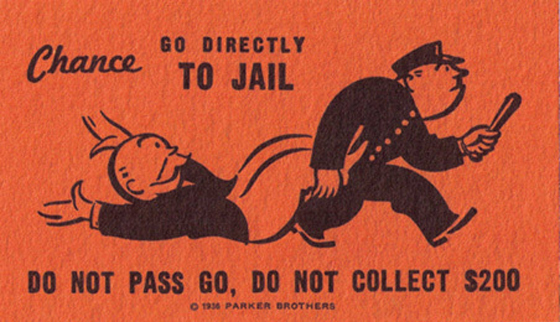
This matters because it potentially focuses the CFTC’s main firepower on the top, where it should aim.  If anyone is to be responsible for a $1.6 Billion customer money ‘misplacement,’ that person should be the one in line for the $12.1 million severance package.[4]

It doesn’t matter because Corzine should always be the main focus of any regulatory probe in the first place.  Not only is he the relevant figure in the enterprise, but as I explained earlier, his subordinates could not credibly have acted on their own to commingle customer funds to satisfy margin requirements.  I just don’t believe it.


Please also see Arrest Jon Corzine Now

and Update on Jon Corzine by the MF Global Trustee


[1] At least until he’s arrested, or proven innocent.

[2] Sorry, it may be behind a pay wall, but I’ll summarize for you.

[3] This is somewhat analogous to OJ Simpson losing his civil case to the family of his murdered wife, while remaining ‘innocent’ in criminal court.  The standards of proof are WAY easier.

[4] Which Corzine declined following the bankruptcy filing of MF Global, to his credit.  But still.

Post read (1658) times.

Book Review: Too Big To Fail

You may, like me, be curious about what happened during the Great Credit Crunch.  You may, like me, have the feeling we reached a financial precipice, peeking over the edge into the abyss.  But before falling in we blacked out and woke up in the hospital, a thick IV needle in the arm, tired and confused but otherwise basically OK, thinking, “But, but, but, wha, what happened back there?”

Andrew Ross Sorkin wants to answer this question for us in Too Big to Fail, his bestselling account of the eight most dramatic months of the Great Credit Crunch.  It begins in March 2008 with the demise of Bear Stearns, peaks the week of September 15 2008 (Lehman declared bankruptcy, Bank of America agreed to purchase Merrill Lynch, and AIG got its first $85 Billion bailout by the Federal Reserve) and ends in October 2008 with the mandatory TARP investments by the US Treasury in nine systemically important – aka Too Big To Fail – banks.

Sorkin covered the crisis for The New York times via his Dealbook column, and has a lot to offer us as that front-line journalist, under nearly war-time conditions of high stakes and daily – even hourly -changing conditions.  For sheer personal access to the leading protagonists, as well as the rendering of real-time conversations, Too Big To Fail is a helpful first brush at history.  No doubt the movie attracted even more attention than the book, because, well, most people would rather watch a movie than read.

For all the attention and acclaim he received for his A-list account of the Great Credit Crunch, however, Sorkin has two big problems.  The first is a minor stylistic issue, the second a fundamental difficulty.

Look, Sorkin had a problem in writing this book; namely, how to make concrete action out of events that took place primarily on the financial ledgers of governments and banks.  These ledgers do not exactly provide riveting visuals, and I definitely get the feeling Sorkin planned to sell the movie rights before he finished Chapter One.  So visuals were key to his plan.  As a way to create cinematic action Sorkin highlights every swift swipe of the Blackberry from Hank Paulson’s pocket, every frenzied snatch for the phone while riding in a Town Car zooming away from the Federal Reserve.  There’s a lot of gasping and ‘Oh my God!’ horrified looks as bank executives read the latest risk report on their phones from their loyal lieutenants.  Paulson’s phone in particular plays a fetishistic role in the book, constantly moving from his ear to his pocket and back.  It’s just a quirk of style on the one hand (movie rights must be sold!) but it is nevertheless distracting and silly.  Sorkin tries to show the high stakes danger facing Paulson and his deputy Neil Kashkari, but instead merely brings to the reader’s mind Crockett & Tubbs shouting into their oversized car phones, buzzing the Day-Glo storefronts of Miami in 1985.

The more fundamental problem with Too Big To Fail stems directly from Sorkin’s strength as a New York Times journalist – his access to financial executives and government officials.  They needed him to tell their story, and he needs them to write his story, but their pact of mutual benefit results in a narrative with no bad guys.  In Sorkin’s story, every Dick Fuld, every Tim Geithner, every Lloyd Blankfein and every Jamie Dimon is just a high powered guy with a Blackberry doing his darndest to survive this financial firestorm.  They gave extraordinary access to Sorkin, they will give extraordinary access to Sorkin in the future, and there’s really no point in painting any of them in a negative light, now is there?

Hank Paulson made this book happen through repeated interviews with Sorkin, in his attempt to get his (Paulson’s) version of the crisis on the record first.  As a result, the one exception to Sorkin’s rule of mutual benefit is Chris Flowers, who clearly got so under Hank Paulson’s skin (their historic antagonism goes back to the ‘90s when both were at Goldman) Sorkin shows him as the backstabbing, untrustworthy thief that he probably is.  In this case, Sorkin risks an unflattering portrayal (and really, the shocking thing is that ONLY Flowers is shown in this light) because he needs to present Paulson’s version of the truth.  Reading Too Big to Fail I kept thinking that the Wall Street I know has got a lot more unsavory characters than just Chris Flowers.

I do not mean to imply that I prefer a book bashing the heads of Wall Street firms.  There are plenty of those, and frankly they’re even less helpful than Sorkin’s book.  What we do need, however, is some analysis that might make Sorkin’s sources uncomfortable.  We need a chronicler of the Great Credit Crunch to contextualize what happened, to explain the forces at work that put us in this situation in March 2008 in the first place.  Less necessary is Sorkin’s entire book – which can be summed up as: ‘There were a bunch of aggressive but basically good guys working late nights and weekends to save their bacon and that of their firms, and it was really scary but kind of exciting to be there with them.’

If you read the news as obsessively as I did during that period, you know the basic facts, and Sorkin tells us a lot more basic facts of who said what to whom, and when, and what late model Blackberry they used.  But now we’re lying groggy in the ICU with that thick IV muttering, “OK, I know WHAT happened, but WHY?”

Please also see related post, All Bankers-Anonymous Book Reviews in one place.


Post read (2627) times.

Update on Corzine – From the MF Global Trustee

The New York Times’s James Stewart provides excellent details from the MF Global Trustee report that corroborates in part my speculative narrative on Corzine’s  actions in the last week before his firm’s bankruptcy last Fall.

Stewart concludes his story saying, “a comparatively low-level employee like Ms. Edith O’Brien[1] should never have sole authority to tap segregated customer accounts.”  Crucially, however, Stewart had already reported that Ms. O’Brian hardly had any authority at all, as she had reluctantly followed her superiors’ orders:

Ms. O’Brien, who had to approve such transfers, was also worried about the firm’s growing liquidity needs and where the cash would come from. “Why is it I need to spend hours every day shuffling cash and loans from entity to entity?” she wrote in an e-mail in August, describing the process as a “shell game.”

After tapping customer funds on October 26, 2011 for an intra-day loan to meet margin requirements to JP Morgan, this relatively junior treasurer was left in the dark and terribly exposed.

The funds weren’t returned by the end of the day, which caused “panic” in Ms. O’Brien’s operation, according to the report. Ms. O’Brien demanded, in an e-mail, to know when the funds would be returned, adding in capital letters: “I NEED TO KNOW NOW.”

Corzine reportedly personally told JP Morgan that the firm’s use of segregated customer funds on October 28, 2011 was proper.  Yet on October 29, the very next day, O’Brien pointedly refused to sign a letter to JP Morgan certifying that the customer funds were properly used, in direct contradiction to Corzine’s representation.

The Trustee for MF Global has yet to file civil or criminal charges.  Ms. O’Brien, rightly it seems, pleaded the 5th Amendment to avoid self-incrimination during Congressional testimony.

Based on the Trustee report, O’Brien appears to be a person who knew where the criminal line was, and refused to cross it.  Corzine?  Unclear.

Here’s the depressing problem though:  Who will be made to pay the price?  Corzine the CEO, Senator, and Governor?  Or O’Brien, the Assistant Treasurer?


Please also see my earlier post Arrest Jon Corzine Now

and Another Corzine rant


[1] A Chicago-based assistant Treasurer

Post read (1457) times.

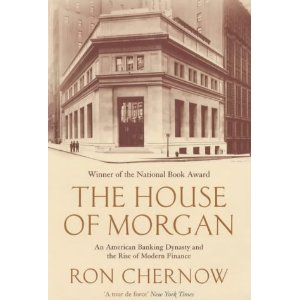
Book Review: The House of Morgan

Since the beginning of the Great Recession, JP Morgan’s Jamie Dimon has played the role of the United States’ Alpha Banker: snatching Bear Stearns’ franchise at bargain basement prices, modeling superior risk management,[1] and publically pushing back against government regulation of his industry, all the while acting as Obama’s BFF when it suits him.
So it takes a great book like The House of Morgan to see Dimon’s Mini-me status compared to the original John Pierpont Morgan.  In sweep of history, stretching from the original J. P. Morgan to Jamie Dimon, the former looms like the Atlas statue outside of Rockefeller Center over Dimon’s diminuitive Oscar statuette.

Size matters in this story.  Even in paperback form, The House of Morgan arrives bigger than a breadbox.  And Ron Chernow can write big. The one-hundred-year epic sweep of the bank’s rise and evolution tracks the United States’ rise as the world financial center, a position wrestled from the Brits in the first half of the 20th Century.

J.P. Morgan himself, a giant of a man with his 19th Century prejudices and a horrifyingly bulbous, pockmarked nose, shaped the entire world through force of will and unerring capital deployment.  In contrast to today’s mega-banks, saved from the brink by massive government intervention, the House of Morgan intervened to prevent government collapse.  In 1907, one hundred years before our own 2008 Credit Crunch, Morgan single-handedly engineered a market-saving trust merger.

Here are a few more essential reasons to read The House of Morgan.

First, if you work on Wall Street and don’t understand the original deep divide between Jewish and Gentile banking worlds, start here.  JP Morgan, the ultimate white-shoe firm[2], fought bitterly and ultimately unsuccessfully to keep the likes of Kuhn, Loeb; Lehman Brothers; and Goldman, Sachs from competing on equal footing for banking assignments.

In the latter half of the 20th Century, cozy relationship banking gave way to a competitive world that required top intellectual talent and drive.  Morgan and its (predominantly) Protestant brethren often chose family pedigree over talent, a choice that put them at a disadvantage when sons didn’t exhibit the same drive as their fathers.  The traditional Jewish Wall Street firms, by contrast, tended to welcome a variety of backgrounds into their ranks, based on intellectual and personal qualities, rather than limiting their employees to those of Jewish heritage.  By the 1980s, Goldman Sachs, Salomon, Bear, and Lehman began to out-compete Chase, PaineWebber, Merrill Lynch, Morgan Stanley and First Boston.  The white shoe firms reluctantly adopted a meritocracy approach to talent acquisition, by necessity.

Second, although Chernow’s story ends in 1989,[3] he captures the evolution from wholesale merchant banking of the early 20th Century to the aggressive M&A takeover and trading culture with which we associate Wall Street now.  Wall Street’s reputation as a rapacious casino, in which profits accrue privately to the few while the public picks up the unlimited liabilities after the bust, is a relatively new phenomenon.

Third, it’s fascinating in the age of TBTF[4], to contemplate a single banking behemoth so much bigger in importance than any one bank today.  The original JP Morgan, split forcibly in 1933 to comply with the Glass-Segall Act, lives on in its descendants Morgan Stanley (originally for investment banking) Deutsche Bank[5] (originally the UK Branch) and JP Morgan (originally for commercial banking).  Imagine those three banks re-merged[6] and even then you probably don’t get the sense of the scope of the original JP Morgan Bank’s influence, nor of the man himself.

Jamie Dimon, you’re pretty huge.  Does it bug you that there’s always someone bigger?

Please also see related post, All Bankers-Anonymous Book Reviews in one place.


[1] With the obvious notable exception of missing the London Whale’s trades until it was too late to save a few $billion.  But really, in my mind, that episode highlighted Dimon’s solid reputation.  We’ve come to expect BNP Paribas or UBS to periodically blow giant holes in their balance sheets via rogue trading positions.  It was quite another thing – and quite a surprise, when it happened on Dimon’s watch.

[2] Along with its successor firm Morgan Stanley

[3] Wall Street’s image frozen in time with the image of Michael Douglas’ Gordon Gekko suspenders!

[4] Again, Too Big To Fail.

[5] The UK bank Morgan Grenfell became Deutsche’s investment bank in London.

[6] As they contemplated doing in the 1970s

Post read (6627) times.

Facebook IPO Bust? Not To Your Banker!

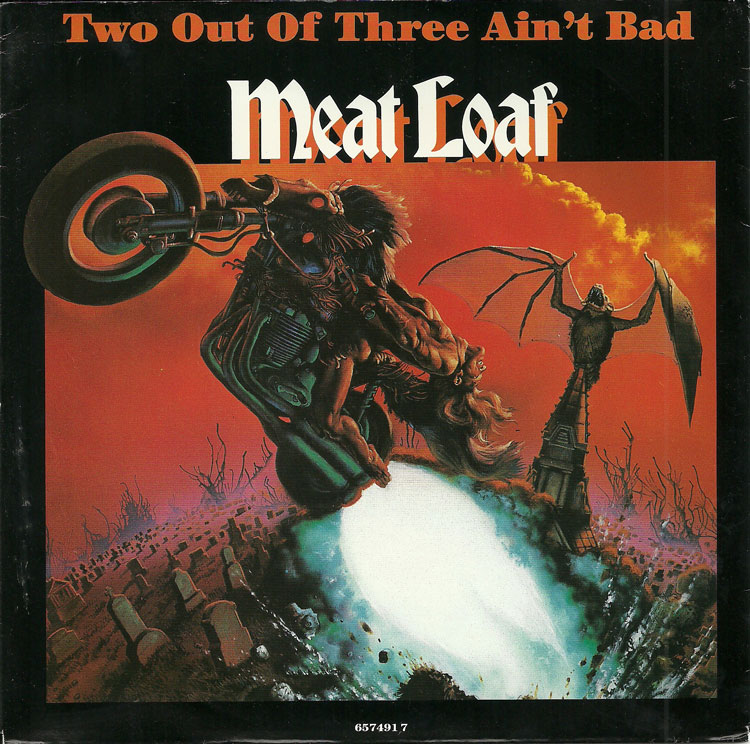
A friend of mine who bought Facebook shares in the IPO complained last week about its miserable performance post-pricing, and I began to get flashbacks to my time on Goldman’s bond sales desk on new issuance days.  I wanted to tell my friend our old bond sales new issuance motto,[1]  But, to spare his feelings, I kept my cynical tongue firmly in check.

A not-uncommon new issuance timeline went like this:

10:00 AM: Goldman’s bond syndicate desk would issue hotly oversubscribed bonds to our institutional clients, who would yell at us for not giving them more securities at issuance.

10:01 AM: Sample Dialogue

Favorite Institutional Client: “I’m a *&^% BIG SWINGING [client], and you gave me this *&^#$% allocation?  You guys suck!”

Me: “Um, ok.”

Favorite Institutional Client:  “Seriously, you @#$%-Heads, lose my number!”

Me: “Would you like to sell them back to us?”

Favorite Institutional Client: “No way, I’m buying more on the open.”

10:05 AM:  Quite frequently, the flippers who obtained hotly oversubscribed bonds sold immediately[2] after issuance, driving the price down.

10:20 AM: The same institutional clients who didn’t get enough bonds would then yell at us for selling them such a terrible piece of shit in the first place and why didn’t we support (i.e. commit Goldman’s capital to prop up) the newly issued bonds in the aftermarket?

In the face of such mental artillery fire, we built blast-resistant concrete bunkers around our consciences.

The senior bond salesman would turn to the junior salesman having pangs about his clients losses.

“You know,” he’d say, “Today the issuer made money, and Goldman made money, and clients lost money.”

…beat…

“But hey! Two out of three ain’t bad!”

That always made us smile.

Look, I’m not saying my friend deserved to lose money for participating in a hot IPO.  I’m also not saying, as some have, that the issuing bank’s only duty is to pump the new issue price to its maximum saleable level, investors be damned.

In fact, issuing banks know they have both an implied ethical duty to their purchasing investors, as well as long-term financial incentives, to issue new securities at a compromise level that satisfies the issuer’s need for capital yet allows long-term investors to also earn a return on their capital.  As is quite nicely articulated here.

But, let’s just say that in the heat of battle and the excitement of a new issue, ethics and long-term interests occasionally take a back seat.  To say the least.

To my friends who lost money in the Facebook IPO, Meatloaf said it best:

Your banker wants you, and he needs you, but there ain’t no way he’s ever gonna love you.  But don’t be sad, because two out of three ain’t bad.


[1] Hint: It’s in the Meatloaf graphic above

[2] Seconds.  Sometimes minutes.  Rarely hours.

Post read (6226) times.

Arrest Jon Corzine Right Now

Why is Jon Corzine still a free man?

As the WSJ points out, investigators still have not located $1.6 Billion of supposedly segregated customer money that disappeared three days before the firm declared bankruptcy October 31 2011.

In the history of CEO falls from grace, Corzine’s MF Global debacle ranks far worse than Lehman’s Dick Fuld or Bear Stearns’ Jimmy Cayne.  In the latter case, Fuld and Cayne stand guilty of poor risk management combined with horrific timing.  Their worst crime was failing to reverse course in the face of a financial storm, which frankly, most executives in their position also failed to anticipate properly.  Fittingly, Fuld and Cayne and their cohorts suffered a significant financial setback and some brutal whipping of their reputations in the public square.

To my knowledge, however, Bear Stearns and Lehman never misplaced customer money, the primary and original fiduciary sin.  In the disorderly chaos of March 2008 (Bear’s shotgun purchase by JP Morgan) and September 2008 (Lehman’s Bankruptcy) managers properly segregated customer money, which was later returned to customers in due course.

Not so for MF Global customers, who still await word on the fate of $1.6 Billion of their money, originally held in custody by the now bankrupt firm.

At this point the proper CEO comparison with Corzine’s failure, unfortunately, is not Fuld and Cayne but Stanford and Madoff.

I should back up from my heavy condemnation here and explain what I mean.  Corzine ran Goldman in the early years I worked there.  While many or most fault him for having an outsized appetite for trading risk,[1] nobody has accused him in his career of actively seeking to defraud customers like Stanford and Madoff.

In my wildest paranoid fantasies I do not believe Corzine meant to permanently abscond with $1.6 Billion of customer money.

But – and this is why he should be in jail – I do believe that in a moment of weakness he knew (he knew and authorized!) MF Global’s teensy tiny borrowing of customer money to satisfy (just temporarily, I promise!) margin requirements (just for few hours only!) from creditors demanding margin call money immediately.  In that scenario, Corzine most likely believed, and caused his employee[2] to believe, that a one-day use of customer funds would save a lot of hassle on margin requirements.

The obvious penalty for improperly using customer money is jail.  Which is why I simply do not believe a treasury officer at MF Global would have made an unauthorized transfer without running it by the head of the firm.  Corzine undoubtedly had a plan for a sale or recapitalization that would have made all the MF Global liquidity-squeeze problems go away, if he could just get a brief respite from the margin calls.  In the end, a suitable suitor could not account for all of the firm’s capital and customer money, the rescue failed, and MF Global declared bankruptcy.

I believe it is right and proper that equity investors in Lehman, Bear and MF Global suffer losses, as they took a calculated risk in the hopes of profit.  We forgive the capitalist who invests for a profit but suffers a loss.

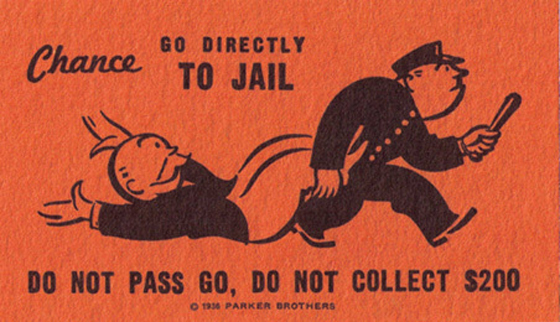
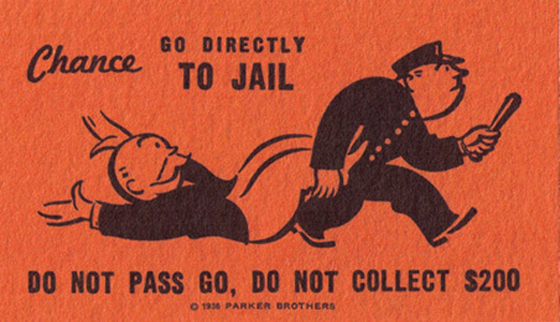
But the vanishing of customer money held by a fiduciary is unforgiveable.  It’s the ultimate financial sin, for which heads must roll.  Corzine was the head and I’m afraid should not be a free man.

At least Madoff had the decency to turn himself in.

Please also see: Another Corzine Rant

and Update on Jon Corzine from the MF Global Trustee


[1] For which he was pushed aside by his executive team of Hank Paulson, John Thain and John Thornton in the Fall of 1998.  The parallels with Corzine’s 1994 fixed income losses as the head of Goldman’s bond trading department, and his limitless trading appetite during the 1998 Long Term Capital Management episode, are obvious.  With that kind of history, the MF Global trading debacle brought on by Corzine’s European bond trades is not surprising at all.

[2] Whoever actually entered the transfer request

Post read (3737) times.