A Visit To Trump Country

As a kind of time capsule regarding democracy in America, I wrote a bunch of posts (6) following the 2016 election. You can revisit them, starting with the first one here

In advance of next week’s election, I wanted to write about a recent ugly Saturday morning encounter. It fills me with dread for the election, and for whatever comes after.

Last month my family and I drove to a small rural Hill Country Texas for socially-distanced State Park family time.1 

Garner_state_park
Frio River in Garner State Park

During the drive 1.5 hours directly west of San Antonio, of course we saw our fair share of Trump2020 and Trump/Pence signs. That was to be expected. 

We live in a downtown San Antonio bubble which, like all of Texas’ cities, bleeds blue. But I know, overall, I live in a one-party state. 2 

Saturday morning, 9am, Central Breakfast Taco Time. Hill Country, Texas.

We drove from our AirBnB to the nearest drive-through breakfast place. There were only three places that seemed to be serving breakfast in town, and the first two didn’t appear to have outdoor seating. 3

Getting into the drive-through line required a second pass through, left onto a side road, before circling back and getting line. 

The first strange impression on this side road was the line-up of fifty or sixty cars, all parked but with people in them. This was in a very small town, where fifty cars represented a major part of the town’s population. 4

So many people lined up in cars, patiently waiting presented a puzzle at first. But I guessed (correctly, it turned out): Food Bank.

Parked in line for the drive-through tacos window we faced the Food Bank line, half a block away. But that wasn’t the big shock. The big shock happened after the middle aged, white lady in the drive-in window looked up expectantly, to take our order. 

Coffee, water, tacos. Normal stuff. 

mmm breakfast tacos

We could see two other wait staff – another middle-aged woman and a younger man – inside bustling around, serving the people seated inside the restaurant.

The blue t-shirts of the two waitresses matched. Maybe a uniform? But no, actually they wore a “TRUMP 2020” t-shirt, printed with large white lettering on dark blue.

That was surprising, as both waitresses wore the same political shirt at a taco place. 

But below, under three white stars to offset the TRUMP 2020, was the message, “FUCK YOUR FEELINGS.”

I turned back to my wife in the shotgun position. Had she seen this? Oh yes, she’d seen it. My two daughters in the back seat hadn’t read the shirt yet. 

Well. Despite her exhortation to self fornicate, I can say I had a whole bunch of feelings. 

Wearing a political t-shirt while serving breakfast is certainly a choice. A rare choice, but one that could only be taken with the knowledge of what the restaurant owner would want. And relatedly, what customers would want. But this was not an ordinary political t-shirt. This was an attack on any customer who didn’t share their sentiment. I don’t share their sentiment. 

“Fuck Your Feelings.”

Not: Vote Trump if you enjoy business de-regulation. 

Not: Vote Trump if you want lower taxes. 

Not: Vote Trump because you believe he’s a useful tool for placing judges who will rule in line with the current Christian-Political-Right.

Rather: Vote Trump, and also, if you have any disagreement with me – or any empathy for people who are different from yourself – go fuck yourself. 

That, I felt, told me a lot about what management of this restaurant believed. About customers of the restaurant. About this town. About America in 2020. And, I couldn’t help but think, about their feelings for the fifty or so cars lined up half a block away. Lined up for food.

fuck_your_feelings
The cruelty is the point

Something clicked into place for me. More concretely than it has in the past 5 years of the Trump nightmare. His supporters hate the people he hates. His contempt, his attacks, his denigration of others.

His denigration of “The Other.”

As Adam Serwer said long before me: The cruelty is the point.

They don’t care for his policies. (He has no policies.)

They care that he hates the right people. 

I couldn’t help but feel that the waitress’ t-shirt was a direct attack on the people lined up a half a block away, trying to get enough food for the week for their families. The people in line for food from the food bank aren’t thriving in Trump’s America. For that matter, the woman serving breakfast tacos to me through a drive in window isn’t thriving in Trump’s America either. 

fuck_your_feelings

But she seethes with hate. How else to explain “Fuck Your Feelings” as, practically a business slogan? She may have very little power, but she has power over the people in line for the food bank. She derives power from his attacks.

After we paid and she handed us out tacos through the window, she said goodbye with “Have a Blessed Day.” Because of course she did.

“Fuck Your Feelings!” Just like Jesus would say.

Did she notice the rainbow Beto sticker, leftover from his 2018 Senate campaign, on the back of our car?

Sunday morning, 10am Tubing Central Time. Hill Country Texas

The next day on our trip we rented inflatable tubes to go down the Frio River from an outfit that flew a “TRUMP 2020: No More Bullshit” flag. This wasn’t as aggressive as the taco place t-shirt uniform but was further confirmation that:

No_More_Bullshit

a) Only expletives properly express Trump supporter views, and

b) Trump, the greatest con artist in history, somehow always manages to make his supporters project Trump’s flaws on to the rest of the world. 

I mean, “End The Bullshit?” 

The guy is the biggest and most successfully bullshitting bullshit artist who has ever lived. And he has his supporters (I understand, between 40 and 45 percent of my fellow citizens) believing that Trump will “end the bullshit?”

I just. I mean. This is amazing. 

Anyway, here’s hoping our Democracy doesn’t end next week. 

american_flag

But if it does, well, Fuck Your Feelings. And do have a blessed day.

Trump Part I – Fever Dreams

Trump Part II – Review of Recent Elected Authoritarians

Trump Part III – The Use of Security Crises

Trump Part IV – The Economic and Financial Crisis

Trump Part V – The Constitutional Crisis

Trump Part VI – Principled Republican Leadership

Post read (308) times.

  1. Garner State Park and Lost Maples State Park. Both beautiful!
  2. There are no statewide elected Democrats as of October 2020. Maybe that will change on election day November 3 2020, but it still feels probably 4 years too early for a statewide Democratic win.
  3. Drive-through or outdoor seating is our key criteria for eating out, during COVID times
  4. The official population of Leakey, TX is 468 people. Fifty cars all lined up at the same time is…a lot

Don’t Forget International Stocks

I received a question from a long-time reader, noting the multi-year underperformance of non-US stocks relative to US stocks. 

Over a 10-year interval, he noted, international stocks very rarely outperformed US stocks, and concluded that it “makes me wonder why any asset manager would invest more than a token amount in international stocks, funds, or ETFs.”

I wildly disagree with his conclusion, but it is a great question. What exactly is the point of investing in international stocks, especially those that just seem to do worse than US stocks over a decade?

To begin, can we nerd-out for a moment on portfolio theory? We start with the first principle that we choose assets because they offer a return. But unfortunately, they also carry some risk.

Stars_and_stripes
Patriotism is not a good portfolio reason to own only American

As a second principle, we also assume that we want to maximize returns, while minimizing risk. More returns = good. More risk = bad. 

Portfolio theory says that you can accomplish the goal – more returns and lower risk – by owning more than one investment.

If you have two (or more) investments (or mutual funds, in our analysis) that are not perfectly correlated, then portfolio theory says that you improve your combination of risk and return – as a combination, as a portfolio – when you combine these two (or more) assets.

The key ingredient to this recipe working is non-correlation between the investments. In non-technical terms, when one asset zigs, the other one zags. Underperformance during some period of time with one asset will be offset and blended with outperformance of the other asset.

When you combine a US-based mutual fund with an international-based mutual fund, portfolio theory does not promise you better returns. Instead, it promises that the combination will, over time, get you closer to the maximum return on your portfolio for a given level of blended portfolio risk. 

To be sure, the highest returns possible often come from concentrated, undiversified, investments. However, those returns may come at a cost of higher risk than may be prudent. 

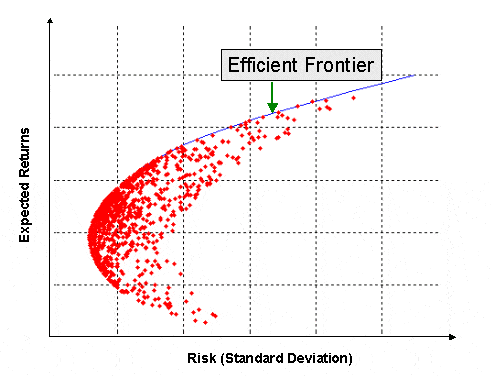
The theoretical language we use (I mean, financial theorists use) is approaching the “efficient frontier” of risk and return, through diversification.

The clearest explanations I’ve ever read of this comes from a 2013 book by Lars Kroijer, Investing Demystified: How To Invest Without Speculation and Sleepless Nights, which carefully threads the needle between plain language and an academic financial nerd festival. Which is to say, I recommend it.

Kroijer offers strong advice that directly addresses my reader’s question about whether to bother with both international and domestic funds. His advice, which I endorse, is that there is no rational reason to have more US stock exposure than the proportion of global stocks that are based in the US. Which, if you’re curious, is about 37 percent right now. I’ve never met an American stock investor who had such a low percentage of stock investments in their portfolio. But I present it as an anchoring idea, in order to be challenging. In my stock mutual fund portfolio, I’m at 60 percent US, 40 percent international. Which, again, I’ll guess is still more international than most.

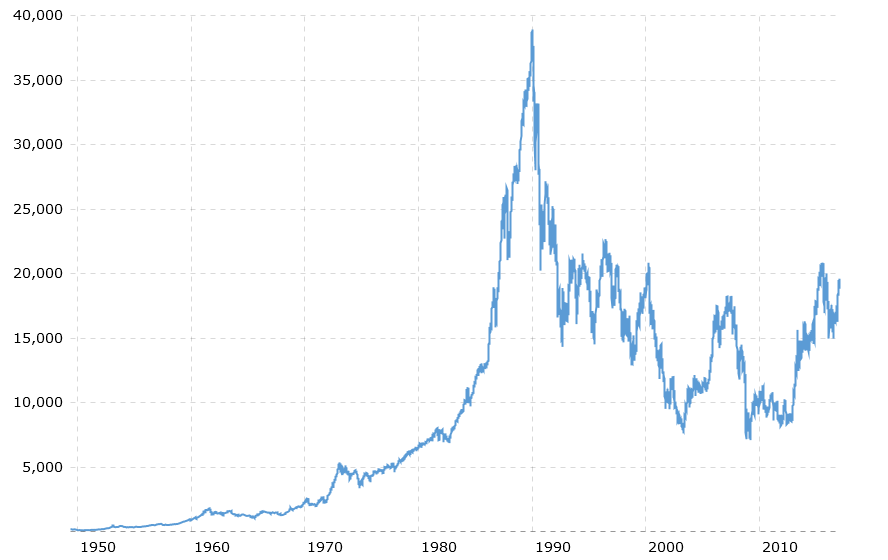
A historical note. Japanese investors experienced approximately zero price appreciation if they bought only the Nikkei 225 Index 30 years ago, versus a roughly ten-fold appreciation in prices of the US-based S&P 500 Index. Including dividends, the 30-year return on the Nikkei versus the S&P 500 is roughly 50 percent versus 1800 percent, respectively. I’m not adjusting for inflation here.

For Japanese investors, owning only the main stock index of their own country would be a very expensive choice, over this 30 year long run. The point is not that Japanese stocks are bad and US stocks are good. The point is that owning only investment assets from your own country can be an extremely poor decision. Which you only learn in retrospect.

Nikkei 225
Nikkei 225 Index price ended 30 years roughly flat, from 1990 to 2020

People who grow up in countries outside the US and who have an appreciable net worth rarely make this same choice. They hedge their risks by owning non-domestic assets, stocks, real estate and currencies. Wealthy Mexican nationals who lived through the 1982 banking crisis or the 1994 currency crisis wouldn’t dream of owning only Mexican assets denominated in Mexican pesos. Wealthy Brits who lived through the pound devaluation in 1992 feel the same way. Or wealthy Russians during the 1998 devaluation. Same with anyone who grew up anywhere in Latin America at any time in the last one hundred years. You get the idea.

Lots of easy caveats and corrections may be applied to this theory of international diversification I’ve presented. One, for example, is that many US multinational companies provide exposure to developed and emerging market economies, so that a US-based portfolio still has quite a bit of global exposure embedded in it. Ok, sure, I partly agree.

Another argument is that a strong tradition of rule of law and regulatory protection makes US-investing inherently superior to non-US investing, for now and for the foreseeable future. I don’t disagree with the initial observation, but I would argue that prices, market capitalization, and future returns will efficiently reflect those institutional differences, over time. Including, especially, in the future.

At the risk of being accused of unpatriotic thoughts, I would also argue that US exceptionalism was real in the past, may still mean something in the present, but isn’t something I would permanently bank on for the future. A main point of portfolio theory investing is that we don’t know what will happen in the future. We can’t control the future, but we can manage our risk and return – as close to the efficient frontier as possible – through diversification.

Another key caveat is that international stocks have become more correlated with US stocks over the past few decades, so we achieve less non-correlation in recent years than we would want from non-US investing. That’s not a reason to not diversify, but rather, a reason to stay vigilant about correlations.

If you broaden your risk examination beyond the stocks you own to think about other financial risks – risks of real estate you own, risks to your income, and risks to your currency exposure, you might realize that many of your eggs are kept in the same US, dollar-denominated basket. Your risks actually stack on top of one another in a correlated way. For portfolio theory to give you the best returns at a given risk, you want to seek out less correlated, or non-correlated, risks.

So, in sum, even if your international stocks have underperformed your US stocks, it doesn’t mean you should give up international exposure in your portfolio. 

To restate, for emphasis: The majority of US investors are woefully underinvested in non-US assets. We are exposed to our own country’s risk to a degree people from other countries – from hard-won experience – would never, ever, dream of being.

A version of this post ran in the San Antonio Express-News

Please see related posts:

Book Review: Investing Demystified by Lars Kroijer

Post read (559) times.

Video: Being Smart About Car Buying

This is another installment from my 10-part series hosted by KLRN on being money savvy, called It Just Makes Cents. This one encourages you to be smart and frugal about the car-buying process.

If you prefer knowledge like this to enter straight into your ear-hole, then you would want to go to the SoundCloud links provided by KLRN.

Finally, text is the way I generally learn, so let’s do that too!

One of the hardest things to get our heads around about cars: A car is a large consumer device that loses value over time. It’s not an investment. It’s not our personality. Also – beware the manipulative question “How much can you afford to pay per month?”

Car Marketing – Beware

Our brains have been soaked and marinated in car advertisements practically since birth. I think this is why it’s difficult to imagine that the “meaning” of a car isn’t bigger than the “meaning” of a washing machine, dishwasher, or any other useful but ultimately disposable thing that just loses value every year and costs money to maintain. With cars, we tend to crave more from the brand than from our dishwasher brand. That craving costs us money.

A car doesn’t define your sex-appeal. It doesn’t make you stronger. An expensive car does not make you rich. In fact, just the opposite. To the extent a car is an expensive consumer device you bought on credit, it makes you poorer. This is sometimes difficult to remember, because of the car advertisements in every media we’ve all seen every single day of our lives.

Less Car, Less Often

Here are the two big lifetime ideas about how to be financially clever about car buying: Buy less car. And buy cars less often. 

jalopy

“Less car” doesn’t mean just 2 of the 4 wheels and engine, while forgetting the brakes and roof. It means: look to buy a car that literally costs less. 

A car good enough to take you from home to work, and back again, could cost you one-tenth of your annual salary. Or it could cost you half of your annual salary. Which one do you want? Try to go with the one-tenth end of the spectrum. If you don’t make a huge salary, you’re looking at an older vehicle with some significant mileage on it.

And “less often” means try to extend the life of your existing ride. Make it last 15 years, not 5 years. Don’t trade it in after 5 just because the dealer reached out to you. What the sexy car advertisements don’t tell you is that every time you buy or sell your car, you lose money. Fewer lifetime transactions means less of your money lost.

Get Pre-Approved Before Walking on the Lot

Finally – Let’s talk about car credit. In an ideal world (I know, I know, most of us are not there yet) you buy a car with cash. Paying cash would tend to force you to shop for “less car,” which is a win. 

But I know we’ll often have to buy on credit, getting an auto loan. 

The best way to do that is to separate the loan process from the auto shopping. What do I mean by that? I mean, line up an auto loan in advance – before walking onto the car lot. Your bank or credit union is in the business of lending for cars. You get pre-approved for a certain amount of a car loan – given your current credit and income – and you’ll then know what you can afford. Shopping for a car, with pre-approval from your bank or credit union only up to a certain amount, limits the temptation to buy more car than you need. 

Beware the “Monthly Payment” conversation

It will also keep the car-buying negotiation fixed on the price of the car, where your focus should stay. Car dealerships notoriously focus your attention on the “monthly payment.” That’s a trick. The cost of the car is in the price, and the interest rate you pay on the loan. The “monthly payment” conversation essentially distracts us from getting the best interest rate and the lowest price overall.

The best you can do

Most of us are not yet living in a ‘post-car’ world. If you can get by on biking and the occasional Lyft/Uber, that could be worth tens of thousands, maybe hundreds of thousands, over your lifetime. But we’re not there yet – and until that day, cars are still useful. 

The best you can do, financially, is minimize cars’ hurt to your bottom line. Buy less car. Less often. Use cash if you can, and shop for the lowest auto-loan interest rate before buying, if you must borrow.

Please see related posts

Car Buying, Part I

Car Buying, Part II

Adventures in Auto Insurance

Post read (665) times.

Video: 7 Tips For Saving

Here’s another installment from my KLRN public television video series “It Just Makes Cents.” This one is on how to save money.

The text is linked here, if you like to read.

Or…if you like your juicy savings tips in podcast/audio format…we’ve got that too!

Fine, fine. Here’s the actual text on KLRN

You want to save money. Duh. Who doesn’t?

I’m a true believer in one way above all others. Let’s start with the one TRUE thing before reverting to other tried-and-true pieces of savings advice. 

1. Automation

I believe in this above all other savings methods. Automate regular contributions of a set amount, on set days, into a savings account. You set up this automated plan with your bank or credit union once and then let it run in the background of your life. For the rest of your life. Every week, or every other week on payday, or every month (or whatever, knock yourself out, set it on daily, go crazy!) you automate a transfer from your checking account into a somewhat-harder-to-access savings account. 

The key is to make today’s decision to save happen automatically in the future. Electronic. Programmed. Unchanging. Savings by Robot. That way, You don’t have to make the decision more than once. We’re not strong enough for that. But automation doesn’t depend on us being strong. Which is exactly why it works.

My bank takes a small amount of money every few days out of my checking account, automatically, and puts it into my savings account.

I’ve also successfully used the automated savings app Qapital for this automating function. This is by far the best new school way to save money and if you’re not doing it then I don’t know what to tell you except this, in a deep Arnold Schwarzenneger voice: DO IT. 

After automation, tips 2 through 7 could also help.

2. Goal Setting

First – set a specific dollar amount. Next, name it. Write it down. Make it real. The idea here is that when you name your goal “Three fabulous new outfits to rock the house,” “Dream trip to Dollywood, TN,” or “BMX racer” or whatever you’re actually saving for, you change the feeling of savings from that grey gnawing emptiness in your belly into something tangible, exciting, colorful, and worthwhile. Going without today is a necessary step toward having something awesome tomorrow. Goal setting can help do that.

https://youtu.be/a6P40wLThbc

3. Round-ups

The old school way was to drop that pesky pocket-change of coins and small bills, collected throughout your day, into a change jar for a year or so, and then bring that all down to your bank or that coin machine at the grocery store.

The new school way is to use ‘round-ups,’ essentially the less-than-a-dollar change you’d get from making plastic purchases (via debit & credit cards) and then electronically tracking all that electronic loose change. When it reaches $5, you automate that amount into a savings account. Many banks can do this automated round-up thing for you, as will many savings apps like Qapital and Acorns.

Does it work? Yes, it works. Mostly because of (see above!) Automation.

4. Identify the Tiny Leak, maybe?

Maybe you can’t save, and you don’t know why. The answer is, maybe, in the small stuff? The dreaded answer, if you’ve ever read those other finance blogs aimed at Millennials, is your regular latte or your avocado toast. And you’re sick and tired of hearing that cliche. So you hope I won’t mention the words L*tte or a*ocado t*oast anymore.

Look, the big idea here is not to forbid you from having those things, or some other small luxury item you crave. The big idea is to find out – maybe just for informational purposes! – what you’re spending money on. So…try for a week…write down every single purchase you make. Tic-tacs. iTunes. Hulu subscription.  Everything. Did you find the leak? I’m not saying you can’t have those things, but rather – it’s worth maybe knowing where the leak is coming from. Right? Well, maybe.

5. Sorry, But It’s Actually The Big Stuff

The worst thing about the avocado toast and latte lecture to Millennials is not that it’s a cliche (although the cliche is admittedly bad) but that it’s not even the heart of the matter. The ‘matter’ being your struggle to save money. The true fact is that most of your money is going to housing and transportation every month, not lattes and avocado toast. Which seems pretty immovable. But also…the correct answer to the savings puzzle – the mathematical answer – is your house payment and car payment. Do you really, really, really want to save money but can’t? Big changes in savings won’t happen without making difficult choices about your house or car payment. Sorry, I didn’t invent math. I’m just reminding you of it. 

6. Only Carry Cash

You take out a certain amount of money. You buy stuff with that limited amount of cash. You don’t use plastic. When you run out of the cash, you don’t buy anymore, because: NO MORE MONEY. Your grandparents did this. They saved money this way. This is decidedly old-school and a bit extreme, but try it. Maybe it will work for you. 

A variation on creating an all cash world is the envelope trick. Some people swear by this one. It’s similar to the “Only Carry Cash” tip, but a bit more organized. You label a bunch of physical paper envelopes with your specific monthly budget. Things like “Rent,” “Utilities,” “Groceries,” “Entertainment,” and “Gas Money/Transportation.” On payday, or the beginning of the month, you withdraw a set cash amount and put that amount in each envelope. When the money runs out this month, no more spending on that category until the next pay day. No plastic. No cheating. Again, it’s extreme. But this has worked for millions of people, and might for you.

7. Bargain/Haggle

You know what else Grandma did? She haggled. Everywhere. With her limited wad of cash. With all the shopkeepers. Like, every day. You can offer less than the store wants at pretty much any place that isn’t a complete chain store. All furniture stores, for example. Any service provider. All locally-owned businesses. Pretty much every business owner has a bit of flexibility in their prices, if you ask.

Arnold_Do_It

Does that seem uncomfortable? Would you be embarrassed to do this? 

Well, put it this way: Would you make yourself momentarily uncomfortable by sticking your arm under the driver’s seat of your car to retrieve a $20 bill? I would. Well, haggling at the store is more like sticking your arm in an uncomfortable position with hundreds of dollars within grasp, and thousands of dollars at stake per year. Try a little discomfort. Your grandma actually enjoyed it. You might also.

But can I remind you of the one best way? Ready? 

Automate your savings! 

DO IT.

(Thanks, Arnold.)

Post read (604) times.

The Shakeout Podcast – First 2 Episodes – Poverty and Universal Basic Income

The-Shakeout

Launched today, with Texas Public Radio, “The Shakeout,” in which we look at stuff that will be, or could be, different during these strange pandemic times.

TPR reporter Paul Flahive leads the Quixotic charge. I look to play a key Sancho Panza role.

People wait in their cars Thursday, April 9, 2020, at Traders Village for the San Antonio Food Bank to begin food distribution. The need for emergency food aid has exploded in recent weeks due to the COVID-19 coronavirus epidemic. The Labor Department said Thursday 6.6 million people applied for first time unemployment benefits.

Episode 1 is here – On Food Insecurity and Poverty

Episode 2 (featuring me) is here – On Universal Basic Income and other Income Experiments.

The_Shakeout

Please see related posts:

Universal Basic Income is Coming – Hopefully Permanently

UBI – That Radical Right Wing Idea

Cash Is Better Than Good Intentions

Post read (93) times.

Mortgage Forbearance in CARES Act

With national unemployment spiking this spring at 14.7 percent and climbing – and severe hardship in certain sectors like hospitality, tourism, oil and gas, and retail – the need for mortgage relief is also high, and climbing. 

Anticipating this trouble, the Coronavirus Aid, Relief and Economic Security (CARES) Act passed March 27th granted some relief for mortgage borrowers. 

Three unequivocal benefits for financially stressed mortgage borrowers granted by the CARES Act are:

  1. You likely qualify for automatic mortgage forbearance with your bank, simply by asking
  2. The forbearance agreement with your bank will not be reported to the credit bureaus, potentially protecting your credit score and credit report, and
  3. Residential foreclosure procedures are all temporarily frozen, at least until May 18th. Evictions are not enforceable until at least July 18th.

If you must suspend or lower your monthly mortgage payments because the COVID recession created a household financial emergency, then this relief is welcome. 

Nationwide mortgage relief like this is rare, because banks really, really, like to be paid on time, every month. 

The passage of time is strange right now in the COVID pandemic, right? What does “on time” even mean? For example, everyone acknowledges the month of April lasted, like, 5 years. 

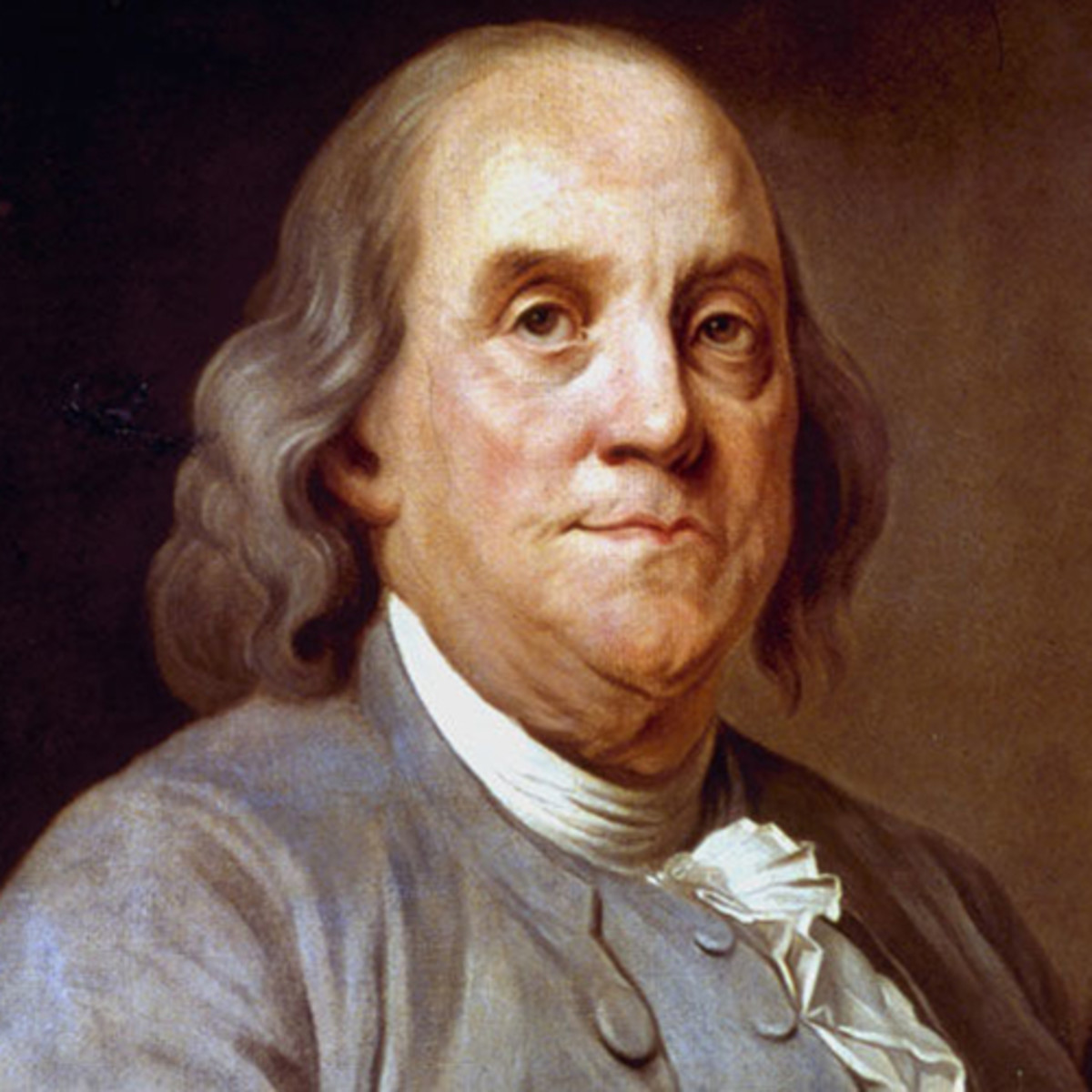
My man Benjamin Franklin wrote in The Way To Wealth about how time passes, depending on whether you primarily lend money or borrow money. 

“Creditors have better memories than debtors; creditors are a superstitious sect, great observers of set days and times,”

Franklin wrote back in 1758. 

For debtors with a mortgage, however, time passes differently, says Franklin. 

“If you bear your debt in mind, the time which at first seemed so long, will, as it lessens, appear extremely short: Time will seem to have added wings to his heels as well as his shoulders. ‘Those have a short Lent, who owe money to be paid at Easter.’”

Anyway, as another mortgage payment day approaches on winged heels, forbearance options seem particularly important right now. If you have to ask for a break right now, you have to ask for a break.

ben_franklin

The CARES Act says that if you have a home mortgage with any kind of federal backing – whether from from the Federal Housing Authority, or Veteran’s Administration, US Department of Agriculture or the mortgage insurance giants Fannie Mae or Freddie Mac   – then you have the right to request forbearance on your mortgage. Very few people have a mortgage not administered in some way by these federal institutions, even if you didn’t know it already. Only a small percentage of private mortgages would not qualify for automatic forbearance under the CARES Act.

Out of curiosity, I looked up my own mortgage on the specially-created Fannie Mae and Freddie Mac websites for this purpose and found that indeed mine is covered by Freddie Mac, so I would qualify for forbearance if I chose to.

Incidentally, you may wonder why – if you only deal with your own bank and never with Fannie or Freddie – your mortgage shows up as qualifying on their websites? It’s very likely because your mortgage has been packaged up by Wall Street and sold into a mortgage bond that Fannie or Freddie guarantees.

Anyway, I found I have the right to request a fairly automatic forbearance on my mortgage, and so do you.

What would that look like? Forbearance comes in different flavors. Simply by stating financial hardship, and without having to present evidence, I could cease payments for a 180-day period. Then that could be extended by another 180 days at the end of the first period, at my request.

In addition, banks are forbidden from charging extra late fees or penalties, beyond the normal interest rate. Further, your bank is obligated by CARES – and subsequent guidance from the Consumer Financial Protection Bureau – to report a loan in forbearance as “current” to the credit bureaus, rather than delinquent for non-payment, as it normally would. So, even while not paying your mortgage for 6 months or a year, your credit would be fine.

Heck, this sounds so good, it’s a wonder anybody pays on their mortgage anymore! 

Not so fast. If you have some assets and income and were wondering about entering into a forbearance agreement in order to get strategic financial relief, the CARES Act is not a great deal, according to Wendy Kowalik of financial consultancy Predico Partners.

One version of forbearance you can get is a 3 or 6 month payment suspension, followed by a lump sum payment at the end of that time period to get back on track. That probably isn’t what most people expect. And it’s totally unaffordable to most. 

Wells Fargo, the largest mortgage lender by volume in 2019, offers a weblink to an extensive question and answer page on mortgage forbearance under the CARES Act. 

According to the Wells Fargo FAQ, maybe missed payments would be only due a long time from now, but it’s equally clear that that is only one possibility, among many.

Says Kowalik, “every conversation I’ve had – the assumption is that of course they are going to tack payments on to the end of the mortgage,” meaning 10 or 15 or 25 years from now, at the end of a mortgage term. “But if you have any liquidity, the likelihood is the bank will require you to pay the lump sum to get current on your mortgage right away.” That should worry most people considering a forbearance request.

Another version is a repayment plan that divides up the missed payments into a 3, 6, or 9 month repayment schedule. But that higher mortgage payment may then also become unaffordable. And prior to repayment, it will not be possible to draw further on lines of credit, or even to refinance the mortgage, without curing the forbearance.

Wendy_kowalik
Wendy Kowalik of Predico Partners

A key point that Kowalik worries borrowers are not considering is that the banks themselves set the terms of repayment. If your bank decides your assets or income can handle it, they will demand faster repayment. Failure to comply then could affect your credit. None of the CARES Act protections extend past a year, which means that the normal enforcement mechanisms – credit reporting, foreclosure, and eviction – are all back on the table a year from now, if not sooner. 

Kowalik thinks borrowers who have a choice should be very wary of putting themselves into temporary relief that will cause even more hardship within a year. Understood that way, the CARES Act is quite bank friendly after all, in the sense that they can set the terms of repayment.

The key, says Kowalik, is this. 

“Don’t go into this lightly. It looks like assistance. It looks like a simple answer to help me with my current cash flow, but that may not be the case. There is a lot of devil in the details, and I would hate for people to get surprises.”

“And about the Wells Fargo website that says ‘We want you to know we are here to help,’ Kowalik said, “Well, that just about killed me.”

A version of this post ran in the San Antonio Express-News and Houston Chronicle.

Please see related posts:

An interview with Wendy Kowalik

Book Review: The Way of Wealth by Benjamin Franklin

Post read (253) times.