
The COVID Revolution

With the great economic freight train of spring 2020 brought to a screeching halt by COVID-19, our usual supply chains buckled, broke, and then fell off the tracks. 

Our normal ways of satisfying our needs disappeared. In the midst of a scramble over the past month, in some ways we went back in time. In other ways, we went forward in time. 

I reacted to shortages at the grocery store by getting in the habit of ordering a dozen eggs weekly through my gym, which has a connection to a local farm. The eggs are very delicious, and very expensive, compared to grocery store-bought eggs. I feel very close to the land!

I admire on social media my friends and relatives home-sewing their custom face masks from old scarves and bandannas. Stylish! Unique! Hand-crafted! It’s all very Etsy.com.

I bought a 5-gallon bucket of hand sanitizer from a friend who converted his whiskey distillery to the task.1

So the question becomes, will the legacy of COVID-19 be a return to a slower pace of economic life, recognizable from a century ago? A life full of locally-sourced eggs, hand-sewn clothing, customized distillery products and of course quality time with a small family unit? Seen from a certain angle, it’s all very Little House on the Prairie. Is that our post-COVID future?

No, that fantasy is silly. That train left the station long ago.

What’s happening instead, and what will remain after, is a jump-start to new ways of doing things. 

In The Structure of Scientific Revolutions philosopher Thomas Kuhn argues that big change comes not as a slow evolutionary process, but rather in sudden paradigm shifts. What we’ve all experienced and observed in the last month of social distancing is a massive jump forward – maybe by many years – into the future of certain economic processes. Below are just a few trends that COVID-19 will rapidly accelerate. COVID-19 causes this paradigm shift, rather than evolutionary change.

The revolution in education

Online learning this month has offered an insight into the future of school and learning. For the first three week of school shutdown, the public elementary school where my fourth grader attends has worked on providing technology to all of her classmates. That technology procurement was necessary because it’s impossible to start online work if kids in the class can’t get connected. So administrators have rushed to acquire and distribute iPads, hotspots, and internet access for families for whom that was previously out of reach financially. 

Before COVID-19, they could never do much with online learning, because too many families would be left outside the digital divide.

Having solved that tech problem over the past three weeks, however, new online learning methods, assignments become both possible and necessary.

With the education world forced to adapt so quickly and so universally, will education ever be the same again? Will universities, for that matter, ever be the same? It feels like COVID-19 has forced a paradigm shift in what’s expected of teachers, schools, and kids. 

The revolution in payments
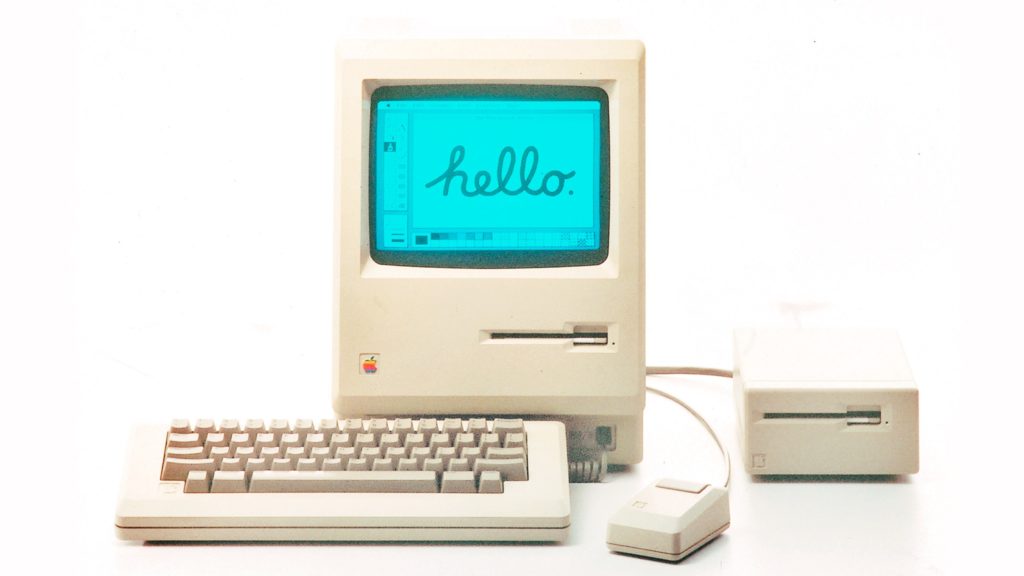
Apple_1984
From Apple, in 1984

I already used the touchless Apple Pay service before now. But I’ve noticed, to my frustration, that a huge number of retail establishments – like my local grocery store chain – never have the right kiosks to accept payment this way. If we understand that bills and coins are a germ-filled disease vector, and even that exchanging credit cards with a cashier is too much contact, then the contactless Apple Pay represents the future. COVID-19 may mark a sudden paradigm shift away from cash.

Apple, as always, sees the future before the rest of us do.

The revolution in retail.

Did we think Amazon’s deliver-to-the-door business model already threatened brick-and-mortar retail before 2020?

Of course. But the only reasonable observation to make now is that Amazon has accelerated its take-over of retail businesses in America. Much more brick-and-mortar retail will now die, much more quickly, in a step-change paradigm-shift way, not in an evolutionary way.

From the distance of time, let’s say two decades from now, my freight train economy analogy that I began this column with will seem even more quaint, and even more apt. We will look back at spring 2020 – before the COVID-19 transformation – and see the way we did things in 2020 as impossibly inefficient. Impossibly brutal, dumb, loud, linear, and tracked. Like a freight train that can only go from one point to another. So limited.
Our sleek, smart, creative, rocket ship economy of 2040 will have blasted off from 2020, no longer held back, no longer limited, by the rails of a freight-train economy.

Note: This post ran in the San Antonio Express News in April 2020…I’ve just been remiss in posting my stuff on Bankers Anonymous! Forgive me.

Please see related posts

The coming death of brick and mortar (2016 edition)

The War On Cash

A small whiskey distillery near The Alamo that is also a family legacy

Post read (169) times.

  1. Next request to the distillery: Please hook me up with a 5-gallon bucket of moonshine to tide me over during this period of isolation, as I spend large amounts of indoor quality time with my family.

Social Security in COVID – Research and Ideas

Adding to a vast ocean of unrelenting bad news, let’s explore some troubling research into the fine print on Social Security benefits.

Andrew Biggs, a resident scholar of the American Enterprise Institute, has two papers out this Spring with interesting implications on our most important safety net for retirees. 

American Enterprise Institute

One paper has bad news for a particular cohort of soon-to-be-retirees. The other explores an idea for helping with current financial distress. I personally think his proposal is wrong, but worth discussing.

Biggs wrote in a recent paper that for a group of soon-to-retire folks – specifically those born in the year 1960 – the COVID recession could be very hurtful to their benefits claimed in 2027, at full retirement age.

In his paper, Biggs assumes the 2020 US gross domestic product (GDP) shrinks by 15 percent in 2022, and that average wages also drop by a similar amount. The net effect of this drop in average wages – as a mathematical input into the Social Security benefits calculations for people born in 1960 in particular – will drop benefits by 13 percent overall. If that happens, for a medium-wage worker born in 1960 in particular, Biggs calculates an annual and ongoing hit of $3,900. For that same medium-wage worker, lifetime social security benefits drop by a present value of $70,193 due to the 2020 COVID effect.

The math justification behind Biggs’ claim isn’t obvious unless you enjoy building your own Social Security benefits spreadsheet.1

The math trick to know is that before calculating your first benefit check, Social Security indexes your annual earnings to a national wage index – rather than an inflation index, as you might expect.

andrew_biggs
Andrew Biggs

If the wage index declines by 15 percent in 2020 (Biggs’ assumption), then this national wage indexing of 2020 earnings has a substantial negative impact on your benefit checks starting at age 67. Subsequent retiree benefit checks do increase according to inflation, known as the Cost of Living Adjustment. But if benefits start at a low base, for example, they will remain permanently lowered, even as they move upward with inflation over the years.

An economic recovery may mean later cohorts do not suffer this same temporary drop. Biggs recommends Congress consider interventions to protect this specific born-in-1960 cohort.

The COVID recession – depending on its duration and lasting effects on national wages – may also affect near-retirees born in 1961. So that’s your not-so-great news of the day on COVID.

Biggs also has written another paper in April 2020 which should be filed to the “interesting, but bad idea” pile. In the midst of our national discussions around stimulus payments, Biggs and his co-author Stanford Economist Joshua Rauh propose allowing pre-retirement individuals to take loans from their future Social Security benefits, which could be paid back at retirement age.

For context, private lenders do not make loans specifically collateralized by future social security payments. But Biggs and Rauh propose the federal government become that type of lender.

If a not-yet-retired individual decided to take a $5,000 check now, the authors suggest, the borrower could pay that loan back at retirement age by simply delaying owed benefits until the loan is repaid. 

Part of the benefit to borrowers, Biggs and Rauh argue, is that the federal government could offer extremely low interest rates, knowing that it can recoup the money at the individual’s retirement date. This low interest rate helps the individual who could not otherwise borrow cheaply. In addition, warming the cockles of an economist’s heart, this cash infusion can be made budget neutral. Money paid out today during the crisis will be repaid, with low interest, by the worker at retirement.

In their scenario analysis, they show that most workers 45 or older who borrowed this way would likely only delay taking their social security benefits by three months, based on a $5,000 loan made today. 

In simplest terms, Biggs proposes a mechanism for financially-strapped workers during the COVID recession to access their social security benefits early, with the obvious implication that they will have less later on, in retirement. 

If enacted, (Narrator: this won’t be enacted) this form of pre-retirement loan would clearly impact the most vulnerable folks – people who have no other source of savings. 

In general, I like considering any so-crazy-it’s-possibly-good wonky financial idea. But this is more like a so-crazy-its-possibly-terrible financial idea. I can’t endorse robbing future Peter to pay present Peter as a humane way to solve a short-term financial crisis.

When I am declared the National Personal Financial Benevolent Dictator (NPFBD) sometime in the future, I have a few different plans for Social Security. Different from both the current plan and Biggs’ suggestions.

My plan eliminates the need for complicated math and indexing as mentioned by the first Biggs paper. In my plan, basically, everyone gets the same amount of money. It doesn’t matter what your average 35 best earning years are, indexed for wages, then further adjusted for cost-of-living, then made progressive by counting different percentages of a specific workers’ earned wages. That’s a description of the current complicated math, simplified.

Instead, in my simple plan you get, say, $32,000 a year. Or whatever flat amount we choose. Everyone gets the same amount. No math. Congratulations, you’re 67. End of story.

If your lifestyle is above that cost, so be it. You should save some money now so you can maintain your lifestyle. If your lifestyle is below that cost, so be it. You’ll feel rich in retirement.

The complicated math we currently do for social security benefits is a very convoluted way to express a couple of wrong ideas. By wrong ideas, I specifically mean the ideas that:

1. We ‘earned’ our social benefits by a lifetime of working, and 

2. If we worked more or harder or got paid more, then we should get a bigger chunk of cash in retirement.

I understand the implications of not doing any tailoring of benefits to individual workers and retirees. I understand why the current system feels “fair” to many. But I think the benefits of simplicity outweigh those implications, leading to a fairer outcome overall.

A spokesperson for the Dallas office of Social Security Katrina Bledsoe said they do not comment on projections or proposed policies, so declined to respond to my query about Biggs’ ideas.

Biggs responded to my query that he is very confident about the math behind his warning about the cohort of near-retirees born in 1960. His biggest doubt is whether the national wage index will actually fall by the estimated 15 percent – a sharp decline – or whether that’s too steep an assumption. At this point – not yet halfway through 2020 – we just don’t know yet.

A version of this post ran in the San Antonio Express News.

Please see related post:

Running for Personal Financial Benevolent Dictator

Building Your Own Social Security Spreadsheet

Building Your Own Social Security Spreadsheet, Part 2

Post read (174) times.

  1. Whoops, guilty as charged!

Video: Buying Your Dream Home

Part of the series of 10 personal finance videos I made with public television station KLRN – This one focuses on home buying.

There’s the same content, but in podcast form if you prefer…

And, of course, if you like text, we’ve got that too.

Linked to here on the KLRN site.

Please see related posts:

The Rent vs. Buy Debate, resolved

On Home-ownership Part I

Home-ownership Part II

Home-ownership Part III

Post read (100) times.

Texas, Inc.

Meat_Loaf

So, anyway, how are finances for the State of Texas going these days?

[Editor’s Note…this post ran in the newspaper in the beginning of July 2020]

Pretty well, thanks for asking. 

If you were to whiteboard the best financial practices for a big state, you would want three things. First, you would want transparency, both for officials making decisions as well as for citizens paying taxes. Next, you would want a conservative match balance between expected revenues and expected spending. Finally, you would want to ensure those revenues stayed strong and steady throughout an economic cycle.

In Texas, we’ve actually got significant amounts of financial transparency, which I’ll describe below. We’ve also got a conservatively-matched balance sheet, for specific reasons worth remembering.

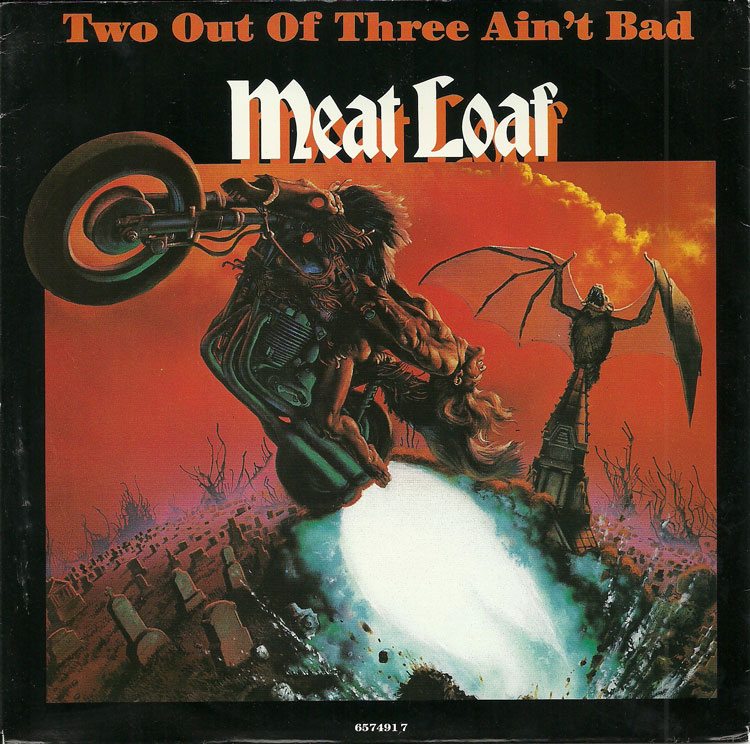
Unfortunately, with the COVID-recession, there’s a lot to worry about when it comes to ongoing revenues. But, as Meat Loaf used to sing, two out of three ain’t bad. 

Damn that’s a great album cover

Actually, that last statement is a bit exaggerated for the purposes of making a late ‘70s rock reference, so let me qualify a bit. I expected to find financial devastation at the state level, but instead found merely areas of concern. 

Let’s start with the transparency part. The State Comptroller’s office supports a website all you Texas taxpayers should know about, called the State Revenue and Expenses Dashboard. This lets you create color-coded visualizations of all state revenues and expenses from 2011 to 2020. The “picture is worth 1,000 words” idea is that we can intuit changes over time, and relative sizes of fiscal categories, by building with and working with a visual dashboard that shows exactly what categories we want it to. The tool also lets you download data into a spreadsheet for further nerdy fun. Which I have done. And, oddly enough, enjoyed.

Some initial insights you can get from the Comptroller’s visualization tool.

  1. Transfers from the federal government are the largest single source of state revenue. (Sorry for you folks who believe in the sovereignty and self-sufficiency of the state.)
  2. The biggest source of locally-derived revenue is retail sales taxes, at 57 percent of taxes in 2019, and 26 percent of all state revenue. This means state revenues will be impacted by recessions, like this one.
  3. Oil extraction tax and gas extraction tax revenue is smaller than I expected, at about 3 percent and 1 percent of all state revenue, respectively.

A related page on the Comptroller’s website, the “Monthly State Revenue Watch”  shows state taxes and other revenue sources updated monthly. 

I know this is updated in real time because I checked it on July 1st, and the June 2020 numbers were already inputted. Impressive! So here is where we can get an idea of how well or how badly things are going in 2020.

Texas runs on a September 1st to August 31st fiscal year, meaning we have two months left in the year. Which further means we already know ten of the twelve months’ worth of numbers, to see any shortfalls versus budget projections.

If you were a worrying type person, you would ask questions like how badly the retail recession, and oil and gas industry disruptions, plus drops in hotel occupancy and car sales and car rentals might wreck state budget projections.

Tax revenue is down, it’s true. But it has not fallen off a cliff. Yet. Retail sales taxes are the largest single tax source, at 57 percent of all taxes. Collections through June are up slightly from 2019, although on track to fall short of the budget by about $2 billion of the projected $35.6 billion, on a total tax revenue base projection of $61 billion.

Franklin_dollars

Again, because we can see ten of the twelve months of the year already, we can see from the transparency website that revenues will fall short by approximately $2 billion in franchise taxes and maybe $1 billion in a combination of oil and gas taxes, with smaller effects in other areas. 

While this is not perfect and possibly a bit frightening, transfers from the federal government are already $4 billion above budget, with two months to go. So we could imagine this will roughly balance out this fiscal year ending in August.

I’m going through this partly because it is interesting on its own, but also partly to point out that the online transparency tools of the Texas state government are kind of awesome. 

Now a word about the fiscally conservative setup of state finances in Texas.

Texas sets its state budgets two years in advance. Future state government spending depends upon a Comptroller estimate – known officially as the Biennial Revenue Estimate (BRE). This is due at the next legislative session in 2021. Unlike the federal government, Texas is highly constrained from borrowing at the state level.

The Comptroller, by constitutional mandate, must sign an oath to certify that the BRE contains accurate revenue forecasts for the next two years. The next legislature must, again by constitutional mandate, produce a spending plan that does not exceed expected revenues in the BRE.

Spare a moment to imagine the difficulty for the Comptroller of signing this next BRE. Like, there are so many different possible economic scenarios in 2021 as a result of the COVID pandemic. 

Financial forecasting is extremely challenging right now. The chief financial officer of any given company must be pulling her hair out trying to estimate future revenue, but at least a private company can kind of wing it on future projections, and then borrow as needed, if things go awry. The Texas Comptroller may not wing it. And there are huge constraints on borrowing. The result has been conservative fiscal state management, which is good. The result in the future – I fear and expect – is a pretty austere two-year revenue projection and therefore spending plan beginning in 2021. This won’t be fun.

Between a pandemic, a recession, and specific oil and gas industry woes – not to mention the 17-year locusts and murder hornets surely set to arrive any moment now – I had expected worse financial numbers for Texas. Can we be blamed for flinching into a reflexive crouch of endless worry in 2020? With strong transparency and a fiscally conservative set-up, I feel a bit better about Texas, Inc, having seen the state’s transparency tools. 

It’s safe to expect budgeting next year will be tougher than this year.

A version of this ran in the San Antonio Express News.

Please see related posts

Transparency Tools in Texas

Post read (257) times.

Hater’s Guide To Tesla

With Tesla announcing plans to build a manufacturing plant in Central Texas – and with the possibility of company headquarters arriving as well – many in this state will rejoice. Not me. 

Tesla is the worst. And Elon Musk, Tesla’s CEO? He’s awful too. My hatred for both the company and the CEO burns inside me with the heat of ten thousand SpaceX rocket launches. 

My reasons for rage range from the profound to the petty. I’ll list them in that order. Tesla, how do I hate thee? Let me count the ways.

  1. Taxpayer Subsidy for Private Enterprise

Del Valle ISD offered $46.4 million in tax breaks for the privilege of hosting Tesla’s new manufacturing facility. Travis County commissioners approved other goodies, for an announced total package of $60 million. Will the state’s Texas Enterprise Fund be far behind in offering public subsidy for private enterprise? 

In return, Tesla plans to employ 5,000 workers at a salary of $35,000 per year. In other words, poverty wages for a family of 6. And this was celebrated by Governor Abbot and other Texas leaders? But see, it’s already obvious Tesla moved here precisely because they could pay their workers $35,000 a year! We shouldn’t have to pay Tesla an additional $60 million dollars in public subsidy for the thing they planned to do already.

And anyway, why does a CEO with an estimated net worth of $70 billion demand to take money from Del Valle public school kids – 85 percent of whom are economically disadvantaged – for his company’s bottom line? Because he can. Because there is no shame anymore in late stage capitalism, as practiced by Elon Musk.

Thanks Mr. Musk! Please sir, may I have another?

  1. Electric Vehicle Subsidies

A debate rages over the past four quarters whether Tesla is profitable over the past year, or whether it is still losing money at this time. What is not debatable is that the only way the firm can report a profit is because – for regulatory reasons – other car manufacturers are forced to purchase “regulatory credits” from Tesla. Because other companies do not produce enough electric cars in their fleet, according to federal government regulations. Tesla booked $782 million in payments from traditional auto manufacturers in the first half of the year. Tesla reported a profit of $16 million in Q1 and $104 million in Q2 2020, meaning it would show a loss without the “regulatory credits” forcibly paid by its competitors. 

Tesla’s entire business model to date has been built on government subsidies. From the $1.2 billion to build a battery plant in Reno, to the $7,500 EV car purchaser credits (now phased out for Tesla.) Without them, they’ve never been profitable. Can we stop publicly subsidizing a $270 billion market cap company, please? Again, something about capitalism has broken here.

  1. Accounting Shenanigans
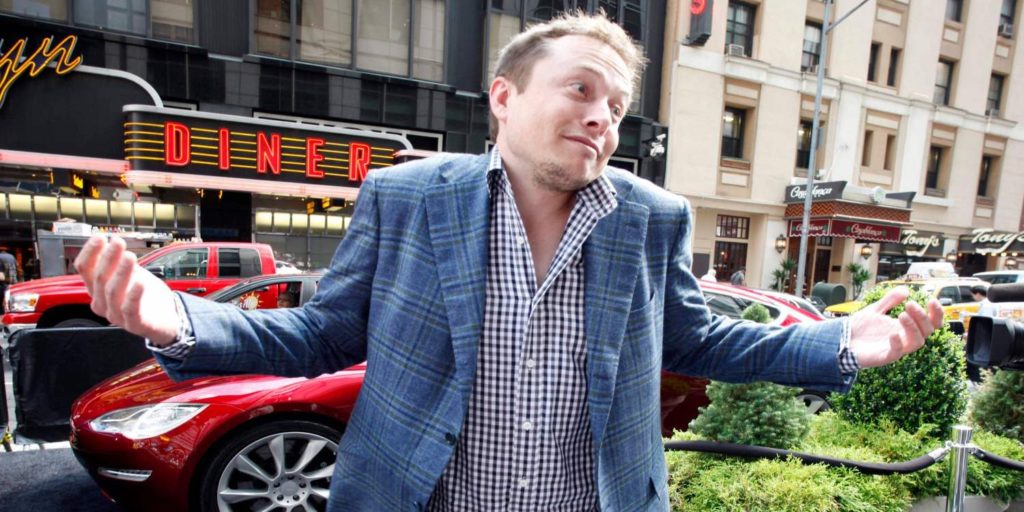
Elon_Shrugged
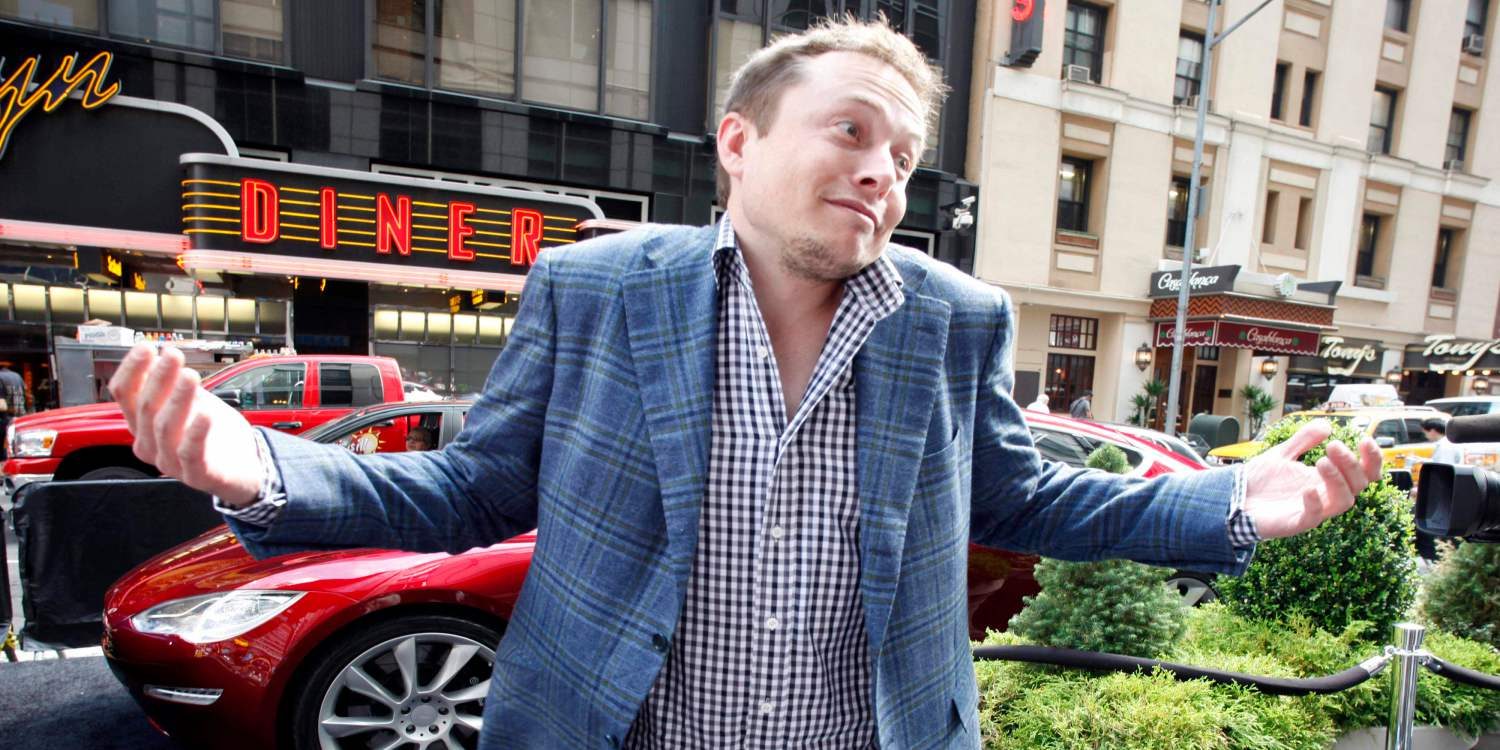
Elon Shrugged

Fundamental investor David Einhorn of Greenlight Capital wrote a scathing analysis in his August 4th quarterly investment letter about Tesla’s accounting practices in 2020. All but accusing the firm, and Musk, of fraud, Einhorn writes: 

“We question whether TSLA’s accounting, which does not appear to correspond to the creation of regulatory credits through auto sales, transfers of those credits to a counterparty nor payment for those credits, conforms to GAAP accounting.”

The bottom line from Einhorn is he thinks Tesla is cheating, in order to show a technical profit for 4 quarters in a row, which will allow the firm to be included in the S&P 500 index. “Through what appears to be sheer abuse of the accounting rules, TSLA has now contrived reported profits to make it technically eligible [for S&P 500 inclusion].”

 Einhorn goes on to predict Tesla’s future crash along the same trajectory of the June 2020 catastrophic fraud of WireCard (WDI) following its inclusion on the German stock exchange (DAX) “As with WDI and the DAX, we expect the TSLA parabola to end around the speculated inclusion in the prestigious S&P 500 Index.”

  1. Stock Valuation 

I’ve made exactly one forward-looking “market call” on an individual stock in my 6 years of writing a newspaper column. I wrote about Tesla in 2015 as a company “I’m reasonably certain will be dead in five years, despite its $25 billion market cap.”  

Ha-ha the joke’s on me, because I revisited that call in January 2020, to point out that its growth to a $100 billion market cap was even more ridiculous. 

A mere half-year later, the stock switched into ludicrous mode (probably as a direct result of karma from my once-only-ever market call.) The company is now valued at $270 billion. Keep in mind this nearly tripling in value happened amidst a global recession and pandemic. The lesson, as always: I am an idiot. I burn with special hatred for Tesla specifically for making a mockery of my considerable investment skills and business acumen.

  1. Tweets 

CEO Musk uses Twitter all day long for lying, bullying, distracting, and constant salesmanship. 

When criticized for his PR stunt regarding kids stuck in a cave in Thailand in 2018, Musk replied to the critic over Twitter with unsubstantiated slander: “Sorry pedo guy you really did ask for it.” 1

In the face of critics who pointed out the precarious financial position of Tesla in 2018, Musk lied about a taking-Tesla-private deal “Am considering taking Tesla private at $420. Funding Secured.”

Lying, bullying, and distracting over Twitter doesn’t make Musk unique among leaders in the world in 2020. But Musk’s style reminds me of the unquenchable narcissism of another lying, bullying, distracting salesman who has an important job to do but who nevertheless chooses to spend his day on Twitter. 

  1. Cars. 

I hate cars. I get it, people like Teslas. They look cool and they zoom fast. Wearing my personal finance hat, I have tried my best to convince my children (and anyone else who will listen) that paying a premium for a cool car makes as much sense financially as paying a hefty premium for a cool washing machine and dishwasher. They are all just rapidly depreciating metal and plastic consumer goods. (To be clear, I mean cars and household machines, not my children.) 

Cars are a bad use of your money. They shouldn’t be cool. Harumph.

7. His Name

“Elon Musk.” Even his name. It sounds like a brand of splash cologne you get for 3 quarters inserted into the gas station lavatory vending machine. Just a few notches in quality below “Axe” fragrance. I’m sorry. My disgust stacks up on itself. If Tesla and Musk were a supper plate, for me they would be black olives and anchovies, garnishing a plate of pan-seared liver. My senses reel with disgust. 

Am I being petty? Yes, you’re damn right I am. I’m so Tom Petty right now that I’m Free Fallin’ and I Won’t Back Down.

A version of this ran in the San Antonio Express News.

Please see related posts:

Sin Investing (and my 2015 market call on TSLA)

Tesla as an example of difference between Castle in the Sky and Fundamental investing

Tesla is Stupid (But, it turns out, I am stupider)

Post read (4501) times.

  1. He later deleted this one from Twitter