Tesla Stock – Zoom Zoom

NOTE: This post ran in the newspaper in February 2020, but for completionists’ sake I’m posting it now, to accompany yet another “I hate Tesla” post that follows.

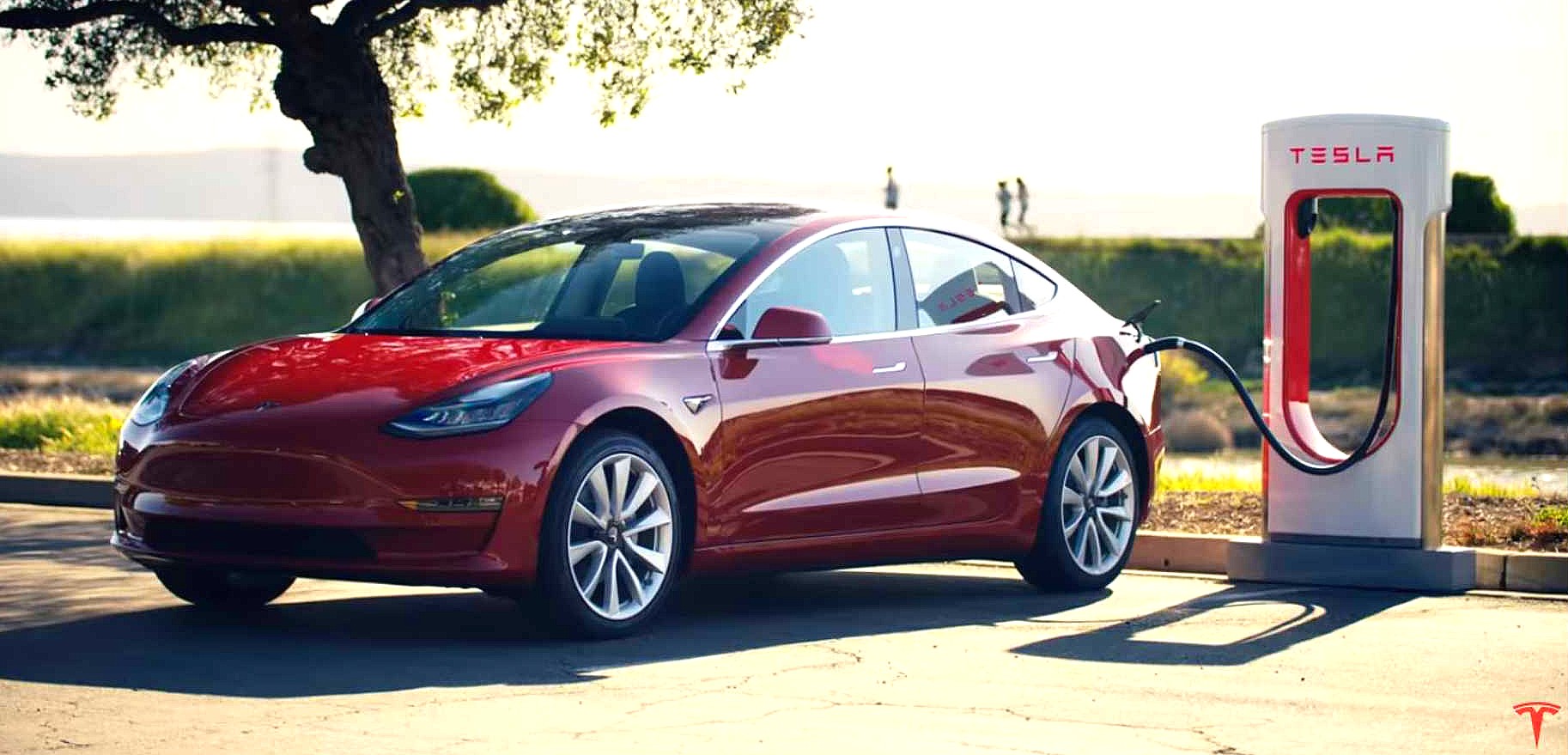
You know that feeling when you’re driving through a city downtown in your brand-new Tesla, and a long series of traffic lights turn green, block by block, all in a row, just as you approach, and you think to yourself “Yes! Finally, my magic powers have come in!” 

That is just how I feel about my TSLA market prognostication in my post in late January, except my magic works in the complete opposite direction. It’s as if by calling for TSLA shares to fall, I personally managed to push the stock to new, previously unimagined heights. It’s quite a power I apparently possess.

Between my anti-Tesla stock January 26th column and last night’s close (2 week’s later) the stock has soared from 564.82 to 734.7, a gain of 30%. 1
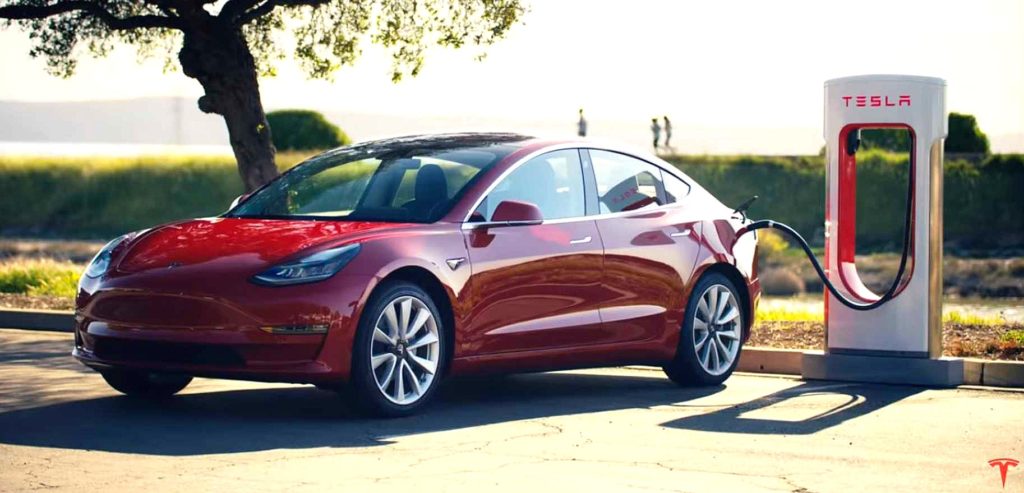
Tesla_supercharger

The company value as measured by market capitalization has jumped from 100 billion to 132 billion in less than two weeks. Year-to-date, the stock is up 75% as of last night, and briefly closed up 100% on the year. This is…insane. 2

If we could bottle up my magic skill in market picking – you just invest the exact opposite way from what I call – then we could all be retired billionaire investors by this time next year. 

But the price action also provides another great opportunity for reviewing important stock market investments concepts. Like short selling. The madness of crowds. Castles in the air. And investment luminaries like John Maynard Keynes and Burton Malkiel. 

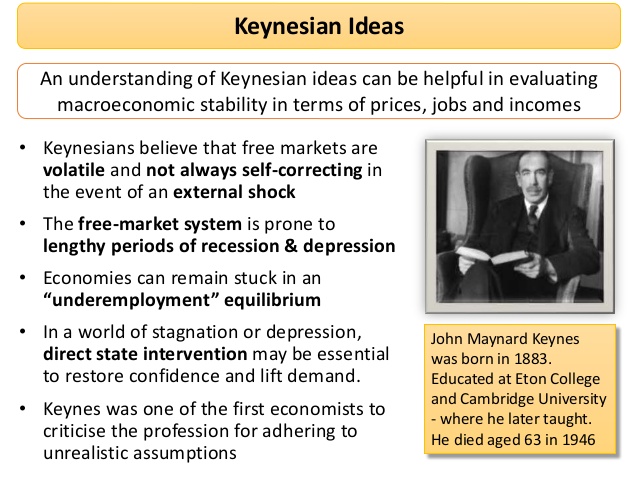
Early 20th century economist John Maynard Keynes gets credit for stating that “the market can stay irrational longer than you can stay solvent.” He also famously described that the point of investing was not so much to decide what you think something is worth, but rather what other people in a crowd will think something is worth in the future.

In Burton Malkiel’s excellent book A Random Walk Down Wall Street Malkiel explains two distinct ways to value stocks: the “fundamental value” method and the “castle in the air” method. Both have their advantages and disadvantages. Warren Buffet is our modern champion for valuing stocks on a fundamental basis. Depending on how you interpret Tesla’s January 29th earnings announcement and to what accounting regime you ascribe, Tesla just reported its first annual profit, or just barely missed. In any case, it’s close to profitable for the first time in ten years. Applied to the Tesla situation, we know that fundamental value analysis cannot apply, however, relying as it does on tracking a consistent pattern of profits and the reasonable expectation that profit will continue into the future. 

By contrast, the castle in the air theory of stocks says that the most important thing to know about a stock is what other people think of it. This method relies on the wisdom (or madness) of crowds. Stock markets trade on future expectations. It isn’t necessary for a stock to be profitable now, but rather it is necessary for sufficient numbers of other people to think it will be profitable in the future. As long as enough other people believe in the future of a stock, it is a perfectly fine investment practice to build a castle in the air. 

Anyway. Obviously Tesla is a castle in the air stock. We should drive one mile further along this racetrack, however, to understand the crazy last week of the stock, and it’s crazy price action so far in 2020.

The key thing to know to explain the price action is that Tesla is the most shorted large stock in the market. Shorting means that investors – typically hedge funds and brokerage companies – have sold the stock without owning it, on the expectation that the stock will go down in the medium term. If it does go down, those same investors can buy back shares at a lower price to close out their position. They profit by selling high first, then buying low later, and pocketing the difference.

Shorting Tesla has always made fundamental sense because the darn company has never reported an annual profit – at least until, arguably, January 29th this year. 

Shorting a stock that goes up, however, causes losses. If you sell a stock at 100, only to watch it go to 130, you’ve suffered a loss of $30 per share. Also, whereas buying a stock has limited downside, shorting can lead to unlimited losses. If you buy a stock at $100 that goes to zero, you’ve lost 100 per share. It’s a loss, but one that’s capped. at $100 per share. If you short a stock at $100, what if it then goes to $1,000? You’ve lost $900 per share. If it keeps going up beyond that, you have the possibility of infinite losses. 

This is all background to explain the price action of Tesla in recent weeks. Large institutional fundamental value investors have long hated Tesla. With good reason! But they have to operate in a castle in the air world. Traders at banks and hedge funds always have risk limits and they also always have managers. At a certain point, managers look at a losing short position and tap the trader on the shoulder. “Sorry buddy, you may be right in the long run, but you need to shrink that position or close it out entirely.” The result is forced buying to close the short position, just as the stock is rising. 

The reluctant hedge fund trader buys the stock at a high price, locking in the loss. The forced buying in turn creates a vicious cycle of higher prices, and more forced buying from others. This disequilibrium lasts until the shorts are sufficiently at a neutral risk position, or metaphorically squeezed, dead, or fired.

In this way, a short squeeze is the inverse of the kind of forced selling we last saw in the broad stock market between September 2008 and March 2009. Many institutional investors – like brokerages and hedge funds – didn’t want to sell stocks on a fundamental basis at that time. But the risk managers came along, saw the falling prices, and tapped the traders on the shoulder. “Sorry, buddy, you need to unload all of your positions by Friday. Also, you’re fired.”

Evil genius and Tesla CEO Elon Musk knows all about the short sellers who doubted his company. He taunted them last Summer. He promised on Twitter the “burn of the century” for Tesla short sellers.

He then mailed a package of “short-shorts” to famous fundamental value hedge fund investor David Einhorn of Greenlight Capital, who had bet against Tesla stock through short-selling.

In  this investment battle between castle in the air and fundamental value, Musk has crushed his competitors, stolen their sheep, and salted their land.

A final reminder of the most important lesson of all. Never invest in individual stocks, or forecast their direction. You might not be as bad as me, but you’re probably not as good at it as you think you are.

A version of this post ran in the San Antonio Express-News

Please see related posts

I hate Tesla

Sin Investing Can Be Good (and also, Tesla is bad)

Book Review: A Random Walk Down Wall Street by Burton Malkiel

Post read (278) times.
  1. This stock tracking from newspaper columns 2 weeks apart is quite quaint, given what happened subsequently
  2. Haha the “insane” joke is on me because it blew through $300 billion market cap within a few months.

Coins – For Collecting, Not Investing

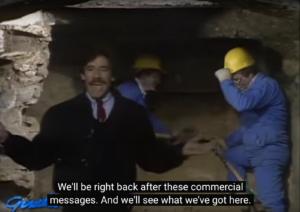
I’m visiting my parents on Cape Cod this month. My father recently turned 90, and my mother decided to open the long-buried safe where my father kept his coin collection. This offered a brief moment of Geraldo Rivera-type drama. What treasures, buried for decades, would we discover? Tune in after the commercial break…

Ok! We’re back! And…

geraldo_al_capone_vault
Al Capone’s vault: also disappointing

The haul fills less than half a shoe box. Mom got a quote from their local coin and stamp shop. This long-buried treasure is worth $728. At least, that’s what the dealer would pay for it. Smaug’s glittering horde this is not.

For nerdy numismatists among you, I’ll briefly describe the coins: a ¼ ounce gold coin; an 1877 U.S. Trade Dollar; two Carson City Morgan Silver Dollars (uncirculated, 1883 and 1884), five Peace Dollars, circulated from 1891 to 1934; three Spanish Carolus III Reales, ranging from 1784 to 1806; and two French Indo-China coins, issued a little more than 100 years ago.

I spent some time trying to figure out how much this little collection would cost to accumulate today. I checked Ebay.com, but also specialist sites like Coinquest.comGreysheet.com and ApMex.com. And then some books I’m about to mention.

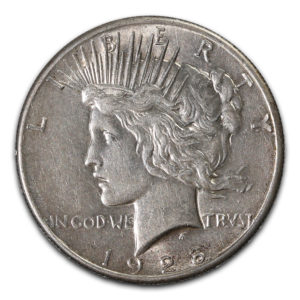
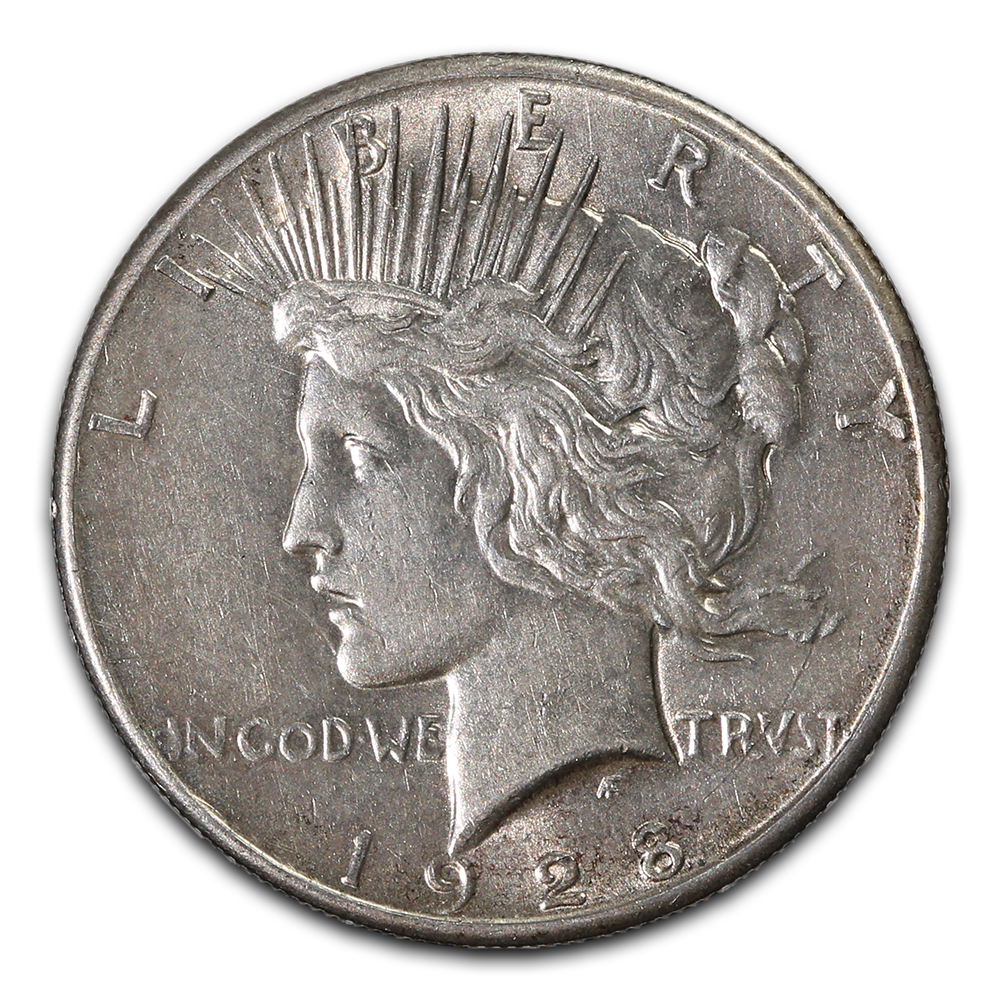
Peace_dollar
Peace Dollar

The collection would cost between $1,300 and $1,600 to put together.

In other words, the quote from the dealer is about half what it would cost to acquire the collection.

I bought two books at the dealer’s shop, a blue-covered  “Handbook of United States Coins 2021: The Official Blue Book 78th Edition”  and a red-covered “A Guide Book of United States Coins 2021: The Official Red Book 74th Edition.”

Both books have the same author and the same publisher. Both provide a comprehensive catalogue — lists upon lists upon lists — of coins and prices. They are basically the same book, with one crucial difference. One is for collectors (retail) while the other is for dealers (wholesale).

The issue comes down to what the finance world knows as the “Bid-Ask Spread.” In other words, the difference between how much retail purchasers pay to acquire the asset — the “ask”— and how much dealers will pay to take it off your hands — the “bid.”

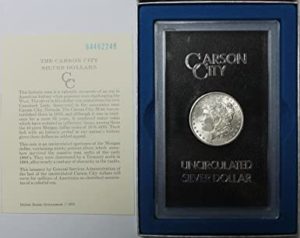
Morgan_Dollar
This is what the uncirculated Morgan Dollar looks like

Comparing the blue and red books side by side is fun. It would cost you about $39 to acquire my father’s 1927 silver Peace Dollar (the ask.) But the dealer will pay just $21 for the same coin (the bid.) It would cost you about $210 to acquire my father’s 1884 Morgan dollar (the ask.) But the dealer would pay just $150 for the same coin.

Sometime in the 1980s, probably at the same time gold prices were rising rapidly, my father became interested in coins. A mania for precious metals and coins has long cursed unsophisticated financial minds, like my father’s, but interest spikes particularly in moments of increased fear — such as the recession in the early 1980s. And also after gold and silver increase rapidly in price. In other words, moments like this one. Which makes his lapses of financial judgment in the 1980s relevant for us in the 2020s.

The problem with coins as investments is not that they are inherently fraudulent, per se. The idea that a dealer will charge an extraordinarily large bid-ask spread is not the same as fraud. Bid-ask spreads, in many cases, are fine. The issue is a question of degree, as well as a question of unequal information. Smaller spreads are obviously better for the purchaser/investor/collector, while bigger spreads can be better for the dealer. Assets with a huge bid-ask spread, like collectible coins, become inappropriate in part because of their inefficiency in trades.

Unequal information about the bid-ask spread gets to the heart of where mere inefficiency slides gently, maybe imperceptibly, into fraud. If the purchaser/investor/collector does not know that a huge big-ask spread exists and likely will persist in the future, rendering the asset extremely inefficient, then we should worry about fraud.That was one of the issues in the multi-state enforcement action against precious metal marketing company Metals.com earlier this year. They targeted the credulous and frightened, mostly elderly conservatives who watch and read right-wing media, and mercilessly charged markups so large that they constituted fraud.

My father’s own coin collection, as it exists in 2020, I mostly consider harmless. I mean, it wasn’t a good investment. But there’s an aesthetic and maybe intellectual pleasure to collecting old things, and that’s fine. My view is that because of their historical and aesthetic significance, his coins are preferable to accumulating a thousand dollars’ worth of Beanie Babies. Although it is, admittedly, more difficult to hug coins than Beanie Babies.

Coins don’t work well as investments. But they are OK as collectibles, I guess, because people like what they like.

The details had been a bit lost in family history, but my mother told me that, in fact, my father and his business partner had been defrauded on coin investments in the 1980s. My father’s memory is not good anymore, so I called up his old partner, now 80, to find out more.

A well-trusted accountant had introduced them to a pension advisory group, which helped them invest some of the firm’s pension in rare coins, approximately $50,000 worth, according to my father’s partner. Around the time they figured out that a motel investment (also totally inappropriate for my father and his partner’s level of sophistication) had gone sideways, they were contacted by the state attorney general investigating their pension advisor.

Unsurprisingly, in the end, they had paid huge markups on their coins. My father’s partner estimated they took a 30 percent loss on that portion of the pension, in the course of cutting ties with the advisor. That actually sounds to me about what one would expect, even with no outright fraud. That’s pretty much just the bid-ask spread. The motel was a larger percentage loss on a bigger investment. In the end, employee pensions were made whole on the losses, but my father and his partner took losses in their own pensions — as the business owners who should have known better.

Seems about right.

A version of this post ran in the San Antonio Express News.

Please see related posts:

Metals.com – The Long Con and The Short Con

Texas Bullion Depository – What Exactly Is The Point?

Never Buy Gold

Post read (286) times.

The Great Economic Leap Forward Experiment

While medical researchers race against time to find effective treatments for COVID-19, we have launched ourselves headlong into an economic experiment in federal policy on effectively treating a recession.

The experimental treatment so far is the recently signed $2 trillion Coronavirus Aid, Relief, and Economic Security (CARES) Act. Money for big businesses. Money for small businesses. Money for individuals. Is it too much? Is it not enough? Will it prove to be – in a phrase now used in many contexts – “a cure that’s worse than the disease?” 

A primary mission of mine – as a writer – is provide language and categories around which we can discuss financial matters, as citizens. In vastly simplified terms, we could identify 3 theoretical approaches to fiscal and monetary policy in response to a COVID-induced recession, from the right, the middle, and the left. 

On the right, the Austrian School and its most famous 20th Century theoretician, the Nobel Prize-winning Freiderich Hayek, would encourage limited government spending and a cautious central bank, in favor of freedom, individual action, efficiency, and ever-vigilance around inflation. Writing in the middle part of the 20th Century, Hayek warned against creeping Socialism and the centralization of economic power as threats to humanity. Bank lending of fiat currency – rather than relying on the solidity of an anchor-currency like gold – tends to artificially lower interest rates and overly expand the money supply.

The policy implications of the Austrian school is to interfere the least in business cycles, as they will work themselves out over time.

In the middle, policy makers advocate along themes established by John Maynard Keynes, who argued for a combination of robust government spending and easy money from the Central Bank, originally in response to the Great Depression of the 1930s. Fed Chairman Ben Bernanke, a careful researcher of the Great Depression, followed that playbook in the 2008 Great Recession. And I would say – from a monetary policy standpoint when all was said and done – very successfully.

The left has recently coalesced around something known as Modern Monetary Theory (MMT). 

Just as the Austrian school of thought and Keynesianism have variations, so too does MMT. But simplifying a bit, the big unifying idea of MMT is that governments that print their own currency like the United States do not have to worry tremendously about the problem of paying back debt. Controlling an unlimited supply of money can free policy makers from worries about a finite source of capital, or the classical economists’ worry of “crowding out” private borrowing and private enterprise. Both fiscal policy (taxing and spending) and monetary policy (the supply of money and interest-rate setting) should respond to problems by making money much more available, aggressively where needed. In stark contrast to the Austrian school, MMT points to a massive intervention of the government in the economy.

A key point of MMT – a point in which I am in agreement – is that debt owed by a government is not exactly like debt owed by a household or a business. Households and businesses do not create their own currency, so must always have a reasonable plan for repayment, or risk being shut down or punished by having assets seized by creditors. Governments that create their own currency, by contrast, need not fear creditors in quite the same way as households and businesses.

MMT theorists, accused of disregarding inflation, have argued that in periods of low inflation – like we’ve seen in recent decades, and like we usually see in recessions – policy can focus on more immediate threats, like underinvestment and unemployment. 

I’ve been thinking about some of this in part because a conservative friend and reader handed me a copy of Freiderich Hayek’s The Road To Serfdom on March 18th, during what might be the last sit-down meal at a restaurant we will enjoy for months. Hayek’s worldview (or permit me to smoothly roll ‘Weltanschauung’ off my tongue) in simplest terms, is that the biggest enemy confronting society is government control of economic activity. 

So where are we currently on the spectrum of policies – from the Austrian right, the Keynesian center, or the MMT left?  As of this month we’re neck deep in a massive MMT experiment. That’s not what Congress and President Trump said out loud as they passed the CARES act. They would all deny it, if asked. But just to be clear: that’s what we’re all doing. The CARES Act was the most MMT experiment our country has ever tried. And it’s still early days yet in the COVID recession. As a betting man, I’d say more is coming.

MMT

And the weird thing was the near-unanimity of it all. Which also makes me nervous.

One reliable indicator of problematic policy in a democracy is unanimity, or near-unanimity of votes. Problematic because unanimity generally indicates votes forcibly taken, votes taken in fear, or votes taken under emergency conditions. 

Like elections in the old Soviet times, in which the winner would earn 99% of the vote. Or like the Patriot Act of 2001, which passed the Senate by a vote of 98-1 in October 2001, following the attacks of September 11th. 

We similarly saw the passage of the $2 trillion CARES Act by a 96-0 vote in the Senate, and the absence of anything other than a voice vote among a quorum in the House of Representatives, without a recording of who voted how. Friday March 27 was a weird day in Washington.

So Tea Party folks, just to clearly review. Your party – with a unified Republican Congress and Presidency – passed the 2017 Tax Cuts and Jobs Act, expected to increase the federal deficit by $1.4 trillion, according to the Congressional Budget Office. The CARES act just passed – by a divided Congress and Republican President – will cost $2 trillion. What we should all agree on right now is that there is no fiscal and monetary conservative party in the United States. It does not exist. We’re all unified MMT leftists right now. I guess we’ll find out in a few years how we like it.

Not that we necessarily had a choice.

Would I have voted yes for the CARES Act, were I in Congress that day? Yes.

Do I think we’ll be instituting a form of Universal Basic Income within 6 months? Yes.

Do I think our fiscal and monetary policy might be a ticking time bomb – both because of our debt levels and inflation – for the United States? Also yes.   [LINK to column on government debt spending:

Please see related posts:

We’re getting UBI and we’re never going back, after 2020

Government Debt – Ways to Think About it.

Post read (269) times.

Video: Good Debt Bad Debt – It Just Makes Cents

Earlier this year I did a series of videos/blog posts for TV Station KLRN.

Over the next month or three I’ll post them here. This one is on a theme I’ve delved into before, namely that debt is like a drug, for better and worse.

The text of this post – if you’re a word rather than video person – is linked to here, as one of my 10 “It Just Makes Cents” blog posts.

They even did podcast versions of the audio, which is also cool.

Please see related post:

Your Mortgage – A Bad Drug?

Post read (503) times.

How’s Your Small Business Going Lately?

What do you do when your business is forcibly shut down from one week to the next, as has happened to first every bar and restaurant owner, and then every other so-called “non-essential” business?

I gathered anecdotal data from Bryan Potts, a San Antonio-based CPA and the owner of CFO2Go, who primarily serves restaurants with consulting and accounting services. It’s been rough. Potts says he lost 75% of his client base in March. 

With doors forcibly shut, many of his clients simply can’t pay him. Of his restaurant clients, Potts estimates that 10% are hanging on to their employees in the shutdown, while 40% have cut back as much as possible to just a few essential employees. About 50% of his clients have simply laid off all of their employees.

CFO2GO

To begin to get a sense for the scale of the hit to employment numbers this month: The Texas Restaurant Association counts 50,000 restaurants in the state, and counts 1.4 million Texans in the restaurant industry.

In a related story, US weekly jobless claims have hit catastrophic levels every week since late March.

Back in the good old days, in December 2019 – which feels like a decade and a half ago – I sat down with Ryan Salts of the small-business resource center Launch SA.

Salts’ passion and profession is to support entrepreneurs and would-be entrepreneurs as they launch, survive, and then hopefully thrive as business owners. 

This Spring, however, is not at all like the good old days. Salts invited me to listen in, as he gathered together entrepreneurs online on Zoom in a part advice-giving session, part therapy session. Potts was not on this call, although he is part of Salts’ mentoring network. 

A different mentor on the call – who asked not be named – described the process of filing with the Texas Workforce Commission for a “full company” claim of unemployment. This would streamline the process for her employees, all of whom she assumed would need to apply for unemployment benefits. 

A question among the group arose: Is it time – as the classic entrepreneurial wisdom says – to “pivot” your business model? Not necessarily.

Many restaurant owners, for example, have opened up grocery stores, or boosted their take-out and delivery businesses. Customers want this and encourage this, and employees may feel grateful for the ongoing work. But this could be – in fact it probably is – a money loser for restaurant owners. And the result of operating a money-losing pivot over the next few months could be further debt for the owner down the line when normalcy returns.

One of the Zoom participants was Jeni Spring, from The Center For Barefoot Massage. She said a widely suggested pivot runs counter to her business. She runs a San Antonio-based continuing education center to train massage therapists in deep tissue technique. In this lockdown, she’s received advice and pressure to move to an online training model for massage therapists nationwide. But that, fundamentally, is not something she believes in. 

barefoot_massage
I hadn’t ever heard of them either!

“We can’t become something we are not. It doesn’t work to move to online training, since our entire reason for being is that you have to learn massage in person. You simply can’t learn the sense of touch needed to give professional massages online.” 

So, the “pivot” is a mixed bag.

What about the other solutions business owners bandied about following the lockdown – such as offering gift cards, as a kind of down-payment on future business that would help finance the present? 

Salts offered a cautionary tale.

“I have a downtown friend. He won’t make it through this. His normal traffic is foot traffic. of the first things I thought last week was “’why don’t you do gift cards?’” 

“But everything is changing so fast that recommendations from earlier in the week change day to day.” His friend didn’t feel gift cards were ethical, Salts explained, “given that he was of the mindset that he had a 70% chance of not surviving the downturn.” 

In December, Salts and I had talked about how hard it is, even in the best of times, for food service businesses to survive. I was curious about a spate of high profile restaurant closures in my neighborhood at the end of last year. 

Salts was philosophical and realistic, based on his work with Launch SA: “Are food people good business people? On average? No,” he’d said then. “They’re really good at what they do. They’re creative. They can put together a good menu. But can they run their accounting? Can they cost things out?” That was December.

Now, of course, none of that matters. The best restaurant owner in the world cannot stay open against the COVID-19 lockdown orders.

About the restaurant businesses now shuttered, Salts has an extremely dire prediction. 

lift_fund

“Probably 50% of the places that close their doors right now are not going to reopen when this thing is over. Every single person I work with is in a dire situation of triage.”

And with those shut-downs, we are learning, painfully, how essential these small businesses are. Everything is interconnected. As Potts explained: “It shows how far small business employers contribute to the economy. It’s everything from people who clean out the grease traps to lawyers and accountants. I don’t think there’s anybody that’s not been affected by restaurants shutting down.”

Disclosure: I do occasional consulting projects for the non-profit small business lender LiftFund, which partners with the City of San Antonio to run Launch SA.

A version of this post ran in the San Antonio Express-News.

Please see related post:

The Entrepreneurial Mindset

Post read (203) times.

Meditations On The 100 Year View

Something was very different this Spring. A once-in-a-century type of event.

Did you notice it? Many centuries ago, the Mayans could have told us.

The vernal equinox came early – March 19th. The earliest in more than a century. Don’t blame carbon emitters or the COVID-19 virus. The earth’s natural rotation means that an equal amount of night and day hit all US time zones earlier in the year than at any time since 1896. 

Sunlight animation

I understand: the early vernal equinox was not on the top of your mind. But I’m trying to zoom out our short-term focus to ponder a bit on the big picture here. The one-hundred-year view. 

During this first week of Spring, can we talk a little bit about stock market gyrations? And then meditate on interest rates as well? 

In the spirit of meditation, the Judeo-Christian tradition provides a metaphor for stock performance. By contrast, the path of interest rates and bonds, metaphorically, follows the Hindu-Buddhist tradition. I’ll explain what I mean by those metaphors later on, as I understand I’m saying something that sounds a little kooky.

What’s happening in the stock market these past two months is not new. It’s a hundred-year flood that periodically recurs, well, about every ten years. Let’s try to see the larger pattern. 

What’s happening in interest rates, by contrast, is totally wild. Uncharted territory. There is no past precedent for these moves. 

In an interview with the BBC in 2009, Charlie Munger – the Vice Chairman of Berkshire Hathaway and famously Robin to Warren Buffett’s Batman – laid out a concise version of the correct hundred-year view of stocks.

“I think it’s in the nature of long-term shareholding, of the normal vicissitudes of world outcomes, of markets, that the long-term holder has his quoted value of his stocks go down by say 50%,”

said Munger during the interview. 

Even beyond the utter normalcy of this kind of volatility, Munger says the periodic 50% drops determine who will be rewarded. 

As Munger continued, “In fact you can argue that if you’re not willing to react with equanimity to a market price decline of 50% two or three times a century you’re not fit to be a common shareholder and you deserve the mediocre result you’re going to get compared to the people who do have the temperament, who can be more philosophical about these market fluctuations.” Munger has 96 years and $1.7 billion to back up his wisdom right there.

So, stock market fluctuations like this past week are normal. Carry on as you were. Do nothing different. If you can, maintain regular automatic contributions to your portfolio.

Incidentally, this recent volatility is a reminder of why owning individual stocks could generate bad investor behavior (trading frequently) whereas owning broad indexes of stocks could generate good investor behavior (doing nothing in the face of volatility). Heading into a recession, we can easily see why any particular business will get crushed. We can’t help but have an emotional reaction to a particular story of a particular company. But a broad index of stocks, heading into a recession, maybe inspires us to remember that over the next few decades a few thousand of the best-run and most innovative companies in the world will figure out ways to generate profits, and therefore a return on investment. Indexes help us worry less about any particular story and to focus on the longest time horizon possible. 

The stock market, understand as a whole, follows a linear path through the medium term. It sure doesn’t seem that way, especially this past month. We humans with our hominid brains want to take note of a every single up and down movement, like baboons tracking a particularly delicious, but peripatetic, insect on a tree branch. Up, down, up, up, up, down.

The up and down is an illusion, however, as the stock market, again as a whole, goes upward with each decade. In the long run, over a century, the stock market understood as a whole, follows first a linear, and then an exponential upward, path. In the longest run, a basket of stocks is unidirectional. Birth, life, and then an ascent into the infinite. That’s what I mean by the metaphor of the Judeo-Christian tradition.

Meanwhile, interest rates typically act more like the Hindu-Buddhist tradition of a circular path. Sure, rates change a little bit over time, but they always tend to loop back upon themselves. Unlike stocks, interest rates resemble a wheel. A cycle of birth, death, rebirth and reincarnation. We don’t ascend or decline too much over a century. We don’t depart from the wheel. Except this month, we did.

Holy Cow! 1

Anyway, rates recently have been anything but normal. We’ve never in US history seen interest rates this low. 

Mayan_ruin

As Covid-19 panic set in mid-March, thirty-year US government bonds hit 1% mid-day, while 10-year government bonds hit 0.5%, albeit briefly. We’ve seen 0% overnight Fed Funds rates before, but even in the 2008 Great Recession, long-term US bonds didn’t hit these low rates. This all indicates panic in the financial system. For what it’s worth, the Fed’s move to carpet bomb financial institutions with liquidity following unprecedented interest-rate lows seems appropriate to me. We do not want the wheel to break.

Finally, the vernal equinox again. Few of us alive today will live to see another March 21 vernal equinox, which will not happen until the year 2101. What else will be never-before-seen between now and then? 

A link for those who don’t follow the Old Farmer’s Almanac assiduously.

A version of this post ran in the San Antonio Express News and Houston Chronicle.

Post read (269) times.

  1. Thanks very much, folks, I’ll be here all week with even more Hindu-tradition jokes.