Ask an Ex-Banker: HELOCs – Friend or Foe?

Michael,

I read your columns weekly. I was surprised, taken aback, and disappointed in your opening sentences in a recent column.

You knew you had RE taxes to pay in January but apparently didn’t save (I call this self-escrow) during the year. It’s my belief that people read your columns and look to you as a knowledgeable resource and someone who would provide good guidance.

To not save in advance of a known annual obligation and to, willy-nilly, say “We have a home equity line of credit…” [aka a HELOC] is to enable most homeowners to do the same and then to incur interest cost on the balance. This creates a never ending cycle of debt since the homeowner would not likely have the excess funds to both pay off the balance due and save for the next year. Instead, homeowners are encouraged to not save in advance. What about homeowners that don’t have a HELOC?

I’m disappointed. Thoughts?

Warm regards, Larry Estes, Houston TX

Michael,

On a recent visit to my local bank the Branch Manager inquired if I had an Equity Line of Credit. I understand the concept. I can use an amount of equity in my home to pay for whatever and pay back the bank over time at some rate of interest. I recall seeing one of your recent articles in the Sunday Houston Chronicle about paying a tuition payment using an equity line of credit. What are the good, bad, and ugly benefits and issues with an equity line of credit? My banker showed me an example of $50K for 60 months at 8% interest.

Pete Thompson, The Woodlands

Hi Pete and Larry,

These are great questions & comments. I am a big fan of HELOCs, which I mentioned recently in a story about paying my real estate taxes. 

Willy-Nilly Condoning Irresponsible Behavior

To address Larry’s criticism head-on:

Yes, the best scenario for paying bills is to always have sufficient savings on hand for expenses, and to not use any debt. No arguments there. That just isn’t a world in which I currently live. So, we make different choices. My choices may appear to be giving permission to readers to be willy-nilly incurring debt and living beyond their means. But that isn’t my intention. So, readers, to be clear, try to pay for everything with savings. For the rest of you, the HELOC can be a tool, however imperfect, that is better than the alternative.

First, some definitions. “Home equity” is the difference between how much a home is worth and how much debt – usually a first mortgage – is on the home. If your house appraised at $300 thousand and you owe $200 thousand in a first mortgage, we say that there is $100 thousand of home equity. When home values go up, that creates the happy situation of additional home equity which then provides the collateral against which home equity loans or home equity lines of credit may be offered. Lenders are most often comfortable making 80 percent loan-to-value real estate loans. You can probably get a competitive interest rate on a $40 thousand HELOC in this scenario, since it stays within the 80 percent of home value rule.

Home equity lines of credit are revolving, meaning you can draw down and pay back the line – just like a credit card – as often as you like for a period of time, which is normally between 5 and 15 years. This makes it extremely convenient as an emergency back-up financial tool. The best and highest use for a HELOC is to have it in place, but to never draw down on it, unless an emergency or extraordinary opportunity arises. 

Another version of this, which Pete’s banker may have been pushing, is a home equity loan (aka a HEL). This is far less attractive and useful than a revolving HELOC, in my experience and opinion. It’s just a second mortgage, and you get one if you must, but it isn’t as flexible, because it does not “revolve,” allowing for infinite drawdowns and paybacks.

If the choice is between paying for something in an emergency using a credit card versus paying for something using a HELOC, the preferred answer is almost always the HELOC. The interest rate currently should be in the 8 to 9 percent range, as compared to a 12 to 29 percent range for a credit card. 

At the extreme end of the spectrum if you plan to default on your debts, a credit card would be better than a HELOC, since defaulting on a credit card only wrecks your credit, whereas defaulting on a HELOC could jeopardize ownership of your home. But I’m mostly assuming in a comparison between a credit card and a HELOC that you have a reasonable plan for paying off your debts in the long run, rather than defaulting on them.

Dangers

Because this is, like a regular mortgage, debt backed by the collateral of your home, you are putting your shelter at risk if you default. Do not do this lightly. In the 2008 mortgage crisis, HELOCs and HELs wreaked havoc with people’s personal finances, when they lost their job, defaulted on their debts, and faced foreclosure. Banks and investors similarly took massive losses on the portfolios of HELOCs and HELs they had extended. Debt is always somewhat dangerous, use with caution.
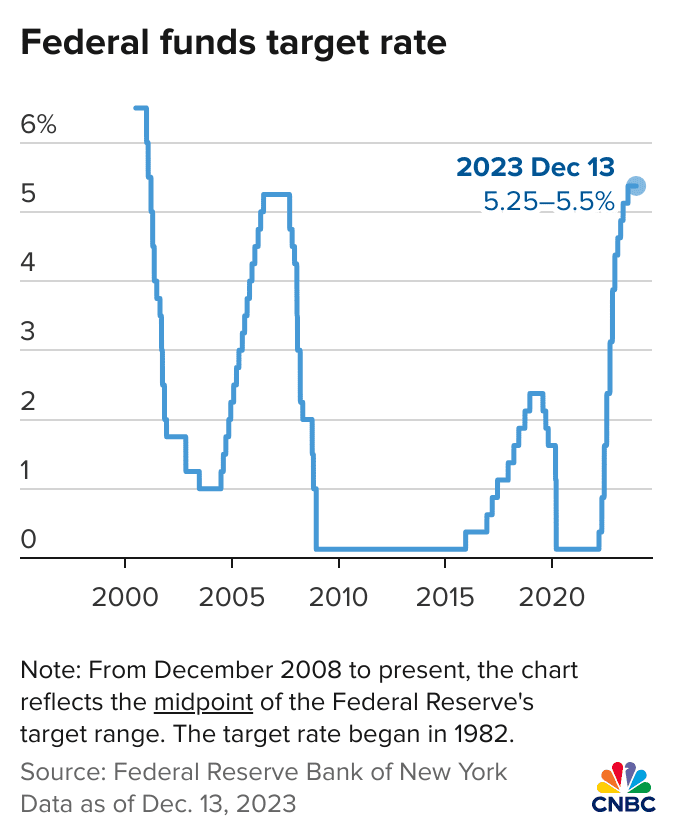
The second danger is more subtle, but very relevant today. The interest rate on a HELOC is generally “floating” not “fixed.” So that can be great in years like 2005 to 2022 with super low rates, but also not as great in 2023 and 2024 when rates float up to 8 or 9%. HELOCs have climbed from roughly 4.5 percent a few years ago to about 8.5 percent today. We have a balance on our HELOC, it’s at 8.5 percent, and as a result I don’t love it as much as I did 2 years ago. 

Who is this best for?

There are people who must have a HELOC, people who should never have a HELOC, and then the rest of us.

People who must have HELOC: Entrepreneurs and owners of early-stage or small businesses. A HELOC is much easier to get than a small business loan, and every small business or early-stage company will struggle to get attractive, flexible, ready-to-use loans to deal with emergencies. If you are a small business owner or prospective entrepreneur, and you own a home with equity in it, then getting a HELOC is an absolutely key tool in your toolbox.

People who should never have a HELOC: If you have the pre-existing condition of constantly living above your means and maxing out your credit card, then a HELOC is going to, over time, turn this bad habit into a dangerous situation that puts your house at risk. Don’t get one.

The rest of us: If you have untapped equity in your home, and the ability to live within your means, the best type of HELOC is one in which it’s there for emergencies but you leave it unused. Since you don’t pay any interest on the untapped part of a HELOC, it doesn’t hurt you to have one set up. It’s more financially efficient to have an unused line of credit on a HELOC than it is to have an emergency fund sitting in cash. That’s kind of my long answer to reader Larry’s criticism.

A version of this post ran in the San Antonio Express News and Houston Chronicle

Post read (157) times.

A Planned Pickleball Haven

On a 50-acre ranch property in the hill country, Sean and Coco Tipton plan a community around the fast-growing sport of pickleball. Well, pickleball is the hook, but mutual hospitality is the vibe.

The Tiptons expect to launch their offering by August 2024 for investors and homebuyers to buy into the Oakfire Ridge condominium community. Their current plan calls for constructing and selling 164 condominium units, each of which entitles the owner to membership in a pickleball-oriented community but also features high-end food, beverage, spa, and pool amenities. 

One easy analogy for the planned community is to a golf course development, except that there will be a total of 19 indoor and outdoor pickleball courts instead of 18 or 36 holes of golf. 

Successful Founder of Airrosti

I sought out a conversation with Sean Tipton because I am a – somewhat to my chagrin – recurring customer of a previous business venture of his. He was the founder and then a long-time partner and executive of Airrosti, before selling his ownership interest in 2017. I found it likely that he’s got a strong entrepreneurial sense for trends in sport and hospitality, and I wanted to know more. If you already know about Airrosti, it might be either because you play professional basketball, or it might be because you are a back-injury-prone crossfitter like me. 

Airrosti

Anyway, Airrosti is now a 750-person strong company, headquartered in San Antonio but with physical locations in four states, that offers hands-on chiropractic treatment and physical therapy for soft-tissue injuries.

Horizontal Hospitality and The Semi-Private Club

The most recent precedent for their pickleball resort is what the Tiptons pursued in 2022. In the latter part of the COVID pandemic, as the world reopened and people re-sought community, they launched on their property at 1275 Stoney Ridge Road in Bulverde a sort of private club, with a particular focus on what Sean calls “horizontal hospitality.” That meant that while Sean and Coco built a beer garden, outdoor kitchen, and speakeasy for ticketed food and music events, their paying customers were expected to treat each other, the working staff, and the Tiptons as if this were a private home. Mutual respect – horizontal hospitality that goes in both directions – was the watchword. 

As Tipton describes their experiment with Oakfire Ridge as a semi-private club, he says the membership cost was a nominal $300 fee, but the theme was that “your price for the membership was your hospitality.” By that, Tipton points out, “you were going to get great hospitality from us. But we expected the same from you. We made it really clear that you have to deliver this type of hospitality to our staff and to other members.” For Tipton, the proof of this concept was in overhearing ticketed members explaining the idea of mutual horizontal hospitality, proudly, to their own invited guests. 

So in addition to selling condominiums, and a new pickleball resort community, the Tiptons are committed to selling this new community on their concept of mutual hospitality.

Does it work as a business? I have no idea. But Tipton paints a consistent theme of hospitality running from his earlier business ventures, which absolutely did work. So I’ll give him the benefit of the doubt.

pickleball

As the founder and then a key executive of Airrosti, Tipton relied on hospitality events as a staple of his business plan. That meant getting to know corporate leaders over food and drink. His team was expected to do the same. 

Speaking of his earlier venture with Airrosti, Tipton told me “our goal was never to sell anybody. Our goal was to introduce them. I would ask my team to go and get to know people, I don’t care what you sell. I want to know that you’re meeting with people, you’re going to break bread, go have dinner, go take them for drinks.”

That ethos – hospitality and relationships first – infused the Tipton’s 2022 version of Oakfire Ridge.

The Condo Plan

As of now, there is one indoor pickleball court, and the Tiptons invite prospective members, condo buyers, and pickleball enthusiasts to exchange strokes and shots with a pickleball robot. 

Condominium buyers can choose to live there year round, as the Tiptons will, or owners can allow the management company to offer up their property as short-term rentals. Both long-term residents or short-term visitors will have access to all of the amenities. The short-term renters, presumably made up of pickleball enthusiasts, will keep the competition fresh.

The Tiptons have already constructed key elements of the community spa and resort spaces, such as their dark atmospheric leather-and-wood interior speakeasy, located inside a former horse barn. They built a large beer garden and patio space with a very high-end industrial kitchen capacity. There’s also the nature preserve with biking and hiking trails, and a pool. The spa will follow. 

The Pickleball trend

Another connective idea of the Tiptons is in seeing where the world is going rather than where it has been. Airrosti shook up the world of speedier sports injury recovery. Oakfire Ridge is an attempt to create a community that responds to the tremendous growth of the sport of pickleball, plus people’s craving for authentic community.

Their bet on a pickleball community seems to be based on at least 3 things. 

First, many people play. The Sports and Fitness industry Association tracks participation across all major sports. Pickleball has been the number one fastest growing sport in America – out of 124 sports – for three consecutive years 2021 through 2023, up 223 percent in that time. 

The number of people who have ever played hit 36.5 million in 2023, up from just 3 million in 2017.

Two, enthusiasts seek community around their favorite sport. But it can be difficult to book a court. 

Oakfire
Hospitality amenities at Oakfire Ridge

I have literally never played once, but a year ago I did have the experience of trying to play one Sunday at the popular restaurant and games venue “Chicken N Pickle.” No luck, the courts were totally booked that day. I just now went online to look for an opening at that same Chicken N Pickle location for an upcoming Sunday in June. No luck, it is entirely booked from 8am to 11pm. Two weeks from now, I can see one hour available, at 9pm. Hmm. Not convenient for me.

Three, and this is something I would not have known, is that passionate pickleball players constantly seek new opponents, so a resort community with regular influx of newcomers is a desirable trait in a pickleball club, according to Tipton. 

Houston has 54 pickleball court locations. Austin has 48. San Antonio currently has 21. 

Other spa, hospitality, and pickleball places are popping up in Texas to respond to the explosive growth of the sport, like the San Luis Resort in Galveston, the Sage Hill Inn and Spa in Kyle, or Horseshoe Bay Resort in the Hill Country.

The 50-acre property at Oakfire Ridge had been offered for sale between 2021 and 2022, listed in the Express News as one of the “most expensive homes for sale” in the San Antonio area. 

Instead of selling, the Tiptons now are set to launch an original condominium and resort community to match the trends they see in hospitality and sport.

Post read (434) times.

The TXSE – Meh?

On June 5th Houston-based finance entrepreneur James Lee announced $120 million in institutional funding to build a new Texas Stock Exchange (TXSE), to compete with the dominant stock trading duopoly of Nasdaq and the New York Stock Exchange (NYSE). The TXSE will seek SEC approval in 2024 and plans to open for new listings for IPOs, ETFs, and trading in 2025.

Announced June 2024, to launch in 2025

Working in favor of the credibility of the TXSE: Citadel and Blackrock are the two biggest reported financial sponsors of this startup. These are both serious financial institutions that would have a deep interest in shaping and owning the infrastructural guts of a new trading platform. 

Perhaps not surprisingly, the Texas Association of Business expressed a Lone Star-patriotic thumbs up to this news, noting “Texas is quickly becoming an epicenter for the financial services industry.”

The Wall Street Journal chimed in with hopes that competition for the New York duopoly will lower fees, and curb aggressive regulatory demands on listed companies. 

LinkedIn commentary on the announcement expressed kind of what you would expect from fans of the Lone Star State, “Love it. The listings and orders are bigger in Texas!” and “Very exciting news for Texas.”

I mean, ok, sure, competition and innovation is good. But I strongly doubt that this newly announced TXSE is something anyone outside of high-frequency trading firms will be aware of five years from now. It’s astonishingly hard to disrupt successful stock markets. 

Through a spokesperson, Lee declined to comment or be interviewed for this column.

I point out Citadel and Blackrock’s sponsorship to acknowledge that they will certainly have the expertise, financial heft and even trading volume to bring to the platform if the TXSE gains momentum in listing companies and facilitating trading. 

Most new stock and ETF trading platforms are not transformative. Most new exchanges are merely “meh.” Many regional exchanges are worse than meh. 

Convincing issuing companies, or ETF managers, to choose the new TXSE over the tried-and-true NYSE or Nasdaq will be a real challenge. A number of electronic exchanges have popped up over the past decade, even as legacy regional exchanges have disappeared. Unless you are deeply enmeshed in stock markets professionally, you’ve probably never heard of these new electronic exchanges. 

Michael Lewis wrote his book “Flash Boys” about the exciting creation of a better electronic stock exchange launched in response to the dastardly takeover of electronic trading by high-frequency trading firms. 

Investors Exchange (IEX)  – that disruptive startup featured in the Lews book – launched in 2016 and currently reports having 1.7 percent of stock trading market share. It offered to drastically cut prices for companies that wanted to list new shares of their IPOs on IEX. After listing a single company in 2018, IEX announced in 2019 that it would no longer be in that business. 

Another exchange called the Long Term Stock Exchange (LTSE) began in 2017 with the intention of breaking up the stock listing duopoly. It appears to have listed exactly two companies since it began. 

The Members Exchange (MEMX) launched in 2019 and began trading in 2020. It also had initial backing from Citadel, Blackrock and at least 16 other major financial institutional players. 

Big banks and financial institutions frequently seed trading platform startups, in the hopes they can shape the future of markets. 

John Hyland is a 19 yr veteran of the ETF industry, created the first oil (USO) and natural gas (UNG) ETFs and has been involved in launching scores of ETFs for multiple different issuers. Hyland speculates that the reason firms like Citadel want to back new electronic exchanges is that it gives them access and leverage into a huge input into their business, which is the cost of acquiring trading data. 

One problem he sees is getting companies to list with anyone other than the dominant issuers.

“If you’ve been around for a while as a big company in Texas or the Southeast, with your primary listing in NY, are you going to change away from the NYSE? If you are a tech company based in Texas, being listed on Nasdaq is part of your brand. And finally, if you are a startup, is there something about being on a Texas exchange that is advantageous?”

Hyland offers a quirky but maybe psychologically powerful reason for companies and ETF issuers to choose New York. In his experience “ETF listers are relatively indifferent to their listing venue. People generally do the New York listing so they can do the bell-ringing at 9:30am on the day they launch.”

Another problem that makes Hyland skeptical around ETF listings in particular is that the Texas brand really isn’t an advantage in that space. The largest 28 ETF issuers (like Blackrock, Vanguard, and State Street) control 97 percent of the market with $8.8 trillion in assets. None are based in either Texas or the Southeast states. Texas holds no special appeal to them. 

Plausibly, Hyland says, TXSE can enter a crowded marketplace of other electronic exchanges. “As a startup electronic exchange. It has good backing, and credible leadership. They have a shot at it. It will depend on micro-market structure, and the fees they charge.” 

NYSE – guys in blue jackets

Essentially, asks Hyland “Is it a cheaper mousetrap” for market makers and traders on the platform? The real determinant of uptake among trading firms will be how market makers perceive the costs of doing business on this new exchange versus others. 

Computer Networks Not Blue Vest Cosplayers

Another thing to think about a Dallas-based stock exchange is that the location of a stock exchange is actually cyberspace. Which is to say, you’re not going to see guys in those blue “NYSE” vests gesticulating and shouting “buy buy buy!” or covered in the confetti of trading tickets scattered on the floor of a downtown Dallas office. You see those photographs every time the Dow hits a new high or drops 2 percent in a day. Those blue vest guys at the New York Stock Exchange photographed by the news at this point in the evolution of computerized trading are nearly cosplayers, not much different from the historical re-enactment dudes at the Alamo, on Battle of San Jacinto day. Stock exchanges are computer networks these days, not open-outcry trading pits. 

Stock Exchanges Outside of New York

Also, the recent history of regional exchanges like TXSE isn’t great. 

The Boston and Philadelphia stock exchanges were acquired by Nasdaq in 2007 and the Chicago stock exchange was acquired by the NYSE in 2019. They were legacy exchanges that outlived their usefulness.

A “Canadian stock exchange” listed company, to a Wall Street veteran, is basically a red flag shorthand for a “penny stock company that’s probably up to something dodgy.” 

A notable exception: The formerly 100 percent Saudi Arabian government-owned Aramco for example is listed itself in 2019 on the Saudi Exchange in the world’s largest IPO, which makes sense as the national champion oil company of Saudi Arabia. It issued additional shares in June 2024. That kind of small regional stock exchange choice is unusual but understandable in limited cases like Aramco. 

Companies in the Southeastern United States – the stated target market for the TXSE – probably do not have that same type of incentive to list with a regionally-located exchange, so it’s hard to imagine a company or ETF sponsor choosing the TXSE. Realistically, I’m sorry fellow-Texans, the TXSE is probably a nothing-burger. 

A version of this post ran in the San Antonio Express News and Houston Chronicle.

Please see related posts:

Book Review: Flash Boys by Michael Lewis

Book Review: Flash Boys – Not So Fast by Pete Kovac

Post read (341) times.

Explaining the Real Estate Broker Settlement

Under the terms of a settlement agreement between home buyers as represented in a class action lawsuit and four large real estate brokerages, standard rules of engagement will soon change somewhat between real estate brokers and their clients. 

The conventional wisdom described in most news stories – hoped by consumers and feared by the realtor business – is that commissions on residential real estate sales will drop from a traditional 6 percent paid entirely by the seller, to some lower negotiated rate paid separately by sellers and buyers.

Lower transaction fees, especially for something as central to household wealth as real estate, seems like a win for homeowners, possibly at the expense of the realtor business. If real estate brokerage fees have been kept artificially high by an unspoken cooperation by big brokerage firms to cluster fees in the 6 percent range – which is the assertion of the original plaintiffs in the lawsuit – then this ruling and settlement may land the average fee at a much lower range, like a 3 to 4 percent range.

Possibly no change

In conversations with real estate professionals, however, their belief overall is that this settlement will likely lead to very little observable changes, especially in Texas. On the other hand, the settlement may have unintended consequences that actually hurt consumers. Mandated changes will go in effect August 14 or later, so we’re still in speculation mode.

Far from lamenting upcoming changes to her industry from this settlement, realtor Carolyn Rhodes of Kuper Sotheby’s International Realty in San Antonio told me “this is the best thing that has happened to us in 10 years.” She explained her confidence stems from two points. First, the rules of the settlement will mandate written agreements for buyer-side representation, and it will restrict certain types of commission listings by seller’s agents which might have been used to enforce – again in an unwritten way – a 6 percent standard commission. But Rhodes says reforms in Texas in the 1990s and 2000s already mandated buyer-representation contracts, and also already made commissions explicitly negotiable. Far from putting downward pressure on commissions, her theory is that new rules will lead to better disclosure and dialogue about brokers’ fees, which helps her business rather than hurts it. 

Nicole Webb (my wife’s cousin)

Outside of Texas I heard the same thing from Nicole Webb of Realty Executives in Knoxville, TN. She doubts the settlement will have any negative impact on her business. For starters, she says she’s rarely listing a property for a full 6 percent commission (she actually said “never”) so does not think downward pressure on commissions will be any adjustment for her. Next, she’s confident that she talks to clients upfront about how commissions work, what costs they cover in terms of marketing and advertising. And finally, like Texas-based brokers, she would always have had in place a written agreement with clear rules of engagement as a buyers’ broker. (Disclosure: Webb is my wife’s first cousin, once removed). 

Another real estate broker friend I spoke with who asked to remain anonymous expected very little change in her business. As a well-established broker who relies primarily on relationships and deep knowledge of her coverage area, she felt confident that future commissions would reflect value-added work in line with past commissions. Many of those were already negotiated away from the “standard” 6 percent anyway, based on the size or complexity of the transaction. 

The details of the settlement

Regarding the details of the settlements over the past few months, large brokerage firms Keller Williams, Anywhere, RE/MAX, and HomeServices of America were all sued by a group of home sellers. Anywhere and RE/MAX settled before trial, paying $83.5 mm and $55mm respectively.

A jury then ruled against the industry, and a judge ordered the National Association of REALTORs (NAR), Keller Williams, and HomeServices of America to pay damages of $1.8 billion. NAR agreed to pay $418 million, and Keller Williams settled for $70 million. In April 2024 HomeServices of America, owned by Warren Buffett’s Berkshire Hathaway, finally settled for $250 million. 

The NAR settlement

A central feature of the settlement is that when agents list property on the Multiple Listing Service (MLS) database of properties for sale, they’re now much more restricted in how they communicate on this listing about commissions. They can’t require a cooperative relationship between seller and buyer when it comes to commissions. They can’t filter listings by compensation. The intent is to make it more likely that seller’s agents and buyer’s agents are totally separately compensated, and they negotiate their own compensation separately with their own clients. 

Risks for homebuyers

One possible unintended consequence of this settlement, commented on by a few brokers I spoke with, was the risk that some consumers may actually be harmed by the settlement. 

That’s the speculative worry of J Kuper, president of Kuper Sotheby’s. In particular, homebuyers expected to pay for their own buyer’s representative face a problem. Under current rules that pre-dated this settlement, banks who offer mortgages at a real estate closing may not include buyer’s commissions in their loans. The result? Buyers may have to pay the 1 to 3 percent commission at closing, on top of the already-difficult-to-save-for down payment. If banks do not adjust their rules on mortgages in coming months, this could leave home buyers scrambling for extra cash at closing, or incentivize them to forgo representation. Neither is an outcome that will serve home buyers interests well.

J. Kuper of Kuper Sothebys

Steve Yndo has been a long time broker for King William Realty and currently is a developer and commercial broker at Yndo Urban in San Antonio. 

Although his bread-and-butter is not residential real estate, he also foresees complications from the settlement and new rules.

As Yndo says, “The biggest pitfall, the biggest problem might be that if the prevailing deal becomes ‘Hey sellers, you’re now expected to only pay for the seller rep’ and they’re only going to pay those guys half the current prevailing fee, then buyers are kind of on their own.

In concrete financial terms, what Yndo describes goes like this: A first-time home buyer diligently gathers her $60 thousand down payment for her $300,000 dream home. Or $30 thousand down-payment for a 10 percent, or whatever. And the new rule may require her to come up with an additional $6K to $9K at closing to compensate her buyer-side broker. 

So as Yndo speculates: “What first-time buyer is able to pay that fee, unless the practice also becomes that the fee just gets rolled into the deal and as part of the mortgage? Which is more or less how it has always worked. If that doesn’t come about…[Buyers] may go unrepresented, trying to do it on their own.” Since that buyer’s fee isn’t financeable under current rules, there may be a problem in the future. 

J. Kuper’s strong belief is that real estate markets depend more than anything on stability and clarity. The uncertainty around adjusting to the new settlement is what could slow down transactions, not the substance of the settlement itself, which he finds, like his colleague Rhodes, not particularly worrisome. 

In May 2024 not all the details are yet known. A final agreement on new rules of engagement are still being worked out, and will not take effect for real estate transactions until August 17 2024 at the earliest or the months after, adding to uncertainty for real estate industry professionals.

A version of this ran in the San Antonio Express News and Houston Chronicle

Post read (148) times.

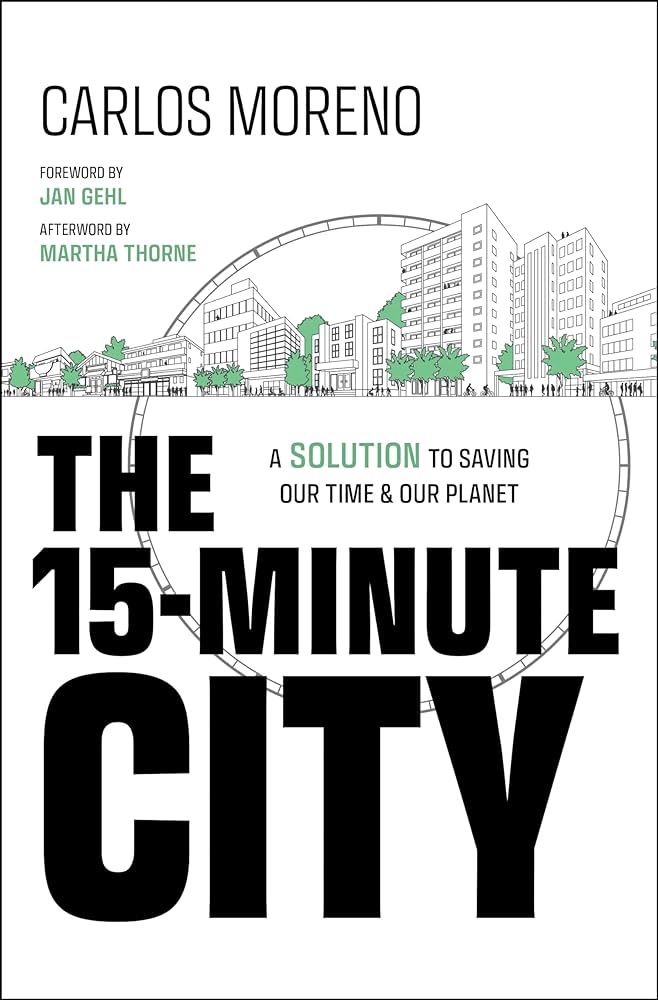
Book Review: The 15-Minute City by Carlos Moreno

Professor Carlos Moreno first presented his “15-Minute City” idea in 2016 at a climate conference. His big idea was that reducing fossil-fuel emissions required a radical redesign of urban life, reducing automobile traffic by making everything much more accessible to smaller neighborhood units.

Part of the power of Moreno’s concept comes from the fact that current Paris Mayor Anne Hidalgo has adopted the 15-Minute City concept as her guiding leadership principle, and she will be mayor until 2026.

Moreno’s new book The 15-Minute City: The Solution To Saving Our Time & Our Planet published May 7th explains this concept in depth and chronicles attempts by leaders of contemporary cities – first 20 cities, then 40 cities, and now many more cities – to imagine and then implement design and zoning changes to improve urban life.

15-Minute-City

Moreno’s argument is that we can and should measure the distance in time it takes city-dwellers to reach essential services like education, work, health, food, and entertainment amenities. Healthier cities try to avoid long commutes and traffic jams, some of which are caused by car-centric planning. We can accomplish this partly by creating the conditions for more walking, biking and public transportation modes. Mixing residential and commercial buildings makes it more likely that people can live in complete neighborhoods where much of life can be reached without getting stuck in traffic.

Moreno’s 15-Minute City is a great example of how a cleverly conceived big idea can drive change when adopted by the right people.The mayors of cities as diverse as Paris, Milan, Cleveland, Portland, Melbourne, Buenos Aires, and even Busan in Korea and Souse in Tunisia have explicitly modeled their urban redevelopment plans on Moreno’s concepts, as explained in his book. 

The convincing appeal of The 15-Minute City, for me personally, has very little to do with environmental impact or as a way to address climate change. I’m not in fact convinced by his arguments on that aspect of it. 

I am convinced instead by the aesthetic and lifestyle improvements that a 15-minute city seem to offer. In the car-centric world of 21st-Century Texas cities, I lament and resent the reliance on cars that our built environment requires. In San Antonio, where I live, we tend to build new residential communities with single access points that connect only to interstate highways. This requires everyone to get in their automobiles, use the interstate like a city street, and then drive three exits down to get to their local grocery store. Congestion is a guaranteed outcome. With this model, time wasted in traffic is inevitable. 

We enjoy a number of walkable amenities and a pedestrian-friendly life in my neighborhood. But I still of course get in my car and drive 15+ minutes to go to the doctor, or to bring my daughter to her soccer team practices thrice weekly. It’s fine, but it could be a lot better. 

Objections to the Book

This is by no means a perfect book.

First, the book does not provide a proof of his concept in any way. It does not provide rigorous data or analysis on the plan versus other solutions. The book is much more of a manifesto for a better way to approach urban design, as well as a history of what went before his big ideas and what has happened since, to coalesce urban planners around his big idea. 

Moreno’s also neither a great writer (English may be his third language) nor a convincing scholar. He repeats himself and relies on fuzzy descriptions of hopeful ideas from around the world that might hopefully accomplish his big idea, ideas which are still very much in the planning phase. 

I find the 15-Minute City convincing not because of the quality of his evidence or argument, but because I’m predisposed aesthetically to this kind of urban life. It’s a big idea, I like the big idea, and I think we should aim for it. The 15-Minute City is totally different from the way Texas cities are being built right now, and that’s a damn shame.

The Wacko Objections To The Book

One version of good-faith criticism of the 15-Minute City is that urban design emphasizing small, slow, and localized neighborhoods inside a large city could involve convenience, lifestyle, and economic trade-offs. Developers of new neighborhoods and new office parks clearly find it to their advantage to continue to do more of what they’ve already been doing. Traffic engineers clearly find it to their advantage to build faster and bigger roadways for automobile-oriented transportation. I think I could see why they wouldn’t naturally be big fans of Moreno’s ideas.

Carlos Moreno is a very big Jane Jacobs fan

Then there are the bad-faith critics and wackadoodles. Moreno in news reports has mentioned receiving death threats because of his idea. For a nerdy academic concept like this, the threats are probably a sign that he is on to something big and important. 

The 15-Minute City concept is potentially threatening to the status quo of cities as developed since the 1950s. As an idea it’s been twisted by bad-faith critics into some monstrous intrusion into contemporary urban development. Socialism! Europeanism! The death of the automobile!  

Earlier iterations of international climate-friendly zoning ideas have acted like a red cape before a bull. A UN-sponsored agreement from 1992 signed by 178 countries, called Agenda 21, became a conspiracy-theory code word for far right commentators who imagined this as a forerunner of a secret “New World Order.” Attempts to limit the potential profits of developers can be, and has been, spun into some threat to an American way of life. What seems like sensible planning for better life in cities to some can be seen as an attack on private property rights to others. 

While Moreno is certainly European in outlook and interested in small scale, walkable, and bike-friendly neighborhoods, he does not personally represent a vast conspiracy. He is just a guy, a Colombian-born Parisian professor who happens to have come up with a cleverly-marketed way to help city-planners imagine better cities. And as described in his book, he hit the zeitgeist for many cities on different continents led by leaders looking to revitalize small-scale neighborhood life among modern metropolises.

A version of this post ran in the San Antonio Express News and Houston Chronicle.

Link to purchase book: The 15-Minute City by Carlos Moreno

Please see related posts

Book Review: The Death and Life of Great American Cities by Jane Jacobs

Book Review: Going Going by Naomi Shihab Nye

Post read (456) times.

TIKTOK Updates

The official position of members of US Congress is that Chinese-based ByteDance, the owner of TikTok, represents a threat to American security both because of data privacy concerns and the propagandistic potential of the platform. 

A law passed by Congress and signed by President Biden April 24 requires a sale of the American side of the business to a non-Chinese owner by January 19, 2025. Failing that, Bytedance’s popular app will be blocked in the US.

The official position of ByteDance is that they would prefer to shut down the business rather than sell it, and a lawsuit brought May 6th seeks to achieve their aim of blocking the new law in US courts first. 

To an extent largely invisible to old people, (fyi my definition of “old people” in this context is anyone over, say, age 21) TikTok is the culturally dominant force of our times. So this will be interesting

Universal Music’s reaction

When mega pop star Ariana Grande wants to launch a hit song, music promotion business professionals know its best bet is to drop marketing dollars on TikTok creators to push music and dance trends, to create buzz for the new music.

Deoz Wilson, an agent for TikTok influencers at RedXTalent, received some of those dollars from Universal, Grande’s music label, in April. 

He in turn distributed money to the influencers he represents, who he refers to as “creators.” Universal paid $1,000 for example for San Antonio-suburban teen Ryane Roy to create a short dance video to the new Ariana Grande music.

Roy is a 15 year-old just finishing up ninth grade this month, who also happens to make tens of thousands of dollars per year as an influencer on online platforms. Roy built her online business originally on TikTok with a combination of dance and relatable lifestyle and fashion short videos.

Ava Lewis, another suburban San Antonio teen and real-life friend of Roy’s who has built her own following on TikTok and joined Wilson’s team of influencers last year, also received payment for promoting Ariana Grande’s new music on TikTok.

Ryane_roy
Ryane Roy, TikTok teen Influencer

The possibility of a ban has forced businesses large and small to react. 

Back in February, Universal briefly pulled the rights to play its music from the platform. They had  complained that TikTok paid them insufficient amounts for royalty rights, although the emerging possibility of the ban probably played a part in their decision as well. Their marketing budget then shifted to other platforms like Instagram.

A TikTok ban of course also threatens the businesses of young entrepreneurs like Wilson, Roy, and Lewis.

Roy reacts

Ryane Roy earns money from a wide variety of revenue streams, including views on YouTube Shorts, shopping links on Amazon & Instagram, brand endorsements, music promotions, as well as paid videos on the celebrity Cameo site. While she has 285 thousand subscribers on YouTube and 153 thousand followers on Instagram, her 1 million followers on TikTok still drive the business. 

“What people don’t realize is social media exposure through TikTok is many small business owners’ only  source of income, and banning TikTok would be potentially taking this away from them,” says Roy.

While Roy believes the TikTok ban is both wrong and potentially very harmful to businesses like hers, she’s also adjusting to any eventuality.

“Because of the TikTok ban threats, I have been consistently promoting my YouTube and Instagram often to ensure continuity,” something she has been working toward for more than a year.

Wilson, manages Roy, Lewis, and another Texas-based influencer named Leigha Rose Sanderson, as well as a stable of other creators, and has had to adjust as well. 

Wilson said “for us, our agency is adapting to the reality [of a potential TikTok ban.] We encourage our influencers to be more active on Instagram Reels and Youtube Shorts. We don’t know if the ban will become real, but we have a Plan B. 

Wilson’s business was also built based on the audience-gathering potential of the TikTok algorithm in particular. As much as YouTube and Instagram are useful, they are currently no match for TikTok, in terms of driving audience views and driving the culture. Wilson says “Of course there is also Instagram and YouTube, but the reason why TikTok became so popular and successful is because anyone can become famous on their platform, because of their algorithm.”

The joke in my own family is that I sometimes become aware of music and dance trends on Instagram “Reels” which is the Meta company’s attempt to compete with TikTok. Inevitably, however, the content on Reels that Dad is aware of is weeks or months behind the trends on TikTok, at least according to my kids. That’s fine for a laugh at the older generation, but for a company like Universal it’s absolutely untenable. 

Deoz_Wilson
Deoz Wilson owns an agency and also has his own TikTok presence

Wilson explains that music industry giants like Universal cannot afford to miss the chance to hit the teen zeitgeist for music trends, which happens much faster on TikTok than any other platform. 

Bowing quickly and inevitably to the power of TikTok to set the trends, Universal decided in April to reauthorize its music catalog on the platform. Wilson reports that bigger music budgets are now back, from Universal and another client Warner Music, for boosting performers among the slate of creators he represents, like Ryane Roy and Ava Lewis.

Presidential politics are also at play. As President, Trump had previously threatened to shut down TikTok. In the past year he has reversed his position. His re-election would likely help TikTok survive the current ban.

So, powerful forces may save TikTok via lawsuit or political pressure. On the other hand, powerful companies like Meta (with Instagram), Snap (with Snapchat), and Alphabet (with YouTube) would be logical beneficiaries of the ban and might be happy to see it knocked out, to their benefit.

Here’s an interesting experiment you can try with the teens in your life: You may consider them wildly uninformed about political or cultural things that you find important, but they are remarkably well-informed on the issue of TikTok’s banning by Congress. ByteDance and its supporters have made the issue impossible to ignore for the 170 million Americans on the platform. This is being portrayed by ByteDance in terms of freedom of expression, First Amendment rights, artistic creative freedom, and the trampled rights of businesses that have made TikTok their home. Maybe ask a teen in your life what they know about this, just to see if they have strong opinions? Spoiler alert: They do.

A version of this post ran in the San Antonio Express News and Houston Chronicle.

Please see related posts:

San Antonio-area teen makes serious money with her business based on TikTok

TPR Podcast: The Austin-area TikTok and Instagram influencer making a serious gross profit – on Slime.

Post read (82) times.