The I Bond Solution

I learned about a timely investment tool from an article by Burton Malkiel in the Wall Street Journal this past month.

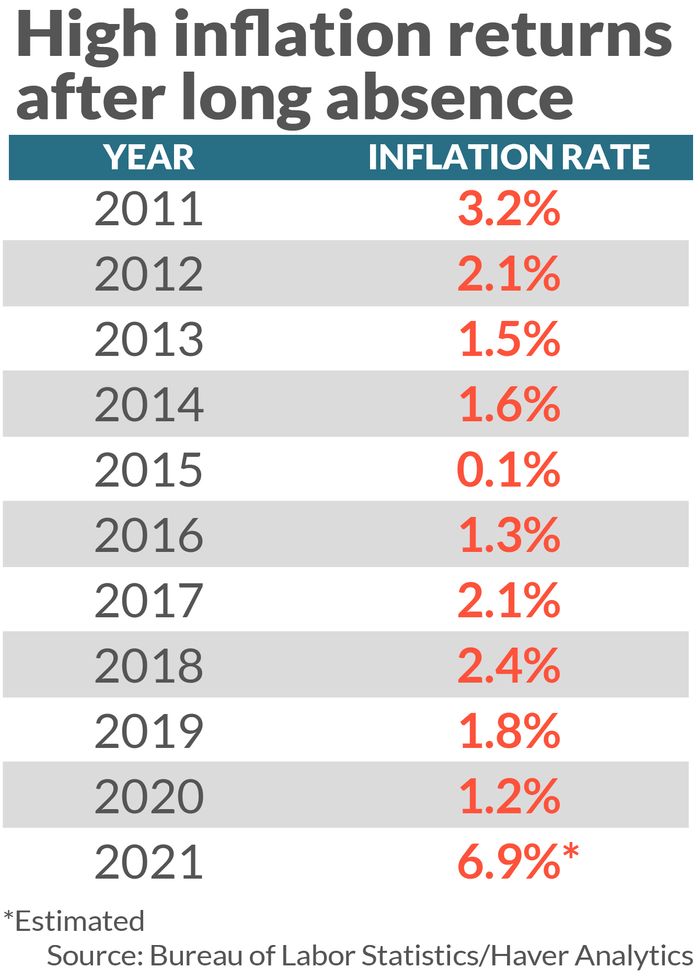
Timely, because observed, economy-wide inflation has finally hit us and prompted the Federal Reserve to acknowledge that “transitory” isn’t the right word for inflation anymore.
inflation_in_2021

I don’t give investment advice here, nor should you ever take investment advice from a stranger who writes a blog or newspaper column. So this is not something you necessarily should do. Rather, I think it’s worth knowing about tools that may solve a particular worry of yours, particularly if it’s been nearly 40 years since we’ve actually experienced broad-based inflation.

Malkiel is best known as the author of one of my personal All Time Top Five Investing Books, A Random Walk Down Wall Street.

So for me – just like in those E.F. Hutton commercials that the over-50 crowd will remember – “when Burton Malkiel speaks, people listen.”

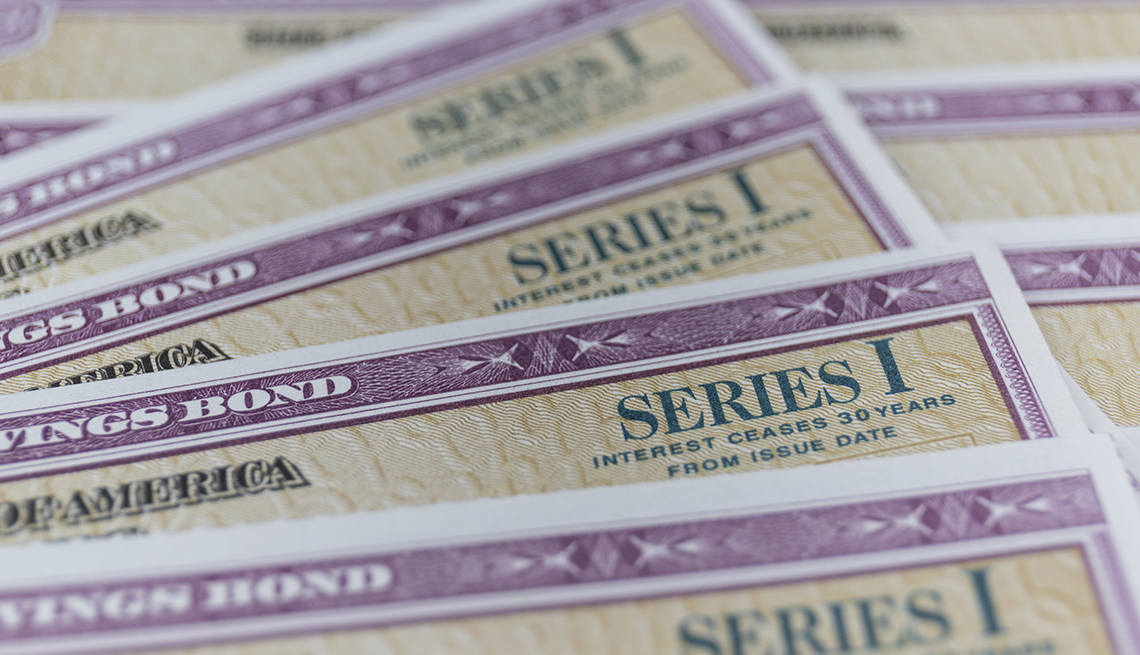
In his article, Malkiel introduced the US Treasury I bond as a tool that we should consider as part of their overall portfolio.

Here’s the part that makes I bonds quite sexy right now. Because the consumer price index jumped so much this Fall, the yield on I bonds is 7.12 percent. I bonds purchased in January 2022 will enjoy this fixed rate until July 1st. That is the highest interest rate that I bonds have offered since May 2000. The semi-annual yield reset will track the consumer price index in the future. After the next reset, the yield could very well go down, if inflation goes down. If it stays high, the I bond will keep a very nice yield, which is why it’s a plausible hedge against inflation. No matter what the inflation rate is in the future, the yield on I bonds can not go negative.
i_bond
U.S. Treasury Series I Savings Bonds.

Institutional investors – big funds and insurance companies and banks – typically have looked to TIPS (Treasury Inflation Protected Securities) when they worry about inflation. Since 1997, investors have been able to buy these bonds that pay a fixed interest but that adjust their principal upward in response to inflation, also as measured by the consumer price index. 

The little guy has typically only been able to access TIPS through mutual funds. Because inflation has been so tame since 1997, TIPS have rarely been high yielding, but instead have offered a hedge against the “what if” scenario. And that “what if” has hardly shown up until recently. Returns over the past 10 years on a TIPS fund have been in the 3 percent annual range, before taxes, with the biggest boost to that performance hitting in the past two years.

Unlike TIPS, you would buy I bonds directly online from the US Treasury, without a brokerage company or mutual fund. They’re not saleable by a brokerage, nor by you. You buy them in increments from $25 up to $10,000 maximum per social social number, per year. They register in your name only, or the name of the trust or partnership buying it. 

I bonds are designed for retail investors with a long time horizon, and do not work as well for a short-term trade. That’s because you will pay a 3-month interest penalty if you redeem after 1 year. Although they can’t be traded and are intended to be held for 30 years, you can redeem your I bond after 5 years without penalty.
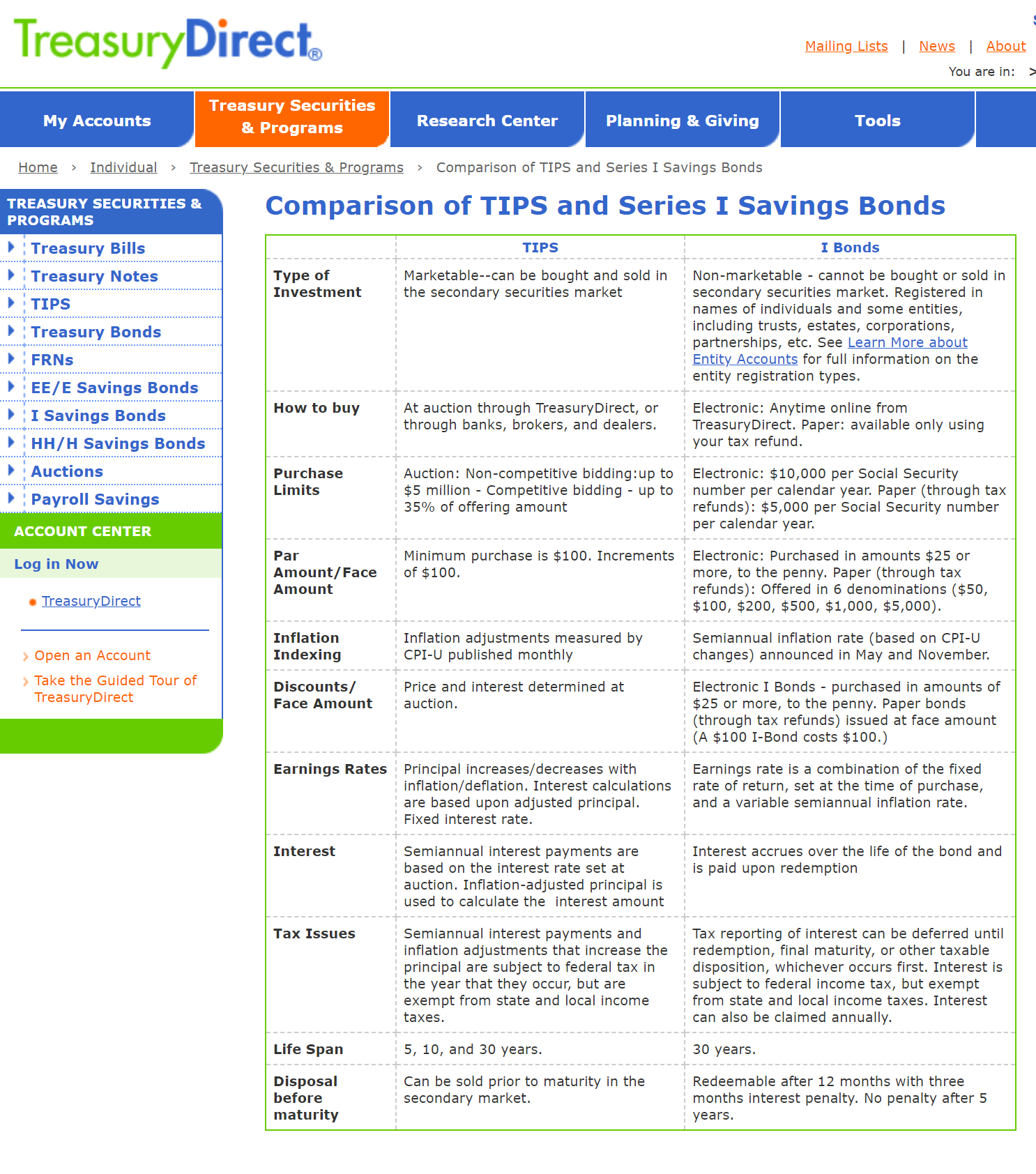
ibond_details
A detailed comparison of TIPS and IBonds from the Treasury website

Because interest accrues until maturity or redemption, you will pay income tax on the interest only at the end. The following fact is irrelevant for Texans, but the interest earned on I bonds is exempt from local and state income taxes, like traditional municipal bonds.

Speaking of traditional bonds, US Treasury or corporate bonds are the last thing you want to buy in an inflationary environment. In addition, US Treasury bonds offer a measly 0.5 percent to 1.8 percent right now. Even a basket of high-risk corporate bonds (what we’ve impolitely called junk bonds since the 1980s) only get you about a 4.5 percent annual yield. That’s unacceptable unless you enjoy locking in losses against the current observed rate of inflation.

Maybe another concluding thought about this particular investment tool is in order. I, personally, will not be purchasing inflation bonds, neither TIPS nor US Treasury I bonds. I’m not actually that worried about inflation in my life or in the economy. I think my combination of real estate (my home!) and stocks (my retirement accounts!) will serve me fine under medium-level inflation. But I have a different risk appetite from most – my appetite is quite high. And I have a longish time horizon. I’m turning 50 this year so I have another 80 or so years to live (if my math is correct?) 

I’m not deviating from my plan (Buy 100% equity index funds, never sell) but I mention this I bond product so that you’re a more-informed investor. 

Also, you should read Burton Malkiel’s classic A Random Walk Down Wall Street. That is my strongest investment recommendation. I wouldn’t recommend any particular stock or bond to buy, but reading a classic like Malkiel’s book is highly likely to make you richer in the long run.

A version of this post ran in the San Antonio Express News and Houston Chronicle

Please see related posts:

Book Review: A Random Walk Down Wall Street by Burton Malkiel

Never Sell – A Disney and Churchill Mashup

How To Invest

Post read (362) times.

TPR Podcast Episode 3 – The Artist as Businessman

My friend Stuart Allen has strong ideas. Art and money can (must!) coexist. The myth of the starving artist does not serve artists or the art world well. Art school is great, but sometimes errs on the side of training art teachers rather than artists. Artists would do well to treat their practice like a small business.

I already admired Stuart’s art – we have a piece of his in our home. But his business sense is also quite admirable!

Stuart Allen

I’m proud of this conversation we had for No Hill For A Climber, my new podcast with Texas Public Radio. You can even listen on Apple podcast and Spotify. And you should absolutely subscribe and rate it and comment and do all the things!

Post read (186) times.

Revisiting Recycling in late 2021

The two biggest macroeconomic worries in the US right now are burgeoning inflation and supply chain issues. A plausible narrative for both is that the rolling global COVID pandemic has disrupted our ability to efficiently move products to markets, while loose money policies have ignited inflation.

These both sound bad. But with markets, sometimes good or bad results depend on who you are. A disrupted supply chain for one business is an opportunity for another business. And high prices? Well, in recycling commodity markets for example, it’s the best market they’ve seen in the last ten years. 

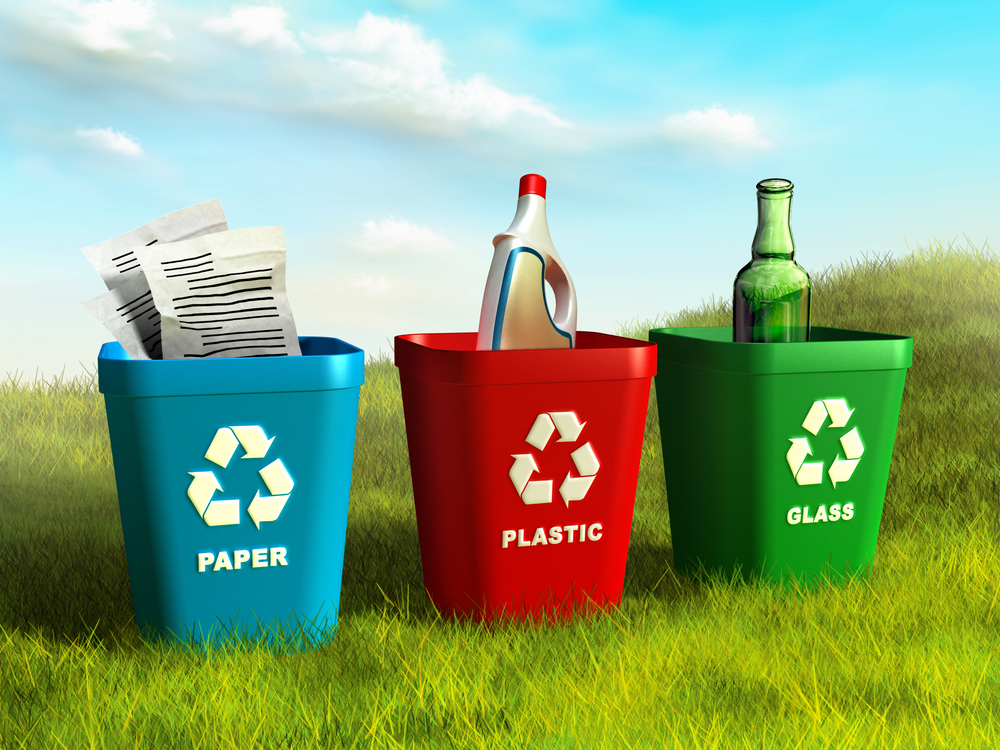
Colored trash bins used to recycle paper, plastic and glass.

What does this mean? Recycled materials – in the big four categories of paper, metal, glass and plastic – all have secondary markets. The business goal of a recycling provider is to sort, package, and sell as cleanly as possible these four types of materials to the end user.

“Cardboard and paper prices are both on the rise. Plastic prices have skyrocketed compared to what they were, let’s say, five years ago,” Josephine Valencia, Deputy Director at the City of San Antonio Solid Waste Department, tells me. Her explanation points to the same macro trends we’re all worried about.

Valencia continues explaining high prices of recycled commodities, “In the past two years, and this is just my guess, it’s COVID-related supply shortages. There’s a shortage of just about everything these days. And I think that has really driven up the price of certain [recycled] commodities.”

So if you’re in the recycling business, these are the best of times.

If your personal subscription to the online newsletter “Resource Recycling” has recently lapsed, allow me to quote a few price changes for you. 

Baled steel cans have risen from $78 per ton last year to $250 per ton. 

Baled aluminum cans jumped from $0.45 a pound last year to $0.77 a pound last year. 

On the paper side, corrugated containers trade for $171 per ton, up from $60 per ton last year. Another paper product, sorted residential paper, sells for $117 per ton compared to $38 per ton a year ago.

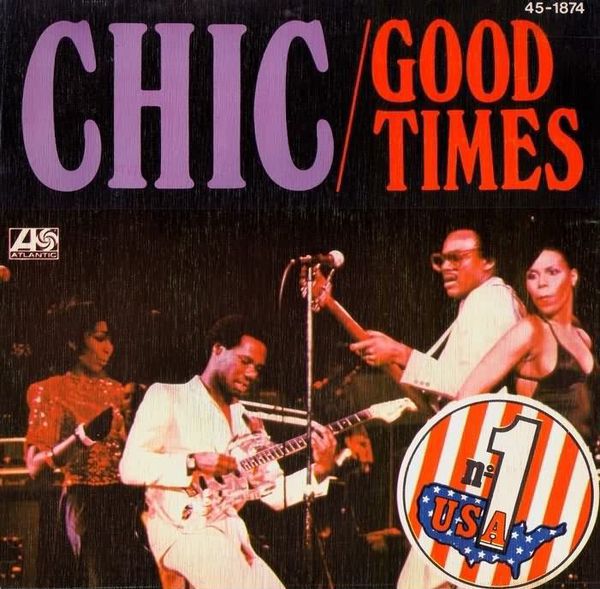
As the band Chic used to sing back in 1979, These. Are. The. Good. Times.

If you were hoping to have a disco-era earworm stuck in your head for the rest of the day, dating back to the last time we saw high inflation, you’re welcome.

Good_Times
For Recyclers

When last I checked in with the recycling markets in 2019, a few trends were made clear to me. 

First, glass is infinitely recyclable but generally a money loser for recyclers unless it can be sorted by color and delivered to a nearby glass recycling operation. Second, paper and cardboard was in a multi-year decline because of the lack of demand for newsprint (RIP the newspaper industry!) and the awkward adjustment to a world in which ubiquitous Amazon cardboard didn’t fit traditional cardboard-sorting machines. Third, plastic prices were in freefall because China had begun refusing most deliveries. Fourth, metal was the only reliable money-maker.

But high prices in 2021 have swung recycling programs from losses two years ago back to a money maker. Things are a lot better now in San Antonio, for example, says Valencia. 

I’m going to simplify the math a bit, but here’s the basic deal in my city. We pay approximately $50 a ton to dump recycled bins with the city’s provider, which currently is the large waste processor Republic Services. Republic sorts and processes the stuff, and then sells it in the secondary commodities market, and agrees to share half the resulting revenue with the city. If the revenue from sales generates $120 per ton, the city makes $60, and can count a “profit” of $10 per ton. That’s approximately the economics – admittedly simplified – right now. 

In a bad year like 2019, the revenue share didn’t quite cover the upfront $50 cost to deliver, so the city had a “loss.” A bunch of other factors makes my explanation overly simple – they average out prices, contaminated commodities change the final revenue-sharing formula, losses can be carried forward – but Valencia endorsed my explanation as basically approximately true.

A factor which tempers the celebration of 2021 recycling profit is that – just like any business – the city’s costs are also affected by inflation. In the past year, the cost of purchasing new plastic household bins has increased from roughly $50 a barrel to $75 a barrel. Because they are made of plastic and plastic prices are way up. With a million barrels in circulation right now, that price increase affects the annual budget in a real way. And just as the price of new and used cars has increased, so too has the price of garbage trucks. In that past year, that’s gone up from $365 thousand per truck to $425 thousand per truck, says Valencia. Because of course trucks are made up of steel and plastic, all of which costs more now than last year.

“On the one side I can say, I’m excited as the city recycling revenues have gone up, so we’re making money. But on the other side, at the end of the day, we’re not sitting on a windfall because even though our revenues went up all our expenses went up as well,” continued Valencia.

Like any volatile financial market, hindsight is 20/20 and past performance is no guarantee of future results, included for recycled commodities. We don’t know what happens next.

By the way, the multi-generational fix that recycling experts would ideally have us do remains the same: Wean us off the big blue unsorted barrel of mixed commodity waste. We should all be sorting the multiple waste streams in our households into many different smaller homogenous-material barrels. Civilized countries (and by “civilized” I explicitly exclude here both the United States and the Republic of Texas) have figured out how to do this basic sorting at home. Everyone would recycle more stuff and make more money. 

A version of this post ran in the San Antonio Express News and Houston Chronicle.

Please see related posts

Recycling Markets were broken in 2019 – Part I

Post read (163) times.

TPR Podcast Episode #1: I Had No Idea How Hard It Would Be

After years of trying to launch a proper podcast with proper professional help…a milestone unlocked for me! The first episode is titled “I Had No Idea How Hard It Would Be” and I think that is also a good description of me, over the past few years, trying to make this happen.

I am super pleased this show with Texas Public Radio has finally launched.

You can listen (you should listen!) here.

But also, you know, subscribe on Apple Podcast or Spotify or wherever, so you won’t miss an episode.

If you’d like to see a quick YouTube preview of the episode, check that out here:

Post read (127) times.

UpCycled Entrepreneur

If food entrepreneurship were a series of races for prizes, Grain4Grain has proved itself a thoroughbred. They took third prize in the HEB Quest for Texas Best contest, winning $10,000 in 2019. In 2020 Grain4Grain won first prize and $50,000 in the Tech Fuel contest, sponsored by the City of San Antonio and Tech Block, a San Antonio-based technology advocacy group. In May of 2021 grocery-store giant Kroger’s Zero Waste Foundation selected them for funding and inclusion in a program for food innovators. This included a $100,000 grant, plus the chance for an additional $100,00 funding based on milestones achieved.

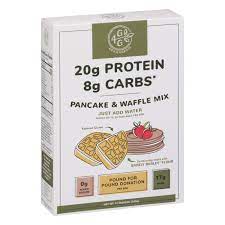
Their big idea, I have to admit, is pretty cool. The founders Yoni Medhin and Matthew Mechtly collect a waste product from local brewers – spent barley used for making beer – and apply a patent-pending drying process to produce flour and flour-based products like pancake and waffle mix. 

Grain4Grain also checks off a lot boxes that are current “in the moment” consumer trends. 

Medhin calls their specific form of organic recycling “upcycling,” a term I hadn’t heard before but which means turning a food waste product into a higher-end consumer food product. I’ve since learned there’s a whole upcycling mini-industry for turning waste products into highly processed foods, and it’s a big 2021 trendy food concept.

Upcycled
UpCycled Food Foundation certifies companies in the space

Following the brewing process, the spent grains are naturally high in protein and fiber and low in carbohydrates, which allows Grain4Grain to market their flour for folks who seek a “low carb” or “keto” diet, so they’ve got that diet trend covered. They also advertise donating a pound of their pancake mix to food banks for every pound sold to customers, so they do good as they do well. 

That’s a lot of different ways to appeal to folks.

Ryan Salts, the director of Launch SA, a small business and entrepreneurship center, recalls being impressed with the Grain4Grain founders and pushed them to enter the Tech Fuel contest. When he heard about the contest, “The first person I thought of was Yoni,” says Salts.

“Grain4Grain fits a diet requirement that is really popular, in the last five years, there’s been an uptick in healthier brands. And having a product that does really good things, it’s helpful,” adds Salts.

More important than prizes and a cool idea, of course, is having supermarket megastores like HEB and Kroger interested in your brand and willing to put your product on their shelves. There is no higher prize than that. In January 2021, the company announced its upcycled grain flour would be featured and used in HEB’s 140 bakeries throughout the state.

Eugen Simor runs Alamo Brewery, which along with local San Antonio breweries Freetail and Real Ale, supplies Grain4Grain’s spent barley product. Simor’s company allows Grain4Grain to pick it up for free, since it’s otherwise a cost to dispose of. 

As Simor told me “They’re taking what would normally be a waste product for so many breweries. It would normally be hauled off to a rancher to feed cattle, or end up in a landfill.” The majority of Alamo’s grain still goes toward a local rancher who picks it up for free. But he was happy to find Grain4Grain developing another use for it. 

“We did an Earth day for sustainability at Alamo Brewery and his product was one of the ones we featured. Yoni’s a really cool guy and I wanted to be part of it,” Simor says. “I was excited about having a low carb flour, and my kids like it too.”

Alamo_brewery
Remember the Alamo Beer

Salts’ particular passion is food-oriented startups, which he champions with his “Break Fast and Launch” program through Launch SA. In the food startup space, many companies struggle with trying to do both the production side and the marketing side. Many choose just one or the other. 

Medhin has managed to partner with other packagers to solve most of his manufacturing problems, to get to the scale he needs to provide upcycled flour to HEB, large-scale bakeries, and hopefully someday soon, Kroger. 

Like many entrepreneurs, Mehdin has already run the equivalent of many marathons to get this far. But in many ways his journey is still in its early days. The struggle to both sell a consumer-oriented retail product while at the same time building a manufacturing business to provide wholesale product at scale is really, really hard. He estimates they need another 6 months to solve their problem of getting to a large enough scale where he and his investors can start making money. His strategy in the future will depend more on providing bulk flour to the biggest food companies rather than direct-to-consumer sales. “Check back with me in June 2022,” he says.

I have a fascination with organic recycling. (My kids would call it an obsession, but what do kids know, anyway?)

Being eco friendly, low-carb friendly, and foodbank friendly are all amazing attributes. But Mehdin is more realist than idealist, when it comes to the needs of the consumer.

As Mehdin says, “customers don’t purchase altruistically. They say they do. But in reality for food products they purchase for taste, price, availability, texture, and health factors. You have to meet their immediate needs and you have to bring the product to the level of the traditional food products in the marketplace.”

Grain4Grain

This morning before writing this column I cooked up Grain4Grain pancakes based on their low-carb pancake and waffle mix. I can hereby certify: they were delicious. But it left me wondering whether pancakes slathered in butter, syrup, and blueberries still qualified as low-carb? I’m asking for a friend.

A version of this post ran in the San Antonio Express-News and Houston Chronicle.

Please see related posts

Psst … The Future is in Organic Waste, Kid

Organic Waste Program Rolls Out In My City

Post read (152) times.