
The Natural Gas Revolution Part VI – Has It Killed Renewables In Our Lifetime?

Here’s my hypothesis[1]: The abundance of cheap domestic natural gas – what I’m calling the Natural Gas Revolution – makes “renewable” energy sources like wind and solar financially untenable, and possibly unnecessary, for the next 90 years.[2]

I can’t prove my hypothesis because energy pricing is complicated.

Figuring out the ‘price’ of energy derived from traditional fuels such as coal, natural gas, and nuclear is not as straightforward as it may seem.  I’ve made an attempt based on a conversation with an official at my local utility company.  But every financial assessment depends on a series of assumptions: from the future price of input fuels, to regulatory changes, to models that take into account the depreciation of assets such as a nuclear or coal plant.

We know that energy produced from nuclear and coal plants has relatively low prices, partly because, in the case of my local utility, it bore the cost of building the nuclear and coal plants long ago.  As a result, we can afford that energy.  We also like the price of natural gas, because both plant construction and current market prices are low.

On the other side of the ledger, my local utility in recent years added solar- and wind-derived energy to its energy portfolio, both of which cost considerably more.  At a free-market price, wind power would be about 50% more expensive than natural gas energy, but a federal government Production Tax Credit (PTC)[3] brings the wind-energy price within the range of natural gas-derived energy.

Solar power is even more expensive than wind.  Solar may cost three times as much per KW hour as natural gas – assuming current technology – but with a federal subsidy through tax credits,[4] solar energy can be priced at a cost about twice as expensive as natural gas.

The energy provider of my home city targets a ‘portfolio mix’ by 2020 of 20% ‘renewables’ – at this point primarily wind and solar energy.[5]

As a retail consumer, I pay 9 cents/Kilowatthour on my energy bill.  This retail price reflects a blend of energy costs from the utility’s primary sources of nuclear, coal, natural gas, and renewables, plus the cost of administration and delivery to my house.  The price per KWhour could be brought down, somewhat, by prioritizing energy sourcing purely on a cost basis, which would favor coal and nuclear, and increasingly – given the natural gas revolution – natural gas.  Wind and solar make less sense on a pure cost basis without the federal taxpayer subsidies that make them feasible for the local utility.

My local utility has chosen to build a portfolio to include wind and solar energy; as a person with environmental sensibilities, I see the benefits of this and I feel good.  In addition, from a risk-mitigation perspective, the utility wants to stay ahead of regulatory changes which may make coal production more costly[6], or periodic events that make nuclear untenable[7], or market prices that would increase the cost of energy from natural gas.

So the local utility embraced wind and solar in part as a reasonable portfolio hedge against the risk of high natural gas prices.

But the future price of natural gas, and the likely range of prices for gas[8], just shifted massively with this natural gas revolution.  Folks I’ve spoken to in the natural gas sector forecast 90 years’ worth of known, accessible, cheap natural gas in shale rock formations.  All of this natural gas we really had no way of bringing to market just 4 years ago.

As a result, from a purely financial perspective I fear we’re locked into paying extra for renewables in a way that makes much less sense than it did just a few years ago, before the natural gas revolution started.

Fans of renewable energy are not going to like this message, I know.  In the largest sense, however, it should be seen as good news, and I’ll explain why.

It’s a huge economic boon to the entire country.

So why is cheap natural gas such good news?  For the majority of consumers the natural gas revolution will benefit their pocketbooks in subtle but important ways.

A drop in the price of energy impacts the price of nearly everything, keeping goods and services cheaper than they otherwise would be.  Just as expensive oil during the Oil Embargo of the 1970s kicked off a round of intense inflation, cheap natural gas will act to keep inflation contained in the future.

To ask people to throw away cheap energy and adopt expensive energy is a lot like asking everyone to throw away cheap food to consume expensive food.

The closest analogy I’ve come up with for renewable energy is the organic food movement.

Organic food works on a small scale, with a dedicated group of true-believers who eat food as an expression of their values.  It’s interesting to think about, but I’m not betting on widespread adoption.

Of course I’m in favor of organic food, and I serve it to my daughters whenever I can.  I’m happy to pay a little extra for the pleasant feeling of using fewer chemicals on the earth, or to support happy, free-range chickens.  The vast majority of food consumers in this country, and the world for that matter, however, do not have the luxury of paying more for food today for some intangible or unvalued long term benefit, even if it ‘costs’ more in terms of health or environmental impact in the long run.  The organic food movement pushes against the immutable logic of the wallet.

Similarly, renewable energy has required people to express their values through their energy consumption, paying more for something that impacts the earth less.

I’m generally in favor of renewable energy, and I would love for more things to be powered from solar and wind generated energy.  Unfortunately renewable energy is a luxury, and it just became even more so with the natural gas revolution.  The risk of future natural gas price spikes decreased dramatically with this revolution, making a portfolio including renewables less financially relevant than it was until recently.

Most people live in a resource-limited world, where cheap food or cheap energy is not a choice, but a necessity.  In my city, San Antonio, for the 25% of residents and 30% of children who live with daily food insecurity, the organic food movement exists in a parallel, irrelevant universe.

Most people I talk to don’t seem aware that the natural gas revolution of the past 4 years has made renewable energy untenable, financially. for the next century.

I see two reasons not to mourn the financial marginalization of renewables right now.

The first is purely financial since the tax subsidies needed to close the gap between wind and solar and more ‘market-based’ energy sources such as natural gas would have to grow in the future rather than shrink.

The second is more political.  This next point is more my instinct than provable fact.  But here goes: Whenever you have an important business – like renewable energy – wholly dependent on government subsidies, the opportunity for power-brokering by public officials and ex-public officials becomes extremely tempting.  More than tempting, it’s inevitable.

I have a real issue with ex-government employees who go out and create ‘green energy’ investment companies, which fund companies whose major source of income is government guaranteed contracts for expensive energy in the form of wind and solar.  Since it’s all divorced from market prices, there’s a huge opportunity for influence peddling and government favors for former public servants.

There may be some of this going around in my city of San Antonio, but there are also big national examples of this.  Yes, I’m looking at you Terry McAuliffe and your GreenTech Automotive.  Most egregiously, I’m looking at you, Al Gore, and your New York Times-reported net worth over $100 million, largely built on this power-brokering technique,[9] earned in just 12 years since leaving office.  I’m very sorry you weren’t president, but your way of making money since then disgusts to me.

As the gap between the cost of natural gas energy and government-subsidized renewables grows in the coming years, one of the main externalities of the renewable energy sector is the opportunity for government graft.  So I’m not just concerned that we’ll pay more than necessary for energy, but I’m also convinced some of our public servants will make sure that the green energy industry pays them back handsomely for their support.


See also Part I – Mad Max Bizarro World

Part II – Big, Corporate, Well Capitalized

Part III – The Drilling and Fracking Scene

Part IV – How Big Is This?

Part V – The Labor Market


[1] I can’t prove this with data, hence it’s only a hypothesis to be tested over time.  But I still think I’m right.

[2] The natural gas revolution is happening mostly in the United States right now, in the Eagle Ford area of Texas, as well as the Bakken in North Dakota, and the Marcellus Shale of the Eastern US.

[3] Created by the Federal Government’s Energy Policy Act of 1992, which allows energy providers an income tax credit of 2.2 cents/KW hour.  Assuming a current natural gas energy derived price of 4 or 5 cents/KW hour, we can estimate the ‘market’ price (before PTC subsidy) of wind energy for the local utility at around 7 cents/KW hour.

[4] Solar tax credits tend to be Investment Tax Credits (ITC), providing 30% of the cost of development of a solar plant.

[5] With a minimal amount of ‘landfill’ gas supplying a third alternative source of renewables.  My local utility’s published description of their mix of energy sources now and in the near future can be found here.

[6] If environmental regulation made utilities pay out of pocket for ‘carbon offsets’ for example, coal could become much more expensive.

[7] Like periodically happens, e.g. 3-Mile Island, Chernobyl, Fukushima.

[8] At the risk of stating the obvious, I believe the natural gas revolution means low natural gas prices at low volatility for decades, perfect if you’re a utility company forecasting your energy portfolio needs.

[9] No, I don’t have a breakdown between fees he’s earned on his movie, speaking fees, and his income from serving on the board of private equity firms that value his power-brokering to the ‘green-energy’ industry.  Kleiner Perkins made him a partner in 2007 and it wasn’t really for his investing acumen.  I just don’t think he’s rethinking the entire private equity business with his Generation Investment Management Fund, the way he describes in this WSJ Op-Ed.  Instead, I think he’s probably doing the same old power-brokering that becomes available anytime a big industry becomes completely dependent on government contracts and subsidies.

Post read (5413) times.
Interview Part II: Pawn Shop Owner Fights The Good Fight

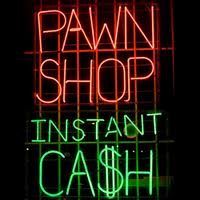
This audio interview is a continuation of an earlier interview with Shirley, in which we talked about her pawn shop, and the customer service they offer that banks rarely offer.

In this portion of the interview Shirley and I talked about serving the traditionally Hispanic West Side of San Antonio, and the barriers to trying to build something new and beautiful on the West side.   The barriers come from the neighborhood, city government, and even from within.

Shirley:                 My name is Shirley, and I’m a long-time pawn-shop owner.

Michael:               Thanks for joining me on Bankers Anonymous, Shirley. I really appreciate it.

I had a conversation with my friend Shirley, whose family has run a pawn shop on the West Side of San Antonio for 50 years.  In the course of the discussion I learned about the type of customer she serves, who typically is under-served by the traditional banking sector.

I learned something else though, about the challenges of trying to get ahead in the world, if you come from the West Side of San Antonio and try to do something good in that area.

Michael:               Who is your ideal customer or regular customer that you depend on?

Shirley:                 The average customer that comes into a pawnshop is a woman in her mid-thirties. She is usually a single mom. She’s working. Usually she might bring in something like a television and we would lend a hundred dollars. She would then within thirty days come and pay 120 dollars and redeem that item.

Seventy percent of the time, a customer does come back and pick up their merchandise. It’s a short-term collateralized loan where the person has   sufficient — usually the person has every intention of coming back and getting their merchandise. That’s how it’s designed to work. If they don’t, there’s no recourse. We are non-recourse lenders. A person doesn’t have to pay the loan back. We don’t call them. We don’t notify them. We do occasionally send reminders but nothing that forces them to come back and get the item.

Michael:               You and I live in the same city. We live in a Hispanic-dominant city. I know you’re located on the side of the city that traditionally is Hispanic. Would you say most of your customers are Hispanic origin? Do they speak Spanish at home, or are they just of origin and it was great-granddad from three generations ago move to that area of town? Do you know that demographic?

Shirley:                 Demographically it’s ninety percent Hispanic. We do require all our employees to speak Spanish so they can communicate well with the customers. I would say at least half of the customers are Spanish-speaking only. We communicate back and forth between English and Spanish all day long.

So the majority of people are Spanish-speaking, and what’s the most important part for us is that our employees can communicate with them and explain the lending process to them, so that they understand what the transaction is and what they’re getting into and what their recourse is if they don’t — well, there’s no recourse if they don’t pick it up, but explain that whole process to them.

Michael:               Do you have a sense that your customers are also going into a bank and they’ve just preferred to do this, or would you say most of your customers never — pretty much never set foot into a traditional bank?

Shirley:                 Most of the customers don’t step foot into a traditional bank. I also feel like not just our customers, but my employees don’t want to go to a traditional bank. Recently when we tried to change the way we do our payroll, the employees didn’t want to go to a bank either. It seems like traditional banking as we know it may not be what a younger generation or a more recent immigrant generation of people want — how they want to deal with their money.

The market that we serve daily, and we know, we understand the pressures that people are facing just to make ends meet. I think the larger community doesn’t really understand that there’s a whole segment of our population that really is paycheck-to-paycheck, and a weekly paycheck-to-paycheck.

They can’t guarantee that they’re going to get work every single week consistently month-after-month. All these people still have the same needs that all of us have. They just don’t have the same access to credit cards. They don’t have necessarily people to ask to bail them out because most of their families are in the same situation.

There is a sense that there’s a large group of people that get left out of traditional financial services, whether they’re credit cards, whether they’re banks, whether they’re equity loans or even just regular every day, consistent payroll. We’re filling that gap. The pawn industry feels like we’re filling that gap, and we do absolutely no harm to people.

I’m very proud of being able to provide that service to a very large group of people that often get left out. I think that our industry does it clearly and fairly, without doing any harm.

I quickly came to understand an irony of Shirley serving the underserved and unbanked of San Antonio’s West Side with her pawn shop.  Because when she had a vision for developing her entire city block, she found barriers on all sides, from the City, from the banks, and even from within.  I’ll let her tell her story.

Michael:               Can you tell me about the scope of the project that you have in mind that you either are going to do or have wanted to do for a long time? What does it mean, the project you’re trying to do?

Shirley:                 We are working on a new building within our existing space, but we’re looking at a 10,000 square foot addition, about 5,000 square feet of retail space and about 5,000 square feet of warehouse. It’s going to be a beautiful project here. We feel like we’re one of the only people that are here on the west-side of San Antonio that have done a private investment in the community in many, many years. It’s going to be a really beautiful project. We have a great architect who designed our building, and we’re working with every detail to make sure it’s something that the community can be proud of, that are many long-time customers can be proud of. It’s a whole new retail space, and a whole new building that I think is going to be the pride of the west side.

But barriers came from the City.  A special IDZ, or Infill Development Zone, was supposed to make this type of project easier on the West Side, but in fact because of that it became somewhat of a nightmare.

Michael:               It’s the Infill Development Zone that’s been hurting you also?

Shirley:                 It delayed us ten months.

Michael:               In what way, what are they doing?

Shirley:                 We needed council approval for that and there was some concern that we were changing our — I think it’s possible that it was just a miscommunication with the councilman and our neighborhood association, that we were not changing our zoning. We continue to be in a “C2”.  We just needed an overlay, an Infill Development Zone overlay to allow us the parking waiver.

Michael:               So they create this special zone to help you but P.S., it’s actually another barrier to getting done what you need to get done.

Shirley:                 First of all, it was very complicated, so that I could not read it and understand it and go myself to council, or rather to the board of adjustments. I had to hire lawyers. I didn’t have to hire lawyers, I suppose I could have hired a consultant but it was complicated. It was very important to me because we’ve been here for fifty years and it was recommended to me to hire a lawyer to help get that passed. The lawyers were very expensive. Then I think unfortunately complicated the issue even further because once lawyers get involved it seems to be more complicated. They didn’t quite seem to understand that we were just asking for an Infill Development Zone.

Delays came not just from City Council and lawyers, but from her bank.  This got Shirley to reflect on the financial barriers, the political barriers, and the barriers from within.  But she’s still trying her best.

Shirley:                 Again, I’ve been hitting my head against the wall for two years and I can’t get it done. But I think that for a long time I thought it was me, because I’m not competent enough or strong enough, or I don’t have the qualities that are necessary to move this forward.

I think it’s possible that as a community we feel like “it must be me,” that I can’t get things done. But I think there’s a possibility that maybe in fact that’s not true. There are in fact these real barriers, so even just recognizing that there may be something that’s beyond myself, it’s not just me, that people that are working in these communities, that there are barriers. We have a bit of a hard time navigating them because at the same time this is what we know. But I think that by having our mayor speak the way he does, and having some of the other politicians come in and really working within this community, there starts a change. It’s slow-changing but even just recognizing that we have the power to make that change.

Without sounding too trite about it, I really do think it’s possible. It’s just a recognition that there is plenty of opportunity right here in this community. First of all recognize that it’s actually happening, but then move forward.  I think the fact that everybody else is starting to recognize, the politicians are starting to recognize that we have a very powerful voice here.

Michael:               I hope you get a beautiful new construction.

Shirley:                 I can’t wait. I’ll definitely do a big grand opening for everybody when the time comes.


Please Also See: Interview Part I: Pawn Shop Owner on the Unbanked

Also see: Video: Pawn Shop owner turns Politico!

Post read (2773) times.

SAC Capital – Too Much Of A Good Thing

I covered the mortgage bond side of SAC Capital in the early 2000s, and I remember half-kidding, half-probing my client about Steven A Cohen’s seeming inability to miss.  Back then Cohen’s SAC had put together a string of annual monster returns like no other hedge fund.[1]  Cohen’s SAC Capital was the Mark McGuire of stock trading, and we knew enough to think the home run records of 1998 looked mighty suspicious.

My client was one of the nicest and most straight-forward men I ever worked with, and his team of bond portfolio managers were really not the beating heart of SAC’s fund, which at its core was a high volume, stock-trading firm.

My client honorably defended his employer Cohen, marveling at his ability to stand in the middle of his trading floor in Stamford, CT and synthesize all the trading inputs and react unerringly with his ‘feel’ for the markets.

SAC was known then to produce an inordinate amount of volume on the NYSE for just one fund,[2] making Cohen’s fund the top equity client for a number of broker-dealers who earned extraordinarily high commissions on his stock trading.  The implication of high volume like this, at the time, was that a top client like SAC could command top coverage from the Street.

According to the honest way of looking at things, this meant SAC might receive a phone call,[3] tip-off, or access to the Street’s best research ideas, first.

According to the dishonest way of looking at things, this meant SAC might get information that nobody else had access to, possibly – unethically – the client-flows of rival funds, or – illegally – straight-up insider information.

With yesterday’s accusation of one of SAC’s portfolio managers, we have what some believe to be the first major chink in the armor of Steven Cohen’s code of silence around his trading success.

This has got me thinking again about hedge fund cheaters and too-good-to-be-true results.

The first investing lesson of the Madoff scheme was this: If your hedge fund manager is flawless, if he never endures a down month, if he beats the competition month after month and year after year, then he’s not a genius, he’s a crook.  Real investing sometimes involves losses, and sometimes involves volatility.  Fake investing by contrast offers you steady, non-volatile wins every month.  Until all the money’s gone.

The second investing lesson of the Madoff scandal was that investors will look the other way with their own crooked hedge fund manager, if they think it benefits them.  Investors turned out to be wrong about Madoff (he wasn’t cheating on their behalf!) but many people inside the financial community have long wondered if SAC fits in this category of acceptable cheaters.

Insider trading is a kind of ‘everybody wins’ cheating[4] that investors hope benefits them, so they are willing to not ask too many questions.

Steven A Cohen’s unrivaled success over the years brought the unwelcome attention of securities crime prosecutors long ago, as the Lance Armstrong of the hedge fund world.

As we learn more about Cohen’s proximity to insider trading, the parallels with Armstrong hold.  Armstrong enforced a code of silence among his fellow riders for nearly ten years at the top of the cycling world, as who wants to be the first Judas to admit the whole operation depends on cheating?  Too many people’s livelihoods depended on maintaining appearances and not asking questions.

Cheating on the kind of scale of Armstrong, or the SAC scale, however, involves so many people that eventually a few can be peeled away to talk to prosecutors.  Based really on a gut feeling, and on no particular personal knowledge of the situation over the years, I wouldn’t be surprised if Steven Cohen eventually gets his 7 Tour de France titles taken away as well.


[1] With the possible exception of Jim Simonds’ Renaissance Fund, but that managed no outside money.

[2] This was ten years ago, and SAC was alleged to generate 25% of equity commissions on the NYSE.  These days, its all run by Skynet so I can’t believe any one fund could have that kind of influence.

[3] Back when, you know, people used phones.  It’s all so quaint.

[4] It’s not really ‘everybody wins,’ it’s just that winning is concentrated in the hands of a few interested parties with quantifiable benefits, while losing is diffusely shared by the entire system of unknowing, losing, participants.  Kind of like tax loopholes.

Post read (14214) times.

Tax Update – An EVEN BETTER WAY To Get Your First $10 Million

Earlier this week I posted about how the tax code incentivizes you toward the old-fashioned way to make your first $5 million: Inherit it.

That’s because, at least until December 31st, the first $5 million you receive through estate inheritance comes to you tax free.

I was trying to point out that there’s no better way to get ahead in life, as the tax code tends to take your money away if you are so foolish as to, you know, actually work for a living.

But, as the Wall Street Journal reminds us today, there’s an even better way to make your first $10.24 million, at least until the law changes or gets updated on December 31st.

An expiring but very generous lifetime federal gift-tax exemption allows individuals (presumably your parents) to gift you up to a maximum of $5.12 million each[1], without paying any taxes on it.  This works like the better-known $13,000 annual gift tax-exemption, except your parents can only take advantage of it once.

This is far better than the estate tax gift I mentioned earlier in the week.

You see, the downside of inheriting $5 million is that somebody close to you has to die first.  That’s kinda sad, and it’s also hard to count on, timing wise.  You might need the $10 million, like, right now.  But fortunately, because of this generous lifetime gift exemption, your living parents can start you off right in life, like, right now.

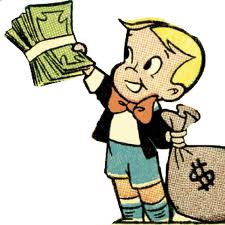
So, Richie Rich, you have no time to lose because the tax code either reverts to a $1 million lifetime exemption per person[2] next year, or Congress passes a law to extend the gift-exemption.

I think its time to be nice to your parents again.

And if that doesn’t work, get on the phone with your Congressman and get him to extend that exemption.

“Either way, Daddy, start writing checks!”[3]


[1] Hence, the $10.24 million total, $5.12 million from each parent

[2] $2 million if both your parents maximize their lifetime exemption.

[3] as I once heard a classmate at Harvard say, un-ironically, when she didn’t get into the prestigious dormitory of her choice

Post read (10923) times.

SHHHHHH…Please Don’t Talk About My Tax Loophole

I wrote last week that one of the great lessons of the recent Presidential campaign, for me, is how little we as a country understand income tax policy.

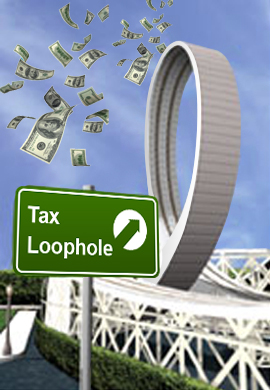
Since we’re about to engage in a crash course in fiscal policy[1] it’s worth focusing on the loophole of carried interest.

Both Presidential candidates referred in the debates to closing income tax loopholes, yet both were deathly afraid of mentioning anything specific, such as the egregious carried interest income tax loophole for hedge funds and private equity funds.  Romney skipped it because his entire Bain Capital career benefitted from it, and Obama skipped it because he’s derived a healthy portion of campaign funding from the same industry.[2]

Industry-specific loopholes like this always prove notoriously difficult to close, because benefits accrue to an intensely interested, knowledgeable, and well funded group, while the general public has minimal to no knowledge of the loophole, no voice at the table, and only earns a very diffuse benefit by closing the loophole.

If you don’t know what carried interest is, then you’re not particularly close to anyone in the hedge fund or private equity world.  Frankly, that is the way we in the investment world would like to keep things.  You – in the dark.  Us – avoiding taxes.

However, as a recovering fund manager dedicated to a fearless moral inventory of all things financial, I’ll explain what you’ve been missing by telling my story.

How I tried, ignorantly, to forgo my right to an awesome loophole

When I set up my private limited investment partnership – also called, inaccurately, a hedge fund[3] – my attorney insisted I set up not one additional Limited Liability Company in Delaware, but rather two.  I tried to resist him, saying I felt most comfortable with just one new business entity.[4]  I was so averse to two new entities that I asked another attorney for a second opinion.  He told me the same thing.  I needed two entities.  I asked my accountant.  His response was, of course, “two entities,” and complete puzzlement at my resistance.  Clearly, they knew something that I didn’t.  That something is the awesomeness of the carried interest loophole.  Needless to say, I got the extra LLC.[5]

Two types of income require two entities

Why did my attorney and accountant insist I create a separate entity?  Because that separate entity can collect payments in the form of ‘incentive allocation,’ also known as ‘carried interest,’ which is taxed advantageously, at the same rate as long-term capital gains[6] rather than as ordinary income.  Here’s how it works.

If you set up a traditional hedge fund[7], first things first: you’ll want to charge the traditional “2/20.”[8] Embedded in this short-hand lingo of “2/20” for hedge fund fees are two types of income.

With the two types of income, you need the two entities to keep the income tracked separately.  Entity #1 collects the “2,” which is taxed like regular business income, and Entity #2 collects the “20,” which collects your totally awesome income at a lower tax rate.

The “2” refers to an annual management fee of 2% of assets under management.  On a small/medium-sized hedge fund of, for example, $500 million under management, you will collect $10 million in management fees per year.  The purpose of this money is to pay for rent, staff, overhead, technology, research – in short all the things you need to do as a fiduciary for the proper care and feeding of the client’s money.  This management fee income will net out with business expenses, and may or may not ever generate “profit” for the manager.  In some fundamental sense, it’s not supposed to generate profit; hedge fund managers are fine earning zero profits from management fees since the $10 million is taxed like ordinary income at 35%, which is, as you know, kinda lame.

The “20” refers to the incentive allocation, meaning specifically that 20% of all annual gains are retained by the manager, in entity #2, as ‘carried interest.’  Here, the hedge fund manager takes full advantage of the loophole.  If the $500 million fund has a gain on investments of 10% this year, fully 20% of the $50 million gain on investments – that is to say $10 million – gets earned by the hedge fund manager’s entity #2 as the ‘incentive allocation’ or ‘carried interest.’

At this point, that ‘carried interest’ gets treated at the rate of capital gains, a 15% tax rate, rather than the 35% taxable rate of ordinary income.  Often, by design, the hedge fund manager leaves the entire 20% incentive allocation inside the fund for it to grow long term.  The manager only owes $1.5 million in taxes (15% of $10 million, at the capital gains tax rate) instead of $3.5 million (35% of $10 million, at the ordinary income tax rate).  As a result of the special tax treatment for ‘carried interest,’ the small/medium hedge fund manager in our example keeps $2 million more than he otherwise would have been entitled to keepThat’s a good deal, for him.

And that’s just one year.

And that’s just for kind of a small hedge fund.

You can imagine the bigger, scale-able results available for when a John Paulson-type fund manager scores  big by shorting the subprime mortgages market in 2007 (probably saved about $740 million in taxes with the loophole) or buying gold in 2010 (probably saved about $980 million in taxes with the loophole)[9]

You can also see why my attorneys and accountant insisted that I set up a separate entity that could take advantage of the tax loophole for carried interest.  My keep-my-life-simple approach made absolutely no sense in the face of potential millions in tax savings year after year.  And they knew that.

Is carried interest deserving of special treatment?

Is there anything special about ‘carried interest’ that justifies the preferred tax treatment?

Proponents argue that because much of ‘carried interest’ stays invested inside of hedge funds, still at a risk of loss, that additional risk justifies the 15% preferred tax rate.

But typically much of that ‘carried interest’ left in the market could be liquidated and taken out by the hedge fund manager anytime.[10]  (You know what else is risky?  Having a job, with a salary, that you could be fired from next week, but you have to pay a much higher tax rate on that salary.  That’s pretty risky too.)

Other proponents of ‘carried interest’ argue that tax policy should incentivize the accumulation of our economy’s scarce investment capital, basically the Ed Conard argument for lower taxes on wealth and investments.

In my opinion, that’s bunk.  Capital is not that scarce for any truly innovative segment of the economy.  Most hedge funds and private equity investments offer little value-added as innovative engines of the economy.  I know that’s my hypothesis, not a provable assertion, but I’ve seen enough on the inside to know – these hedge funds are not the engines of innovation you’re looking for.

At the end of the day, the ‘carried interest’ money is treated better than salary money because it’s been earned by a special class of people – hedge fund and private equity fund managers – who are much more influential in the political process than the average worker.  Full stop.

All of this is why I wrote last week that I would appreciate it if both sides of the political aisle would just stop lying to us about fiscal policy and loopholes and treat us like adults.  I’m ready to be pleasantly surprised.  But I’m not going to turn blue holding my breath.


[1] Thanks to the overheated discussion of a completely politically synthetically created crisis known as the Fiscal Cliff.

[2] Don’t be overly misled by some of the anti-Obama rhetoric from titans of the hedge fund industry like Omega’s Leon Cooperman.  Despite Cooperman’s choice comparisons to Nazism, or Dan Loeb saying Obama’s treats them like ‘battered wives,’ hedge fund and private equity managers know that Obama’s been all talk and no action when it comes to what they really care about.  Which is the carried interest loophole.

[3] A pet peeve of mine as well as for many people in the industry, the use of the term ‘hedge fund’ to describe what is better described as a ‘private investment limited partnership.’  ‘Hedge fund’ implies something that has no relation to my business.  I did no hedging.

[4] My reason at the time was that as a small business, I wanted to keep things simple.  A new entity meant the additional cost of entity creation and maintenance, a separate set of accounting books, a separate set of tax returns, etc.  Boy was I wrong about the potential costs and benefits, as I’ll explain below.

[5] Here’s a handy rule of thumb for non-financial people:  Whenever you see a company or business situation with lots and lots of separate business entities, you can be confident there’s tax avoidance going on.  It’s possible there’s also an attempt to shield the principals from bankruptcy, but it’s either that, or tax avoidance.  Anyway, just an FYI.

[6] See my earlier posting on tax rates for different types of income.

[7] Or private equity fund, but for the purposes of this illustration I’ll just refer to a ‘hedge fund.’

[8] Industry folks, bear with me, as you already know this, but the non-financial types don’t:  Insiders refer to hedge funds not as an asset class but as a compensation scheme.  The “2/20” is why.

[9] I’m assuming his reported gains of $3.7Billion and $4.9 Billion respectively, the largest portion of which would be in the form of tax-advantaged incentive allocation.

[10] Admitedly less so for a private equity manager, whose investments tend to be less liquid.

Post read (19795) times.

Adult Conversation About Income Tax Policy

With the Fiscal Cliff1 looming, kids, it’s time for “The Talk.”

By ‘The Talk,’ I mean yank our minds into the grown-up world.  We have been innocent about how money really gets made, and kept, and taxed.  The ‘adults’ know, but they haven’t felt comfortable sharing the real truth.  We didn’t know, and we didn’t think we could talk about it.  It seems embarrassing for some reason.  Almost dirty.  Maybe it’s the way we were brought up.  Nevertheless, now’s the time for ‘The Talk.’

Here it is in a nutshell: The way the ‘grown-ups’ – our elected officials – set tax policy tells us how they value different ways of making money.  They see three different ways to make money, and they clearly favor the first two.

Inherited Money

According to our tax code it turns out the very best way to make money is the old-fashioned way:  Inherit it.

As of this writing, the first $5 million from a deceased individual can pass to you tax free.  Our elected leaders want you to know that the best way to get rich is to be born into a rich family and have the right people die at the right time.2

Stated that way, it seems a bit un-American, no?  A bit, well, aristocratic.  Nevertheless, that’s far and away the best way to earn your first $5 million.  Our leaders want you, Richie Rich, to have your first $5 million tax free.3  Mwah!

Make money with your money

The second best way to get wealthy, according to the tax code, is to already have a lot of money, and then earn money on your money.

If you already have a lot of money, then a significant proportion, probably a majority of your income, will come from three sources: Tax Free Bonds, long-term capital gains on your investments, or corporate stock dividends.4

The best of these investments, tax wise, is Triple Tax Free municipal bonds, which are exempt from local, state and federal income taxes.  You earn just about 0.5% interest5 these days, but if you’ve got $100 million in triple tax free muni bonds then you’ve got yourself $500,000 a year, tax free!  That pays for quite a few golf outings a year, with money left over for the lobster roll at the club and a tip for the valet.

The next best way to make a living from your investments, according to the tax code, is to buy and hold stocks for at least 18 months before selling at a profit, so that your earnings will be taxed at a rate of only 15%, the long-term capital gains rate.

Should you be so fortunate as to start out in life with a massive stock portfolio, your elected officials say to you: “Good Job!  That’s an excellent way to make a living!  Let us incentivize you to earn the majority of your living by having your pile of money do all the work, while you join that swell municipal bond fellow at the club.”

The third best way to earn money from your money is to hold stocks for at least 60 days, thereby earning qualified dividends, likewise taxed at a comfortable 15% rate.6

I interpret all of these three tax policies combined as our elected officials’ way of saying that the next best way of making a living – after being born into a rich family – is to sit around like Scrooge McDuck investing money, and only paying 0% and 15% on one’s income.7

Mitt Romney’s 14% effective tax rate in 2011 derives from this tax advantaged way to ‘earn’ a living, just as your elected officials would like you to.

Working for a living

The ‘grown-ups’ who make tax policy tell us this is the worst way to make money.  You see, if you work for a salary, that income is liable to be taxed at the maximum income tax rate.

If you can make less than $35,350 a year, fine, they’ll tax you at a 15% rate.

But over that, you’re looking at 25%, 28%, 33%, or up to 35% for those making over $388,351.  The lesson of the tax code is that people who actually work for a living, rather than inherit from Daddy or live like Scrooge McDuck, should be taxed the most.  “Working for a living?” they taunt us, “that’s for chumps!  Tax that man at the maximum possible rate!”

That’s “The Talk” about our tax policy which creates better and worse ways to make money in this country.  No, Virginia, there is no Santa Claus, but there is a Richie Rich and a Scrooge McDuck.  And our elected officials just love them!


Post read (9871) times.

  1.  Is it weird that I love the sound that the phrase ‘Fiscal Cliff’ makes in the mouth?  Its poetry, really.  To mangle a bit of Nabokov:  “Fis.Cal.Cliff.  Taking a trip of three steps through the split fricative to tap front teeth, at three, on the lower lip.”
  2.  Yankees owner and billionaire George Steinbrenner famously died in 2010, the one year in recent memory during which the Estate Tax was wholly repealed.  George was worth an estimate $1.1 Billion, so the fact of the Estate Tax repeal in 2010 made the Steinbrenner heirs $500 million richer than they would have been had he died in 2009, as the estate tax rate was 45% of inherited wealth that year.  As a Red Sox fan, I’m just so happy for those boys, Hal and Hank.  It couldn’t have happened to a nicer family.
  3. We will hear, or we should hear, quite a bit about the estate tax in the coming weeks, as the limit exemption on tax-free inheritance reverts back to $1 million and a 55% rate in 2013, if Congress does not take action. “Death Taxes on Small Businesses” is how one political side always describes the Estate Tax, but that’s mostly a load of bull.  The real implication of the estate tax is to what extent our leaders signal that the best way to get $5 million is to be born into the right family.
  4. If you’re not making any money through tax free munis, long term stock holdings and dividends, well then you can just skip to the third section, you working stiff.  Our elected officials can’t be bothered with you, if you can’t take a hint about how to make money.  Jeez.
  5. On 5 year municipal bonds, for example.
  6. The low 15% ‘qualified dividends’ tax incentive ends in 2012, unless Congress acts to extend or modify it, as Congress did, with Obama’s approval, in 2010.
  7. The other great advantage to being Scrooge McDuck from a tax perspective, is that – unlike a working-stiff salaryman – you can choose what year to harvest stock market gains.  Scrooge McDuck can end up with virtually no taxable income in any given year should he choose to sell no appreciated stock.  Or Mr. Duck can match up investment losses with investment gains to have no net taxable income, or even to trigger a tax refund.  In a related story, did you know Mitt Romney got a $1.6 million tax refund last year?