
Natural Gas Revolution Part V – The Labor Market

Mr. Grizzly, Mr. Deliverance and Mr. Biscuit – Contractors and the Eagle Ford Labor Market

Among the main lessons of our tour of the Eagle Ford, is that there’s a lot of jobs down here.  If you’re a man currently out of work, and you have the use of all of your limbs, there’s a job available for you in South Texas, right now.  Like, today.  If you feel like working for a living – go.

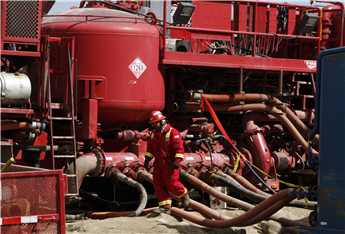
At the newly constructed drilling pad the first order of business was to receive another safety briefing.  If I – in my hazmat suit – look like I just escaped from the movie set of E.T., our safety instructor looks like he escaped from the movie set of Deliverance.  He of the scraggly goatee points out the safe gathering point on the pad in the event of a massive blowout or fire.  He makes me nervous on a number of different fronts.

Another grizzled veteran – with 40 years of drilling experience – takes over the drilling pad narrative at this point.

While Mr. Grizzly is old enough to be a grandfather, this is not your grandfather’s drilling operation.  He explains that this particular drill rig we’re looking at, built a few days before we arrived, can ‘walk.’ What he means is they can drill 10,000 feet underground for a few days, then slide the entire 100 foot above-ground structure a few feet away and drill an entirely new underground well, without dismantling the rig.

Since the relevant underground piping for hydrocarbon is horizontal, underground wells can line up next to each other a few feet away but cover a horizontal mile in entirely different directions from a single drilling pad.  This ability to ‘walk’ the rig and set up multidirectional horizontal wells saves days of labor and hundreds of thousands of dollars.

Mr. Grizzy loves this feature.

Listening to Mr. Grizzly I’m struck that this place isn’t swarming with younger guys, and Mr. Grizzy tells us why.  When the 1980s oil crash struck Texas, an entire generation of workers washed out of the business to work elsewhere.  A few like Mr. Grizzly and Mr. Deliverance stuck it out, and new guys are now joining up, but there’s a missing generation of workers, adding to the difficulty of finding competent experienced workers in the Eagle Ford shale.

Also notable on the drill site are the predominance of contractors.

Everything, it turns out, seemingly depends on contractors and sub-contractors.  Halliburton is on the drilling pad here, as is Schlumberger, to name two huge world-wide oil-service contractors.[1]  But everything down to skilled mechanics and plumbers has to be located and hired separately.[2]

This makes sense as I think about this now, since so much is needed in this previously-empty outback country.  Hardly anybody lived out here before the Eagle Ford shale play began, so everything has to be provided in the absence of pre-existing infrastructure.  Contractors guard the gates to the drilling site; contractors supply the tricked-out Mad Max trucks; contractors even set up the barbecue tent where we were served lunch.

Our host company owns the lease, will oversee extraction from the site for years to come, and will take the oil and gas to market once it gets above ground, but they’ve sub-contracted the actual few weeks of drilling to another group, and that’s who Mr. Deliverance works for.  Mr. Deliverance’s team sets up the drill rig in less than a week and spends another week drilling up to ten thousand feet underground and as much as a mile horizontally, blasting and fracking as it goes.  Following an intense 2-3 weeks of drilling activity, the drilling contractor moves to the next drill site with the same or a different independent operator.

With some sense of what we’re now looking at, we are invited to climb aboard the actual rig, where our steel-toed boots come in handy. We clamber up steep steps to a platform, then over a series of porous metal grates.  Underfoot we see specialty ‘mud’ stored beneath us, a chemically-treated liquid mixture to facilitate the upcoming drilling process.  The actual chemicals mentioned were a mystery to me, but Mr. Grizzly mentions falling into the ‘mud’ container at least once in the past.  Mr. Grizzly appears well past procreation age to me, so I’ve decided not to worry about that too much.[3]

Later in the day, at a separate fracking site, I get another taste of the tight labor market down here.  In an air-conditioned trailer, two men watch flat-screen monitors where all manner of data keeps them apprised of ongoing fracking activity on site.

One of the men hardly notices us, so engrossed is he in his monitors, but the other introduces himself cheerfully as a native of Biscuit, KY.  Based on his overall affect, not to mention his denim overalls, if he wasn’t overseeing a fracking job I’m pretty sure he’d be watching professional wrestling on his couch, right now.  He seemed pretty happy, indeed surprised, to be gainfully employed.  Somehow his provenance from Biscuit tells me what I need to know about the labor market in the Eagle Ford shale.  And no, I can’t find Biscuit, KY on Google Maps either.

See also Part I – Mad Max Bizarro World

Part II – Big, Corporate, Well Capitalized

Part III – The Drilling and Fracking Scene

Part IV – How Big Is This?


[1] One of the unfortunately named contractors on this site was Patterson-UTI.  My wife’s an infectious disease doctor, and as such, would never endorse naming something “UTI.”  It sounds like something you’re likely to catch from the infamous ‘Man Camps’ that have sprung up around fracking areas around the country.

[2] I asked our hosts towards the end of the day how someone could ‘get rich’ in Eagle Ford right now.  They all agreed setting up a contracting company was the way to go.  Anyone with a skill and a willingness to work hard could make a good living with so much need for skilled labor.

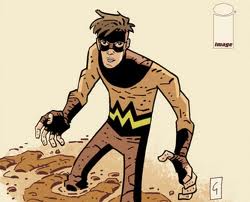
[3] On the other hand, the unique combination of chemicals in the ‘mud,’ if they didn’t kill him, might have been enough to make him unbelievably strong.  Isn’t that how most superheroes get made?  Can somebody do a cartoon mockup for me of Mr. Grizzly and his superpowers after he emerges from the ‘mud?’
Post read (4918) times.
Natural Gas Revolution Part IV – How Big Is This?

Our hosts drilled a total of 239 wells in South Texas, which at $7 million per drilled well would indicate a $1.7 Billion investment in drilling wells alone by this one company.  They also report a $440 million investment in a fracking team, plus major investments in building collection points for their product and pipelines to move it.  Given that they are only the 12th biggest independent operator in the area, it’s easy to see how companies have invested over $100 Billion the Eagle Ford shale play alone.

Nationwide, industry author Daniel Yergin reports an estimated 1.7 million jobs will be created in the natural gas revolution, with an estimated additional $62 billion in Federal and State taxes collected in 2012 as a result of this activity.

The New York Times reports that the largest 50 oil and gas companies spent $126 Billion per year in the United States, over the last six years, in new oil and gas drilling and land acquisition.

For my friends who look in dismay at the drilling industry and fracking in particular I’m compelled to point out that this kind of money doesn’t scare easily.  The anti-fracking folks are working hard to find evidence of environmental and health damage as a result of the fracking revolution, and will no doubt do their darndest to keep the pressure on, but they have a tough fight on their hands with this kind of major capital.


A Silver Lining on this Massive Scale, Maybe

There is one silver lining, however, to this kind of massive, money-intensive operation.  From a safety and environmental perspective, paradoxically, huge scale could be seen as good news.  Big, corporate, capital intensive businesses are all about reducing risks, which will make them extremely sensitive to environmental liabilities and public relations liabilities, in a way that wildcatters simply won’t be.  That’s the theory at least.

Of course, our host company gives the State Rep and me the pitch on how safe fracking really is, and the safety mechanisms involved to prevent ground-water contamination.

The gist of his presentation, since you’re curious, is that a series of concrete tubes in overlapping layers prevents fracking fluids, and the eventually extracted hydrocarbons, from leaking into our groundwater.  We hope.

See also Part I – Mad Max Bizarro World

Part II – Big, Corporate, Well Capitalized

Part III – The Drilling and Fracking Scene

Part V – The Labor Market in the Eagle Ford


Post read (2450) times.

Natural Gas Revolution Part III – The Drilling and Fracking Scene

If you’re a boy, and you like big powerful tools, you might like the next part of our tour.

Early on in our tour of the drilling pad, we entered the air-conditioned trailer where the head driller directs the drill bit.  For the uninitiated viewer (for example, me), the seat of power is not unlike Han Solo’s seat in the Millennium Falcon.  Large, flat-screen monitors with custom drilling software ergonomically surround the drill master’s elevated LA-Z-Boy-style throne with smooth swivel capabilities.  A joystick and keyboard accompany the cushioned seat which also faces a wind-shield view of the outdoor drill rig.

The State Rep and I each insist on mounting the throne, if only for a few moments, to feel the power of the master driller.1  Drilling teams, we learn, work 24 hours a day in 12-hour rotating shifts until the work is complete.

The fracking site which we visited after lunch had a whole different look to it.

Unlike the drilling site, dominated by a tall metal and plastic rig for punching a hole in the ground, giant green sand storage tanks and tubing dominate the fracking site.

Two dozen green urns elevated on stilts hold about 500 of tons of sand each – literally trainloads full brought from quarries in Wisconsin or Minnesota.

[A buddy of mine, not on site with me at this time, is in the frack-sand provision business, shipping those trainloads of sand from the North into South Texas.  I interviewed him here and here.]

Conveyer belts stretch from the colon of the urns to an unseen area.  Twelve-inch wide jointed metal tubes run from there to entrance points near the well head.  These overgrown green aliens arrived from the Planet Arachnid, and now are poised, abdomen down, to blast their chemicals deep into the ground.2

At our feet we examine blasting tubes manufactured in Fort Worth, TX specifically to provide explosive charges to break open the rock.  All of this equipment allows the operators to force a slurry of water, sand, guar, and chemicals deep into the earth at extraordinary pressure – enough to smash open dense rock formations and then keep them open for the oil and gas to flow.

The engineering and custom-manufacturing of the outdoor structures, and the custom software and computing power indoors, reinforced our strong impression of the massive scale of investment in Eagle Ford.  Some of the workers may look rough, but the equipment is brand new and highly specialized.

See Also:Part I – Mad Max Bizarro World

And Part II – Big, Corporate, Well Capitalized

Part IV – How Big is the Natural Gas Revolution?

Part V – The Labor Market in the Eagle Ford


Post read (8283) times.

  1. I don’t know about my State Rep friend, but I know for me, sitting up there, I wanted to blast a hole two miles deep into the fucking earth, while simultaneously laser-rocketing Tie Fighters with pinpoint accuracy.
  2. I would have accused the Wachowskis of copying these shapes for those Nebuchadnezzar search-and-destroy insects, but The Matrix came out before fracking really took off.

Four Reactions to the Election

Four quick thoughts now that the elections are over, from a recovering banker.

1. The equity indexes fell immediately at the open today, and remain down over 2% on the day.  Do not let any talking head from the financial-industrial-infotainment industry try to suggest that this is in response to Obama’s election.  Every trader on the planet knew that Obama had a 60% chance of winning as of last month, a 75% chance of winning as of last week, and a 90% chance of winning as of the final 48 hours.[1]  Nobody who manages capital for a living was caught off-guard by the Obama victory, so nobody suddenly had to reposition their portfolio as a result this morning.  Markets and the people with real capital who participate in them are forward-looking and probabilistic; equity markets  already reflected widespread expectations of an Obama victory.

2. The next Treasury Secretary matters tremendously for the biggest financial-regulatory issue of the day – the unaddressed problem of Too Big To Fail banks.  Secretary Geithner pre-announced that he would not serve in a second Obama administration[2] so the hunt for a new Treasury Secretary is now underway.  Geithner’s utterly failed to address the TBTF problem and pushed the Obama administration into a business-as-usual, same-guys-in-charge approach to Wall Street reform.  Secretary Paulson’s background as the former Goldman chief who grew up professionally with the rest of Wall Street’s heads played an inordinate role in selecting the winners and losers of the Credit Crunch of 2008, along with in providing the ultimate government backstop for the country’s biggest financial firms.  Had Paulson come from any other industry – instead of finance – he would have seen what the rest of us saw: It’s unconscionable to allow firms to pay executive bonuses[3] in the same year that the firms were bailed out by taxpayers.  Geithner continued Paulson’s protective approach to Wall Street banks, rather than seizing the opportunity to extract real concessions or reform when the industry needed the government to survive.

I’m not suggesting we put someone like Elizabeth Warren[4] in charge, but we need someone who can independently evaluate what parts of Wall Street need supporting and which parts need curbing.  Somebody, in other words, who didn’t spend his or her entire life working on the Street.

3. The “Fiscal Cliff” and fiscal responsibility.

Obviously the FC now becomes the next hot topic for overheated punditry, at least until we pass the January deadline.

I’m not optimistic about the tone of the discussion nor about the possible results of fiscal compromise, but I do have my wishes.

I wish that, with elections for Congress now two years away, can we have less complete bullshit when it comes to fiscal policy positions?  Would that be too much to ask?

One party’s leader says the solution lies in tax cuts.  The other party’s leader says the solution lies in more generous social spending.  One party’s leader says military spending is untouchable.  The other party’s leader says transfer payments and social safety net spending is untouchable.  All those proposals leave us in a worse fiscal position as a nation.

Hey guys?  Can you treat us like grown-ups?  We can handle a bit more truth than you’re giving us credit for.  We know budget deficits have a terrible trajectory and only a combination of tax hikes and spending cuts will correct the course.

Say what you will about the 2016 Republican nominee, Gov. Chris Christie, he’s proved that refreshingly blunt and seemingly unpopular – but honest talk – can appeal to both sides of the political aisle.  Let’s have some more of that as we drive, full throttle, toward the Fiscal Cliff.

4. Tax policy

I’ll have more to write about this shortly, but one of interesting lessons of Mitt Romney’s candidacy is how little the US electorate understands, or cares to understand, about our income tax policies.

By releasing only his 2010 and 2011 income tax returns, Romney effectively obfuscated his financial background.  He signaled (albeit quietly) that his tax-planning strategies were so aggressive that their release would explode his electoral chances.  And yet, I don’t think this cost him anything real in the end in terms of votes.  He calculated – correctly! – that the electorate’s ignorance of current tax policies, and popular tax-planning strategies of the wealthy would protect him.

Despite heightened resentment toward the wealthy, I observe the “99%,” for the most part, has no idea what they don’t know.  They can’t even conceive of the many ways someone like Romney avoids paying his proportionate share of taxes.  Romney knew that, and he was not about to wake that ignorant, sleeping giant by revealing his methods in the unreleased tax returns.


[1] Because professional traders pay attention to data and evidence, not pundits trying to hype a competitive race.  Which is why Nate Silver is a the mutherflipping P.I.M.P. of the moment.

[3] Bonuses are for success.  Bonuses are optional.  Bonuses should reflect private profit and should never be paid by borrowing from taxpayers.  Only a deeply embedded executive like Paulson could have missed the implications of this.

[4] I know I may sound strident when it comes to Wall Street reform, but I actually admire the industry very much and I want it to thrive.  Warren, by contrast, strikes me as overly ideological when it comes to Wall Street, incapable of seeing the positive.

Post read (2024) times.

Interview Part I: Pawn Shop Owner on the Unbanked

Where can you still find great customer service in financial services?  The Pawn Shop!

Michael:  Hello, my name is Mike, and I used to be a banker.

Shirley:  My name is Shirley, and I’m a long-time pawn-shop owner.

One of the themes of the Post-2008 Crisis world is how much people don’t like their banks.

I had a conversation with my friend Shirley who runs a financial services company whose practices are older than traditional banking – she runs a pawn shop.

While I was a banker, I never stepped inside a pawn shop – but I wanted to learn what their role is in the financial services business for the anti-banking crowd as well as the un-banked crowd.  I found out that business is quite good in the niche her pawn shop fills.  In addition she relayed an ironic an illustrative experience she had with her own business’ bank.

But first off, business has been really booming during the Great Recession.

Shirley:  One thing that has really transformed our business is the high gold prices. But that’s one of the reasons we’ve seen such great success over the last few years, is those high gold prices.

A little gold ring that maybe at one time was worth thirty dollars is now worth a hundred dollars, so that really has transformed it for us. The other thing is the technology and the way that our business is run is really different than what it used to be, because we’re all run on the cloud. It’s very fast, and we can store a lot of information.

Shirley explained to me the advantage her pawn shop holds over traditional banks, including clarity of service, personal touch, and the ability to do small scale lending.

Michael:  Do you think banks are missing something that they ought to be doing to get the customers or they just — they’re in a different sort of business, that they wouldn’t want your customers? It sounds like they can’t do what you can do.

Shirley:  The banks — to do a loan like we do, it’s very labor intensive. We have to have storage space. We have to have customers entering all of the data of every single loan that’s being done. So for example we do almost a hundred loans a day, which the average loan being around ninety dollars, so it’s a very expensive loan to do in terms of labor. So certainly the banks can’t handle that. They wouldn’t have anywhere to put the items. You wouldn’t want one of your bank tellers lifting and moving and taking things through a warehouse. Definitely, we have a niche market. But I also think the banks are not interested in doing such short-term, small loans for that reason; it’s just too expensive.

Michael: I don’t know if you listened to a radio program of not that long ago, maybe six months ago, and I think it was a design program. But it basically talked about if you were an alien and you showed up and walked into a bank lobby where there’s no signage, there’s no menu, there’s no description of what they’re doing there, and you don’t know that they give loans. You don’t know what they do; it’s a very mysterious thing the way a traditional bank lobby is set up.

I’ve often thought about that. This radio show was about why in fact check cashing and payday lenders tell you, are a more inviting place for certain types of customers who don’t want to walk into a place where everybody is sitting behind a desk and there’s no menu, there’s no signage, there’s no description of what they do; whereas in contrast, your average check-cashing place, and there may be an analogy to what you all do at the pawnshop, it’s kind of clear. This is what we do and here’s how you engage in our financial service; whereas at the bank it’s totally unclear and off-putting, almost by either purposeful design of by mistaken design. This show is saying this is a terrible way for people to design it. I wonder if you have any comment about that, when you think about contrasting what you do versus what a bank does?

Shirley: That’s interesting. I haven’t really thought of that, but I think that’s exactly right. It is confusing when you go to a bank. It’s even confusing for somebody like me who’s been a traditional bank customer for a long time. If you have a question, even just about products they offer, you don’t really know who to ask. I had not thought of that before.

Yes, I think it’s much more clear in our industry. A person walks in and first of all they’re approached right away by an employee, at least in our store they are: “How can I help you?”

And the person says, “I need a loan.” “Okay, well let me help you with that.” It’s much easier, I think, than to walk into a place and you don’t know if you’re supposed to stand in line or do you go to the teller and say, “I need a loan”? Like “Oh, that’s not how it works.”

Michael:  You can’t just walk up to the teller and say, “I want a loan, give me money.” They’ll just look at you like you’re an alien.

Shirley: Of course, and I hadn’t really thought about that, but that’s exactly right. Usually the person says, “I just need money to make this bill,” or “I just need enough money for gas until the end of the week.” So the customer usually comes in and tells you fairly specifically what it is that their needs are.

At a bank, of course you wouldn’t offer that service if a person came in and said, “I just need this small thing.” A bank can’t provide that. They’re not designed to provide that.

We are, more than any other industry, I think highly customer-service related because every time a person comes in the store they have to interact with an employee. That’s not true of most of the places that you go. Even when you shop at H.E.B, you don’t even have to see a teller anymore. You can scan your stuff and walk out. You never talk to anybody.

Shirley sees the pawn shop as a friendlier place to get financial services, but recently got a severe brush-off from her own bank.  Her family has run this business for fifty years, but her big bank, (Ahem, Wells Farg0) neither valued her deposits, nor responded when she needed a loan to expand.


Shirley:  Yes, and not only did they not necessarily want to lend to us, but they also didn’t want to take our deposits. I went through that a couple of years ago, when they wouldn’t even take our deposits. I said, “We don’t do check cashing, so really we just need a place to hold the money while we then turn it around and lend it to the customers.” They didn’t even want to serve us in that regard because there was such a negative connotation about the things that we do.

In my situation I often felt like the banks were — first of all they don’t really like to lend to us because we’re a pawnshop, just in general.  I don’t think they necessarily, not because we compete with them, but either they throw us in there with the bail bondsman.

In fact, the unfortunate thing is these large banks they come into the community and they sort of give the impression they’re going to help the customers or they’re going to service the customers. But when it really comes down to it, they don’t have the authority to do anything. Then it really delays the process a lot because they have to send it to somebody in Tennessee to approve. Even a small loan, when I tried to buy a house in the neighborhood, it was a sixty-eight thousand dollar loan. It took ninety days and had to get approved from somewhere in Tennessee.

You’re right here across the street from me.

Michael:  Right, “Come walk with me to what I’m buying.”  “No we can’t do that. Tennessee has to weigh in here.”

In the end Shirley resolved her deposit and lending problem with a local bank, who actually took the time to understand her business.

Shirley:  We did ultimately go to a local banker. We had tried the larger banks: Wells Fargo, BBVA/Compass and those where we had deposits for many years. But ultimately, it’s only the local bankers that do take the time to build a relationship to understand what we’re doing, and really to work in a way that you understand exactly how much this is going to cost, and what the fees are, and how this is going to be mutually beneficial for everybody. We did go through a local bank. Do you want me to say who the bank is?

Michael: No, it’s up to you.  Or, whatever you want to say.

Shirley:  Because, it’s has been, it’s actually been a very positive relationship once we got in touch with Broadway Bank, and they were the ones who really took the time. It’s been two years that we’ve been working on this project, and Broadway Bank has sort of held my hand along the way, reminding me to get the documents in, and ultimately we go with a small-business loan.

I’ve been saying for years that banks don’t really lend to small businesses – with the exception of real estate developers – because they’re not willing to take the time to understand individual businesses.  They’re not normally willing to actually do what Shirley says her pawn shop does with her customers: figure out their need, and offer customized solutions.  I was pleased to hear Shirley got something she’s been offering to her customers for fifty years.

Shirley:  I think people are really still dying for human interaction, in most transactions. So, that’s where I think the pawn industry is still very customer-service oriented. It’s still very friendly. That’s what I would like for people to know.

Please Also See Interview Part II: Pawn Shop Owner Fights The Good Fight

Please also see subsequent Video: Pawn Shop owner turns Politico!


Post read (7754) times.

Natural Gas Revolution Part II – Big, Corporate, Well-Capitalized

No Dry Wells in the Eagle Ford

Drop any illusions you may have brought about wildcatting speculators like Daniel Day Lewis’ Daniel Plainview in There Will Be Blood hoping to get-rich-or-die-trying to strike oil, because the Eagle Ford Shale doesn’t work that way.  We quickly get the sense that major capital and major expertise is at work here.

An engineering buddy of mine who made his career in Midland, TX had earlier explained to me why Eagle Ford doesn’t favor the wildcatter, but rather the big, well-capitalized firms.  It also doesn’t favor clever geological or engineering techniques which, in the past, helped some wildcatters find their ‘edge.’

Basically, my buddy told me, there’s no discovery-risk involved in fracking the Eagle Ford shale.  There are no ‘dry wells,’ as it’s well known exactly where the shale formation exists.  Our host company has fracked 219 wells as of this writing, for example, and reports 210 wells flowing enough to sell product.

In a shale play like the Eagle Ford, the main trick is to acquire enough leasing rights in good areas (this requires money) and then be able to pay the $7-8 million it takes to drill and frack underneath your leasing area (which also requires money).  Unlike in trickier geological areas, the scarce “resource” is not engineers’ or geologists’ ideas, but rather, money.

Oil and gas will definitely flow when you blast the Eagle Ford shale rock with water, sand, and chemicals – the only question is whether you get paid enough at the end to justify your costs.  As of this writing – and I’ll describe more of this later – gas does not recoup your drilling costs, but oil[1] does.


The Buzz in Beeville – Our Host Company Described

There’s nothing small about the drilling and fracking operations in the Eagle Ford shale in Texas.  On the contrary, this is a big, corporate, and capital intensive business.  The more time we spend with the host company, the more we got a sense for the enormity of the Eagle Ford shale play.

Upon arrival at the regional office of our host drilling company – in the town of Beeville, TX – the State Rep and I are buzzed into a conference room.  Naturally, a government affairs official of the company has been assigned to our day’s tour, as have two other members of its public relations team.

The head government relations guy used to work on drill
sites, including – we subsequently learn – the North shore of Alaska.  The second PR person is a kindly-looking middle aged woman from Louisiana, and the third is a young woman from Midland, TX who is in charge of the company’s ‘sustainability’ program.

The fourth member appears to have a bit more grit under his fingernails as a manager of “Upstream Operations” which, I gather from subsequent conversations, means he takes the oil and gas once it’s aboveground and manages the process of getting the stuff sold and delivered to refiners.

Mr. Northern Alaska and Mr. Grit describe their drilling company as medium-sized, estimating they’re the 12th largest independent working in the Eagle Ford region among 78 independent operators.[2]  They operate 12 drilling rigs in the area, out of a total number of 286 deployed rigs.  Knowing this is a $15 Billion market-capitalized public company gives us a sense, however, of the very large scale of operations under way down here.  Many more even bigger companies than our hosts are investing massive amounts of capital in lease acquisition, drilling, strorage, and pipelines.


Safety and Environmental Precautions

Still in the conference room in corporate headquarters, Ms. Louisiana hands us our light-blue flame-resistant jump suits and steel-toed boots for the upcoming tour.  Next we collect our protective eyewear and hard-hats.  We climb into our blue jump suits rather awkwardly, and lace up the boots.

I haven’t been dressed like this for work since my acting role as a government scientist attempting to monitor and kill E.T. in a suburban California cul-de-sac.  Only this time, we are dressed to kill renewable wind and solar energy – an equally lovable creature – too fragile for this world.

Mr. Grit offers a quick safety briefing on the hazards of poisonous gases that may appear on drilling sites.  He attaches a monitor to his chest that looks like a mini-version of those yellow waterproof Sony ‘Sport’ Walkmans that I so badly coveted as a kid.  He assures us the monitor does not play over-synthesized pop hits, but rather, alerts the wearer, like the proverbial coal-mine-dwelling canary, to the presence of hydrogen sulfide.

Which poison, it turns out, sometimes bursts free of its underground home.

We’re miles from a drilling site but already inundated with safety precautions and risk-averse behavior, swathed in protective gear from toes to eyeballs.  These are not your grandfather’s oil-rig cowboys.

The six of us – 3 PR folks, Mr. Grit, the State Rep, and me – jump into the drilling company’s SUV and head out to our first stop, a just-built drilling pad.

Please also see Part I – Mad Max Bizarro World

and Part III – Fracking and Drilling

Part V – The labor market in Eagle Ford

[1] There’s a third type of hydrocarbon in the Eagle Ford shale that the industry refers to as ‘condensate,’ which can be oversimplified as lower-quality oil.  It is economically viable at this point to extract condensate, but not as profitable overall as oil.

[2]The “Independent” label distinguishes these companies from “the majors,” like Exxon, Shell and BP, which do everything from exploration to drilling to refining to selling you automobile gasoline at a filling station.  The “independents” only do the exploration and drilling for oil, gas, and condensate, which they then sell or deliver to a company that will refine it into a useable form.

Post read (8328) times.