
Book Review: Principles by Ray Dalio

Editor’s note: I wrote this in February 2022 in the San Antonio Express News, as part of my series on “Billionaire Philosopher Kings.”

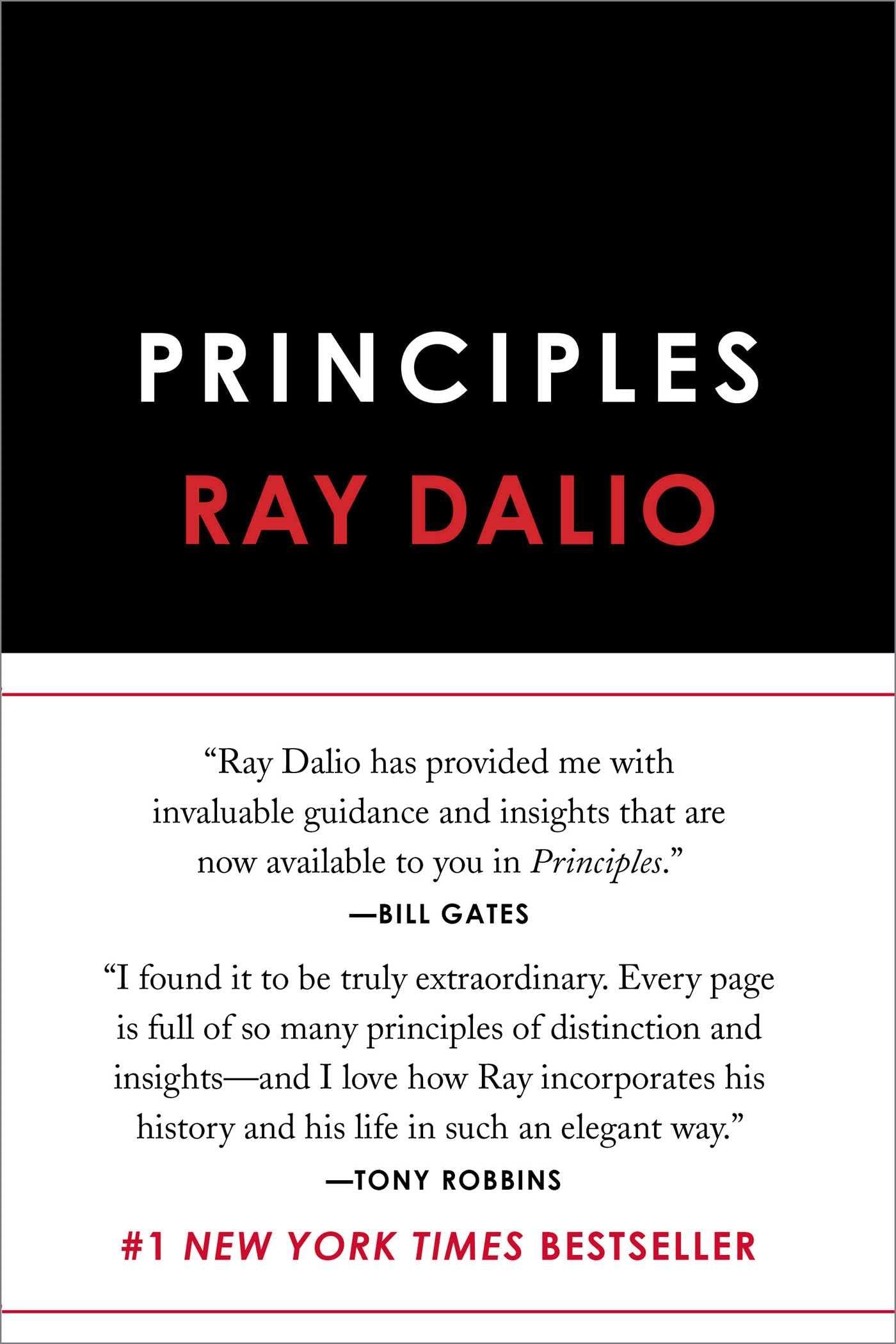
Ray Dalio is the founder of the world’s biggest hedge fund, Bridgewater. He is personally worth an estimated $15.7 billion. With his 2017 book Principles he aspires to the role of a great billionaire philosopher king, the kind I am specifically interested in analyzing in 2022.

Unlike philosopher king Peter Thiel who I wrote about recently, Dalio is not known for his political campaign funding, nor for supporting radical provocateurs with his billions.

Nevertheless, the power of a billionaire in our society should leave all of us cautious. Dalio intends to influence how we organize companies, our daily life, and our work life. The book presents three sections, a sort-of biographical “Where I’m Coming From,” a life-instructional part called “Life Principles,” and the managerial-oriented “Work Principles.”

Here are the most important points from Principles, consolidated for your convenience and consideration:
principles_ray_dalio

Write down your thought processes and guiding ideas, all the better to return and refine them as you collect data and experiences. Seek truth relentlessly. Be radically transparent in your decision-making.  Be radically open-minded. Use computers to enhance your thinking. Analyze your business, yourself, and the world like a machine that can be broken into component parts. Identify weaknesses in the machine and address them forthrightly. Embrace setbacks and pain as part of the process. Use these as learning opportunities. Get better next time. Forget trying to look good or please people, try instead to achieve the goal you aim at. Don’t try to come up with the best idea on your own, instead come up with the best idea using all available sources. Seek out people who disagree with you, to test your own concepts and to learn. Be willing to fire people even if you like them. Suppress emotions and appeal to reason, in your thought process as well as in your relationships with people.

Time and again Dalio hammers on the idea of radically seeking truth and transparency no matter the consequences, while organizing your life and work like a machine that can be fixed through analysis. Emotions, he emphasizes, need to be suppressed to allow reason and truth to shine through.  Basically, be like Spock. (My words, not Dalio’s.)These sound pretty fine and useful to aim for if you want to build a hedge fund.

But here’s the thing. There’s something odd about reading Dalio’s own history of Bridgewater and of himself. He is radically untransparent. Opacity and elision are the rules rather than the exception. I understand he’s protecting colleagues and employees by not spilling the beans. But the stories of conflict within Bridgewater generally do not get fleshed out enough to even seem realistic.

With one big exception. He summarizes a memo his deputies wrote him in 1993, at a crucial time in his firm’s development. “Ray sometimes says or does things to employees which makes them feel incompetent, unnecessary, humiliated, over-whelmed, belittled, oppressed, or otherwise bad. The odds of this happening rise when Ray is under stress. At these times, his words and actions toward others create animosity toward him and leave a lasting impression. The impact of this is that people are demotivated rather than motivated.”
Ray_dalio
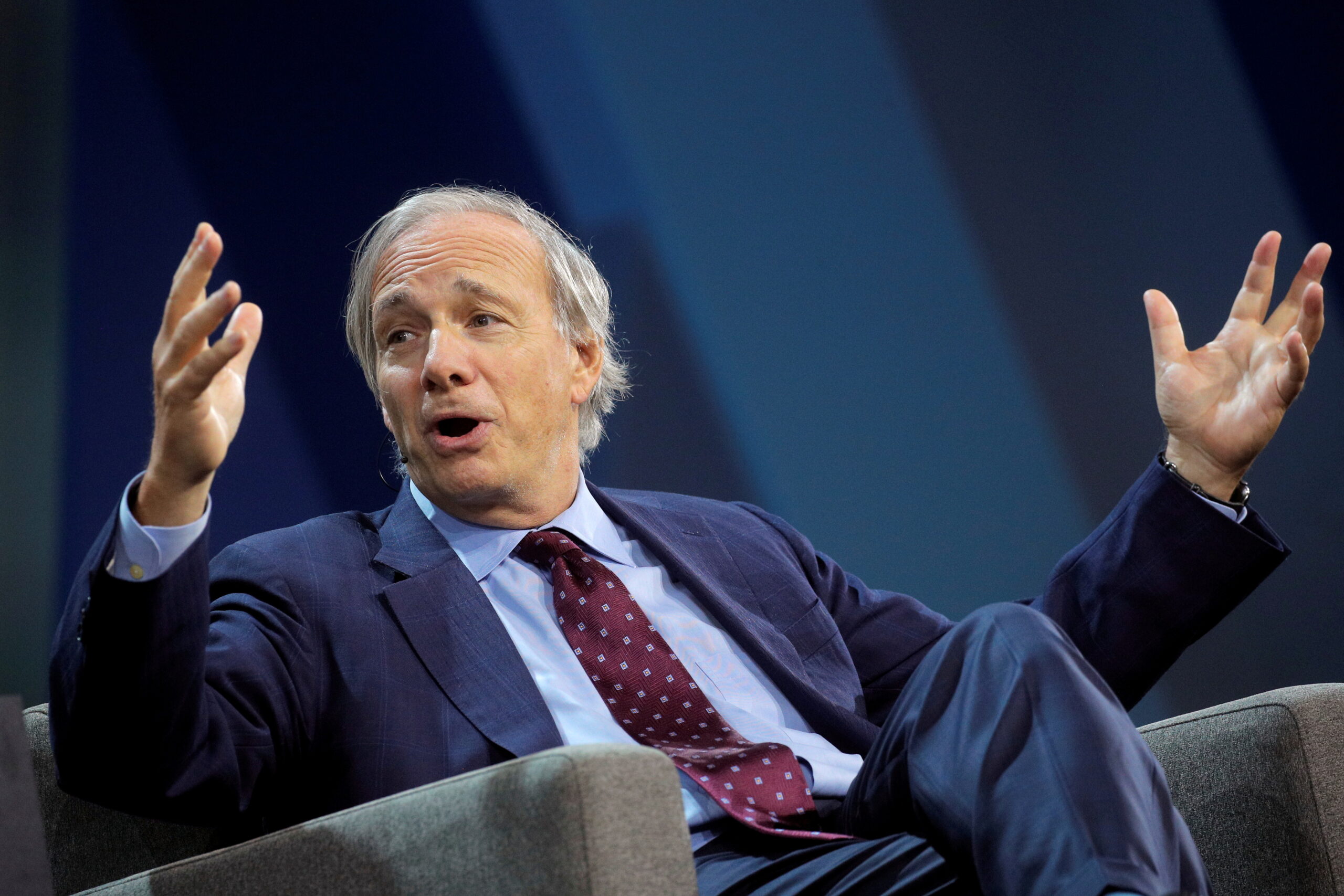
Ray Dalio, Bridgewater’s co-chairman and co-chief investment officer, speaks during the Skybridge Capital SALT New York 2021 conference in New York City, U.S., September 15, 2021. REUTERS/Brendan McDermid

That part was clear. Indeed, it’s the most transparent part of a book which otherwise does not seem transparent. We get an idea of what it would be like to work for Ray Dalio, from his closest colleagues.

Here’s another idea I doubt billionaire philosopher king Ray Dalio is giving enough credit to. To the wealthy business owner, “speaking your truth,” “radical transparency,” and “leaning into conflict to address problems early” sound like great business bromides. 

But I worked on Wall Street long enough to know that being on the receiving end of your boss “speaking his direct truth” involves spittle-flecked f-bombs, smashing telephones and telling subordinates what f-ing morons they are. 

That is to say, radical transparency is experienced differently, depending on who’s giving it, and who’s receiving it. I do not believe – now I’m speaking realistically about a world of vastly unequal power dynamics at work, in politics, in society – that radical truthfulness works the way he says it does. Humans are not machines to be fixed in this way. Ray Dalio’s ability to deliver radical truth bombs will not be met by his subordinate’s equal ability to do the same. To think otherwise is to embrace a curious understanding of human nature. 

The business press wrote a lot in 2017 about Bridgewater’s attempt to replace Dalio with the next generation of hedge fund leadership. It did not go well. I assume it did not go well because radical transparency between everybody is really weird. It’s not human. People who write about the corporate culture of Bridgewater usually say: This hedge fund is really, really weird.

The larger issue is our willingness to convey philosopher king status to people who – while conventionally successful in a capital-worshiping society – are not necessarily those who should be allowed to dictate the principles for our lives. People who we should not emulate. People who would create organizations and a society as a bizarre distillation of their personal identity fantasy.

I’m guessing that if I worked at Bridgewater and expressed these particular truths this particular way, I’d be sent to workplace Siberia for further study of Dalio’s little black book until I saw the truth, or I left the company.

Dalio’s Principles makes me think explicitly of Mao’s Little Red Book. We should always be afraid and skeptical of powerful people – in their own lifetimes – authoring books that purport to direct and optimize humanity. 

Self-made billionaires get to write their “here’s how I built it” book, and that’s also fine. When we hold them up as our philosopher kings for shaping society and human relations, that’s when it’s not fine.

It is too soon to adopt Ray Dalio’s Principles as the bible for human relations. It is also too weird. 

So let me be as radically transparent as I can be, Ray: You, your book, and your creepy Spock-inspired principles of rationality lack emotional intelligence.

A version of this post ran in the San Antonio Express News and Houston Chronicle.

See all Book Reviews on Bankers Anonymous

Post read (264) times.

Social Security and the WEP

According to Social Security, about 2 million people are subject to something called the Windfall Elimination Provision (WEP) which reduces Social Security benefits in retirement. This affected 200,309 Texans receiving Social Security payments at the end of December 2021, more people affected than in any state except California.

The WEP usually hits when income over a lifetime is split partly between a public sector job with a pension and some years of contributing to Social Security.

So if you are a public sector employee with a pension – like a firefighter, police, or public school employee – you’ll want to pay attention to how the WEP may affect your Social Security payments in retirement.

In Texas, an estimated 95 percent of public school district employees do not pay into Social Security, according to the Teachers Retirement System, putting them in a relatively high likelihood of being affected by the WEP. Texas police and firefighters, as well as city or county officials may also be negatively affected if they do not participate in Social Security for most of their career.

The problem is the WEP is notoriously complicated to understand. I’ll explain who and why you might be affected, who shouldn’t worry, and what if anything you can do about it. 

To further clarify, the WEP is notoriously unrelated to any song by Megan Thee Stallion. If you do not already know what I’m talking about then I implore you do not – under any circumstances – check YouTube right now to inform yourself.

WAP
The WEP is NOT the same as WAP

The reason for the WEP 

In order to understand the idea behind the WEP, you have to know a key thing about Social Security retirement benefits design. The main thing to know is that – as a welfare program – Social Security benefits nearly match earnings for the lowest paid people. Once you graduate to medium or higher pay, by contrast, your earnings only get somewhat matched by Social Security. If you make medium or high pay, you will receive a higher benefit from Social Security than a low-paid person, but only slightly higher, and not proportionate to your higher pay. 

A couple of central scenarios make you subject to the WEP. The first would be if you are a salaried public employee contributing to a public pension rather than Social Security, but then you also earn some other modest amounts of money on a side hustle for which you do pay into Social Security. This could happen if you’re a teacher who takes a summer job that pays into Social Security. Or you are an owner or part owner of a business, and that business pays into Social Security. Or you work part of your career in a job that pays into Social Security, but then switch into a public pension job that does not pay into Social Security. 

In each of these scenarios, the WEP is there because according to Social Security it would be unfair to accumulate a bunch of low-pay Social Security credits which then get highly matched with benefits. If you made $15,000 a year in a summer job as a teacher, but mostly make money throughout the year as a teacher with a pension, Social Security wants to more highly reward the person who actually only makes $15,000 a year total, rather than $15,000 as a side hustle. Essentially, that second person needs the welfare benefits of Social Security more than the public pensioneer teacher, according to the WEP theory.

So the WEP reduces the amount of Social Security the public pensioner receives in retirement, as a “fairness” provision relative to low-paid people who really depend on Social Security, rather than a pension. 

Scale of Social Security reduction

Another key thing to know is that whatever amount you are owed by your pension, that part is safe. The WEP only reduces your Social Security benefits, not the pension benefits. But by how much? 

Under the worst case scenario in 2022 the WEP can only reduce your Social Security payment by a maximum of $512 per month, according to Oscar Garcia, a former Social Security Administration employee and consultant now with Your Social Security Strategies.

That $512 maximum ceiling will shift to something higher in the future for future retirees.

Garcia used to write a regular newspaper column about Social Security and is deeply fluent in WEP.

Another limit to the WEP pain is a provision that protects people who only qualify for a small pension through their public sector career. Social Security will only reduce your benefit payment by one half the size of your pension. So if you only get $300 per month from your pension in retirement, your Social Security benefits will only be docked by $150 per month, because that’s half your pension. 

What Can Be Done? Can the WEP Be Avoided?

For people who have only accumulated some Social Security benefits over a lifetime, and will receive a significant public pension, not a lot can be done. 

Any public pension-eligible employee who manages to accumulate 30 full years paying into Social Security won’t be hit by the WEP. Anyone who accumulates between 21 and 30 years earning a substantial income subject to Social Security also is partially protected from the WEP, on a sliding scale as they approach 30 years. Of course, it’s hard to simultaneously work 20 to 30 years of paying into Social Security while also qualifying for a public pension, but it’s theoretically possible. 

Other than that, the best defense is forewarning through knowledge, and people worried about the WEP can go to an online Social Security calculator

To use this effectively, you would need to know all your past years of earnings, as that’s how Social Security calculates the WEP. If you haven’t previously signed up for a personalized benefits estimator through a website called MySocialSecurity, that’s also very worth doing and the best way to get your past earnings.

The WEP is generally quite unpopular with public pensioners who figure out the money they’ll not receive from Social Security, so attempts are made regularly to repeal it, so far unsuccessfully.

In July 2019, Texas Congressman Kevin Brady (now House Ways and Means Republican Leader, then Chairman) introduced the “Equal Treatment of Public Servants” bill to replace the WEP with a new proportional formula that would have raised Social Security payments for most but reduced them for others, based on average time in one’s career spent paying into Social Security. Texas Senator Ted Cruz introduced the companion bill to Brady’s bill in March 2020.

In 2021 Congressman Brady again introduced a WEP-elimination bill, with support from 15 other congress members from TX.

The Texas Lege also sent a resolution to Congress in April 2021 urging Congress to fix it.

Further attempts have been made in recent years to repeal or reform the WEP from both Republicans and Democrats, but so far the WEP lives on. 

A frequently lumped-together and somewhat relatedly-hated problem, known as the Government Pension Offset (GPO to the cool kids) also can reduce Social Security spousal benefits. I’ll address that confusing story in a subsequent column. 

A version of this post ran in the San Antonio Expresss-News and Houston Chronicle in September 2022.

Please see related posts

Social Security and the GPO

Post read (215) times.

Unfundamentals vs FOMO vs Stay The Course

Editor’s Note: This post ran in the San Antonio Express News in January 2022. I’ve been going through my archives and posting stuff here I forgot to post. I think this one holds up, so I wanted to have it preserved here.

In January, the month named for the 2-faced god Janus, we face backwards – reviewing all of the things we did not accomplish in the past year – and we face forward, making a plan for what will change in the new year. 

Investing, too, requires a two-faced approach. We face backwards at the cold reality of cash-flows in order to assess the probability of failure. This is the basis of “fundamental” investing. We also face forward at future possibilities, hoping that our optimistic projections will come to pass. This is the basis of “growth” investing. 

Janus
Janus, the 2-faced god

Both fundamental and growth approaches are valid – even necessary. They operate in a yin and yang of mutual dependence that allows an investor to survive and thrive in different environments. Rely too much on a fundamental approach and you’ll miss the new, new thing, as buggy whips give way to combustion engines and CD Walkmans give way to Spotify. Rely too much on what might possibly come to pass and you’ll buy castles in the sky that crumble at the next dose of recession, interest-rate hike or supply-side shock.

I don’t know about you, but the last year of investment markets felt completely unbalanced, even unhinged. The year 2021 was the most unfundamental investing year of my lifetime. Like, the whole monkey barrel was hope, optimism, and future projections. Some people seem to enjoy heavy castles-in-the-sky investing. Cool, I guess, but it makes me deeply uncomfortable. This Tinkerbell-based approach – everyone just collectively believing strongly enough in magic pixie dust – is just not my style. It’s utterly bewildering. What did you think?

Now it’s a new year so maybe you will be tempted to dip your toes into the new magic pixie dust as well?. Maybe you, too, could triple your money flipping NFTs? Somebody’s brother’s neighbor you heard about just made a million dollars last year in cryptocurrency, right? That guy doesn’t even work and now he’s worth millions? It’s amazing. 

The problem with unfundamental investing is not so much that I’m going to do it. I am personally not at risk of putting any of my real (admittedly fiat) money into NFTs or crypto. The problem with deeply unfundamental investing – even for those of us not tempted to try it – is that it leads to that most inevitable of feelings, the Fear Of Missing Out. FOMO has always been a primary driver of the growth side of investing. There’s no escaping it. Nobody wants to be left behind while a whole paradigm emerges magically from the Metaverse

My antidote to FOMO is to remind myself – and thereby remind you – that doing the most boring, unsexy, incredibly lame thing with your investment portfolio actually produced an amazing return in 2021. And in 2020. And in 2019.

Tinkerbell_Investing
Tinkerbell Investing dominated 2021

In the face of crazy NFTs, crypto, meme stocks – all of which I consider extreme Tinkerbell-based investing – can we review some basic facts on how well boring old index-fund investing went? 

The annual total return on the S&P 500 index – a group of large stocks in the United States – in 2021, including dividend reinvestment, was 28.7 percent. 

The 3 year return on that index has an annual rate of 26.1 percent.

The 5 year return on that same index was an annual rate of 18.5 percent. 

I don’t know any other way to say this: Those results are freaking awesome

The S&P 500 index continuously hit records throughout 2021. There are other major stock indices which registered higher or lower results, but the simple fact to remember is that doing the most boring, uncreative thing imaginable created blow-your-doors-off returns over the past 5 years. In the face of FOMO risk this is the most useful thing I can point out – how amazingly lucrative boring actually was.

S&P500_5yr_return_to_dec2021
The 5yr total return on S&P500 has been freaking amazing

You want to be a millionaire? If you could achieve last year’s S&P 500 index return for 10 years in a row (I know you can’t but just humor me on the thought experiment) you’d only need to start with $80,207 today. 

I’m not saying 2021 stock market returns will be repeated in 2022. Or that the last 5 years say anything about the next 5 years. All I’m saying is that with a FOMO mindset, we might forget that the boring old U.S. stock market has been incredibly profitable in recent years, if you just bought and held. Zero Tinkerbell fairy dust was required. 

And I also mean to point out in particular that if a 28.7 percent return over one year and 18.5 percent returns annually the last 5 years isn’t enough – I mean if you look at that recent past and say, “No, thanks, only crypto returns of 150 percent over 3 months can satisfy my need to get wealthy” – then I don’t know what to tell you. You may experience a very unsatisfying investment journey in the upcoming years. That’s just my guess.

With 2021 in the rearview mirror, and understanding that the future will not recreate the past, I have two concluding reminders. First, try to resist the Tinkerbell allure that has left us open-mouthed, gawking at the unfundamentals of fast speculative returns in pie-in-the-sky stuff. Second, doing the most incredibly boring thing, good old equity index investing, can have a powerful wealth-building effect on your net worth.

A version of this post ran in the San Antonio Express News and Houston Chronicle.

Please see related posts:

Making Sense of Financial Delusions – William Bernstein’s book and the year 2021

How To Invest

Mint.com Interview

Post read (164) times.

The Chapter 313 Monster Revives in Texas

You know how in the final minutes of your favorite horror movie, when our plucky heroes kill the beast with a desperate last ditch effort, and the beast goes down, to everyone’s surprise? And then the camera zooms in on the exhausted survivors leaning on one another, only to have a shadow of the beast rise up, unseen, behind them?

“No!” we shout at the screen. “Look up! It’s still alive!”

That’s the call I got last earlier this year from members of a left/right coalition which managed to help – to everyone’s surprise – kill a terrible corporate welfare program called Chapter 313 at the end of the last legislative session, in May 2021.

The Monster Revives!

They are sounding the alarm over proposed rule changes by the Texas Comptroller’s office which they claim will harm transparency and allow the monster – Chapter 313 tax breaks – to rise up, back from the dead.

As of now, the program is set to expire at the end of 2022. In the light of that upcoming expiration, the Texas Comptroller’s office has proposed a change in reporting requirements for the program. 

The Comptroller’s office responded to my query about the changes, asserting that rule changes are meant to respond to the sunsetting of the program, to streamline reporting, to eliminate bad tax valuation data, and that it is following an established procedure for consulting stakeholders in the program. 

So what are critics worried about?

The fiendish Chapter 313 is a tad complicated, but let’s review the basics. A private company (often an energy company, but not always) wants to build a new thing in Texas. It presents a ( fake, according to a Hearst investigation and academic studies) threat that it might build the thing in some other state, so it needs tax incentives like a break on school property taxes in order to invest in Texas.

I say fake because in 85 percent of cases, the companies would have built their thing in Texas without the incentive, according to a report by UT professor Nathan Jensen, a long-time critic of the Chapter 313 program.

So it’s a pure private giveaway to incentivize a company to do the thing it would have done anyway. And you’re paying for it.

Here’s how you’re paying. A local school board approves a 10 year property tax break to build the thing in Texas. This could be worth merely hundreds of thousands of dollars in tax breaks to the company, but for big companies it can be worth tens of millions of dollars over ten years. A database currently maintained by the Comptroller lets you see how much and for how long companies get this incentive.

The Texas Comptroller’s office needs to approve new deals, but historically has given approval in 97.5 percent of cases. So that, in practice, has not been a real check and balance on Chapter 313. 

Part of the evil genius of the program is that the state wholly reimburses the local school district for its 10-years of foregone tax revenue, so school districts almost never say no. And when I say “the state” provides reimbursement, I mean ultimately you, dear taxpayer, reimburse the private company for building the thing it was already going to build in the first place. 

This became such a successful private corporate welfare game using public dollars that by March 2021 there were over 500 active Chapter 313 agreements, and the cost of the program reached over $10 billion in state funds. 

Even with the program currently sunsetted, a gold rush of sorts is currently underway – mostly by energy companies – to apply for the sweet, sweet tax subsidies. The Comptroller’s office website shows 123 new applications submitted in 2021 alone, with more no doubt to come in the year to come.

So here’s where we are in the horror movie, in December 2021. A coalition of both left and right-oriented think tanks had worked closely with a bipartisan group of Republican and Democratic to raise awareness of the Chapter 313 problems, which helped kill it last Spring.

But Doug Greco, lead organizer for Central Texas Interfaith in Austin, said the Comptroller’s rule changes are a prelude to reviving the subsidy, by limiting the public and press’s access to data in the future. “We are under no illusions that there will be an attempt to bring Chapter 313 back in the next legislative session,” says Greco. 

Among the proposed changes would be a decreased requirement to estimate the total value of projects, the number of jobs created, and the end of a centralized database of local school district tax breaks. Each of these elements made it possible in the past for legislators to study the effectiveness of the program. 

Bob Fleming, a leader with The Metropolitan Organization in Houston, a coalition of churches, sees an intentional plan to revive the subsidy program by keeping the public less informed. “Make no mistake, Comptroller Hegar intends to subvert the will of the legislature,” claimed Fleming during a press conference on the issue.

The Comptroller’s stated reason – per its website – for changing disclosure requirements is to “bring the Chapter 313 reporting into the digital age by making access by the public simpler and reducing the burden on school districts and agreement holders.” 

Opportunities for public comment on the Comptroller’s proposed rule changes ended December 19. 

The Comptroller’s Communications Director Chris Bryan meanwhile responded that “The agency is committed to making changes in a collaborative way that provides the legislature and the public the information they need to make informed decisions regarding the manner in which tax dollars are spent.”

In the light of the current surge underway of new applications before the end of 2022 deadline, the rationale for “winding down” reporting requirements is odd. Chapter 313 subsidies continue for 10 years at a time, so reporting less information until 2032 doesn’t seem to serve the public interest. 

Personally, I was stunned to see Chapter 313 go down in the last legislative session. It was the ideal example of a concentrated private financial benefit understood by insiders (tax attorneys, energy lobbyists) with a diffuse and poorly understood burden paid by the general public (that’s you and me, baby.) Sadly, treating uninformed taxpayers like mushrooms – feed them manure, keep them in the dark – usually works. 

Let’s hope the Comptroller’s office pays attention to recent public comments. We need that office to shine a light on this monster in the dark, as it attempts to stand up after being left for dead.

A version of this post ran in the San Antonio Express News and Houston Chronicle

Post read (111) times.

DeLorean’s Legacy

August was a big month for the DeLorean car company’s legacy. In fact, August 18 was a particularly big day on both coasts. On the west coast, San Antonio-based DeLorean Motors Reimagined hosted a public launch of its “Alpha5” concept car at the 70th Annual 2022 Pebble Beach Concours d’Elegance auto show. 

Meanwhile on August 18 in New Hampshire, an alternate claim to the DeLorean legacy was announced as well. Kathryn DeLorean, original founder John Z. DeLorean’s daughter, launched the DeLorean Legacy Project, an educational engineering center with plans to build a signature tribute car, the Model JZD, first designed by Angel Guerra in 2020.

One of these is a for-profit business and the other is a historical tribute and non-profit educational project. Both are attempts to grapple with what this car brand meant in the past and what it will mean in the future. What is DeLorean’s true legacy?

Ever since its star turn in the famous Michael J. Fox movie, the DeLorean brand has operated in the boundary space between the past and the future. Any DeLorean project wrestles with this fact. A DeLorean-branded car is by definition a 40-year-old throwback while simultaneously marketing itself as a blast into the future.

The DeLorean of our imagination embodies this paradox. A retro-futuristic relic of discontinuous-time and liminal space.

The DeLorean Motors Reimagined folks know this. The name “Alpha5” – the prototype they debuted last week at Pebble Beach – uses “5” in the name because the company claims to have imagined 1990, 2000, 2010 DeLoreans (the Alphas 2, 3 and 4) that never were. That’s a cool made-up retconned legacy idea, actually. 

Alpha5
The Alpha5, Fifth of It’s Name?

Their signature tagline, “The Future Was Never Promised” to me sounds somewhat apologetic, as if anticipating and then responding to a disappointed fan who objects to their vision of the future for DeLorean.

Unfortunately, or maybe inevitably, it’s proving hard to satisfy the hardcore fandom that wants both retro and futuristic styling. So far it’s gone over about as well as did Hayden Christiansen’s Anakin Skywalker in the Star Wars prequels, as compared to the original Darth Vader narratives, another retconned remake that enraged original superfans.

The Delorean Motors Reimagined Instagram page hosts a relentless series of complaints about the Alpha5: that it’s not a real DeLorean, that it very clearly reused a 2019 design for a concept car called the DaVinci, that it looks like a Tesla, and that they didn’t honor the DeLorean design legacy. To satisfy your own schadenfreude, I invite you to visit their social media.

Davinci Car
The DaVinci Concept Car from ItalDesign

The most immediate challenge to their future business hit the company a week before Pebble Beach. Electric car company Karma Motors sued DeLorean Motors Reimagined and its top executives for stealing intellectual property and breaching the non-disclosure agreements they signed as Karma employees in 2021. For them to have a future, they will need to go back to address this past, in court.

Other fights over intellectual property

As one dives deeper into the obsessions of the DeLorean fandom online, the questions of intellectual property rights and legitimacy get even more convoluted. By the time it publicly launched in 2022, the San Antonio-based DeLorean Motors Reimagined had already teamed up in a joint venture with Delorean Motor Company of Texas, based in Humble. That company, led by Stephen Wynne, had long ago established itself as the successor to John Z. DeLorean’s bankrupted firm by buying up DeLorean parts and then over time acquiring lapsed trademark rights to the name, logo and design. 

Sally Baldwin DeLorean, the administrator for John Z. DeLorean’s estate and his fourth wife at the time of his death in 2005, however, sued DeLorean Motor Company of Texas for improper use of intellectual property in 2014 and again in 2018. That case was settled in 2018 for an undisclosed amount, leaving DeLorean Motor Company of Texas in a strong position to claim intellectual property rights to the DeLorean name, brand, imagery and logo. Rights which it has now shared in a joint venture with DeLorean Motors Reimagined.

John DeLorean’s daughter Kathryn and a fan-favorite design

Kathryn DeLorean, JZD’s daughter, believes that Sally cheated on her father and also cheated her out of proceeds of her late father’s estate. Meanwhile, she has embarked on her own attempt to establish a DeLorean legacy, by working with a fan-friendly designer.

In November and December 2020, freelance automobile designer Angel Guerra of Spain launched a COVID-era fantasy idea: A 2021 DeLorean tribute to the 40th anniversary of the car. 

In the online super fandom of DeLorean, Angel Guerra’s designs caught spontaneous fire. In Guerra’s telling, he reached out to Delorean Motor Company of Texas and shared his vision and even business plans for building a prototype within a year. When DeLorean Motor Company of Texas declined to pursue the idea, Guerra returned to his regular day job, working on European hyper-car auto designs. 

Guerra was then surprised to hear a few months later that in fact DeLorean Motor Company of Texas was pursuing a new futuristic electric car joint venture. This turned out to be a group from Karma Motors that formed the executive team of DeLorean Motors Reimagined in San Antonio. Guerra’s comment to me on the formation of that venture, just a few months after he pitched Stephen Wynne of DeLorean Motor Company of Texas, was “what a coincidence.”

Guerra subsequently joined forces with Kathryn DeLorean to offer another kind of legacy. They hope students of design and engineering will learn from building his concept car, the “Model JZD.”

Angel Guerra and Kathryn DeLorean are careful in their public communications to disclose that the DeLorean Legacy Project is not affiliated with DeLorean Motors Reimagined (of San Antonio) or DeLorean Motor Company, Texas (of Humble).

They are not competing in any commercial sense. They represent a different claim, however, to the fandom of the DeLorean. In launching her legacy project, Kathryn says “There is no competition, I am a DeLorean, I’m making engineers, not engines.”  

Now then, let’s go back to the future. Ten years from now, Whose legacy will we remember? Obviously, I don’t know. 

But there’s a recurring pattern with this company. Kathryn DeLorean claims she was cheated out of her estate by her step-mother Sally Baldwin DeLorean. Sally Baldwin DeLorean claimed she was cheated out of intellectual property and royalties by Stephen Wynne’s company. Karma Motors feels cheated out of intellectual property by the executive team of DeLorean Motors Reimagined. Guerra feels cheated out of credit and inspiration by Wynne. Online superfans feel cheated out of DeLorean’s legacy by the new designs. And I’m worried about the public being cheated out of up-to-$1 million in city and county subsidies offered to DeLorean Motors Reimagined, a pure startup with no track record, entering an extremely difficult industry.

A version of this post ran in the San Antonio Express News and Houston Chronicle.

Post read (168) times.

Social Security – The 50 Year View

In the beginning of June, Social Security issued its annual Summary Report  noting that the primary trust fund for paying reserves will run out in 2034. Twelve years.

Sample Social Security Card
Whoops now I’ve doxxed Mr. Public

Also, I was reading this past week a book by Peter Ferrera published in 1980 called Social Security: The Inherent Contradiction.

In 1980, Ferrera forecast the trust fund would run out in 2030, to which I have two reactions. First – that’s some amazingly accurate forecasting of a complex actuarial system over the span of 50 years! Well done, actuaries. Second – you Boomers have had at least 42 years to fix this. Like, what the heck? I am first eligible for Social Security retirement payments in that same year, 2034. Coincidence? I’m a Gen X kid, I’m used to this kind of treatment by now. It’s fine. Really. I’m fine.

More seriously, the real thing we should understand about the trust fund is this: It’s a useful fiction. 

The trust fund isn’t particularly important. 

Benefits get paid from current Social Security payroll taxes. The government is not actually investing our dollars. Technically, yes, a partial and temporary surplus of payroll taxes gets parked in low-interest Treasurys, but by no means is this the real source of our Social Security payments.  It’s a pay-as-you-go system. Current workers pay for past workers.

In fact, understanding this is a fiction is the key to remaining calm about Social Security. Rather than panic, we should take comfort. The trust fund has never particularly mattered.

As Ferrera wrote in 1980, the idea itself of a trust fund is “a carefully contrived deception meant to mislead the public.”

Ferrera continued, “the entire purpose of this deception is to hide the welfare elements in the social security system and attempt to create the impression that social security is simply insurance without any welfare elements.” I agree. 

Whenever I write about Social Security I receive panicked (or conversely, overly certain) emails asking – or informing – me about the Ponzi scheme underlying our biggest government program. This is neither true nor helpful. Ponzi schemes are not backed by mandatory payroll taxes. Social Security is. 

I 100 percent do not worry about Social Security running out of money. It’s never been a true trust fund. Rather, it has always been primarily “pay as you go,” transferring tax dollars from current workers to current retirees.

Ferrara’s big idea from 1980 was that Social Security has two functions, insurance and welfare. Most Americans focus on the insurance aspect, in which they think they pay into the system during their working years and they think they get a return on investment back in retirement years. That insurance function is the fakery, and the trust fund a symbolic misdirection to assist in the legerdemain. The true function of Social Security is a welfare transfer.

Although I haven’t spoken with Ferrera, I’m certain we disagree on whether the welfare element is good. I think it is. He thinks it is not.

A not-sufficiently-understood aspect of Social Security benefits is that it deeply favors modest lifetime incomes over higher incomes, when it comes to benefits. This is partly accomplished through “bend points,” which mean Social Security pays based on 90 percent of an extremely modest lifetime salary, 32 percent of a medium lifetime salary, and only 15 percent of higher earnings. I’m simplifying the language around these “bend points,” but the idea is that the welfare benefit of Social Security favors the neediest. To match this focus on welfare, annual income above a certain amount ($147K in 2022) is not taxed for Social Security.

I am confident that in my own life, under reasonable assumptions, I would have achieved a greater net worth if I had never been taxed for Social Security and instead had invested those funds myself. The “welfare” part of Social Security will turn out to be a net loss for me, personally. 

For most of my fellow citizens however, the welfare benefit of Social Security is a net gain. And that’s fine by me. This is socialism and should be understood as such. 

I say that not as a diss of Social Security. In fact, ninety-six percent of adults polled consider Social Security an important government program. I mean to point out to a Texas readership with all of its preconceptions that a little bit of socialism can be pretty comfortable. Very popular and indeed, necessary. Not having elderly people die of starvation for example is a win in my book.

As for Social Security staying solvent, the real key is in understanding that this is solved with just a series of technocratic tax rule adjustments. The issue is not running out of money in the trust fund (again, the trust fund is largely irrelevant) but rather what small adjustments to delay and diminish benefits or boost taxes will be made to render the entire system solvent.

That was addressed in another 1980s throwback way this past week by former Senator Rudy Boschwitz (R-MN). 

While serving in the Senate (1978 to 1990), Boschwitz had written a key memo in 1982 with proposals for shoring up the program. Yes, it is clear folks were worried back in the 80s about the issue.

Last week, in the Wall Street Journal, he listed the various ways to do it again. 

Raise the “full” retirement age to beyond 67.

Raise the “early” retirement age to beyond 62.

Fiddle with the “bend points” so that payments are even less generous to higher earners.

Slow the rise in benefits by linking to a different, probably better, inflation index.

Slow the rise in benefits for higher earners.

Make inflation adjustments less frequently.

Tax Social Security income more heavily for higher earners.

Raise the payroll tax slightly to bring in more revenue.

This can all be phased in with many years’ lead time, in a boring, technocratic way. No need to panic. Which again is why I don’t worry about the so-called trust fund running out of money in 2034.

Big thanks to reader Steven Alexander who contributed data and analysis to Ferrera’s 1980 book, crunching numbers on computers back in the 1970s that accurately modeled things like return on investment and the end of the trust fund in the 2030s. I was reading his copy signed by the author.

A version of this ran in the San Antonio Express News and Houston Chronicle.

Please see related posts

My nerdy Social Security Spreadsheet, Part I

My nerdy Social Security Spreadsheet, Part 2

Post read (216) times.